
Last updated: May 2026 | Reading time: 11 min | Difficulty: Beginner-friendly
Key Takeaways
- Most “car essentials” lists are bloated with items you’ll never touch — this guide cuts it to the 20 things that genuinely earn their space
- Safety and emergency items come first, always — they’re the ones you’ll desperately wish you had when you need them
- You don’t need to spend more than $150 total to fully stock your car with everything on this list
- The biggest mistake new car owners make is buying comfort items before covering safety basics
- A properly stocked car takes about 30 minutes to set up and saves hours of stress down the road
The Moment That Changes How You Think About Your Car
You’re running late. You’re already stressed. You reach into the center console for the pen you need to sign something, and there’s nothing there but a gas receipt from 2024 and a lone french fry.
Or it’s raining, and you realize your wipers are leaving streaks across your entire field of vision and you’re doing that thing where you lean forward and squint. Or you blow a tire at 8 p.m. on a Wednesday and discover your jack handle is missing and your phone is at 4%.
These aren’t dramatic scenarios. They’re Tuesday. And they happen to drivers who haven’t thought intentionally about what belongs in their car.
Here’s the thing about car essentials — the word gets thrown around so loosely that it’s lost all meaning. People use it to describe everything from $400 dash cams to air freshener trees. This guide cuts through all of that. These are the items that actually matter: the ones that protect you, the ones that fix real problems, and the ones that make daily driving genuinely easier. In that order.
Whether you just picked up your first car or you’ve been driving for years with a chaotic trunk situation, this list is designed to help you build a system that actually works.
Why Most Car Essentials Lists Get It Wrong
The typical car essentials list reads like a gift guide — 40 items, no hierarchy, equal weight given to a jump starter and a decorative steering wheel cover. That’s not useful. That’s noise.
The reality is that car essentials fall into a clear priority order. Safety items first. Emergency tools second. Daily-use basics third. Comfort and convenience last. When you buy a seat massager before you own a working flashlight, you’ve got the order backwards — and the day something goes wrong, you’ll know it immediately.
This guide organizes everything into those four tiers so you know exactly where to start and what can wait.
Tier 1: Safety Essentials — Buy These Before Anything Else
These are the items you hope to never use and will be desperately grateful for when you do. They cost very little relative to their value and take up almost no space. There is no good reason not to have all of these.
A Portable Jump Starter
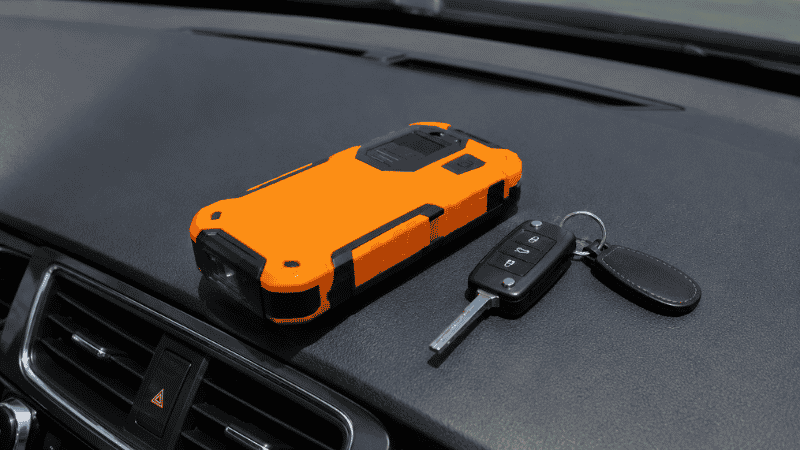
A dead battery is statistically one of the most common roadside emergencies — AAA responds to millions of battery-related calls every year. A portable lithium jump starter means you never have to flag down a stranger or wait an hour for roadside assistance to show up.
Modern units are compact enough to fit in a glove box. Look for one with at least 1000A peak current — that covers most sedans and small SUVs. The Noco Boost Plus GB40 ($99) and the Avapow A680 ($45) are both well-reviewed, genuinely reliable options. Skip the cheap unbranded ones; this is not the item to save $15 on.
One important detail: these units need to be charged periodically. Plug yours in for a few hours when you first get it, then check it every few months. A dead jump starter is worse than no jump starter because it gives you false confidence.
A Portable Tire Inflator
Driving on underinflated tires reduces fuel efficiency, accelerates tire wear, and — at significant underinflation — creates a serious blowout risk. The U.S. Department of Transportation estimates that tire-related crashes cause hundreds of fatalities annually, many of which are preventable with basic pressure maintenance.
A compact electric inflator plugs into your 12V outlet and gets most car tires to proper pressure in under three minutes. The Ryobi P737 and AstroAI inflators are both under $35 and have clear digital pressure displays. Get one with a built-in pressure gauge so you don’t have to own a separate tool.
Check your recommended tire pressure on the sticker inside your driver’s door — not on the tire itself. The tire sidewall shows maximum pressure, not the pressure your car actually needs.
A Basic Car Emergency Kit
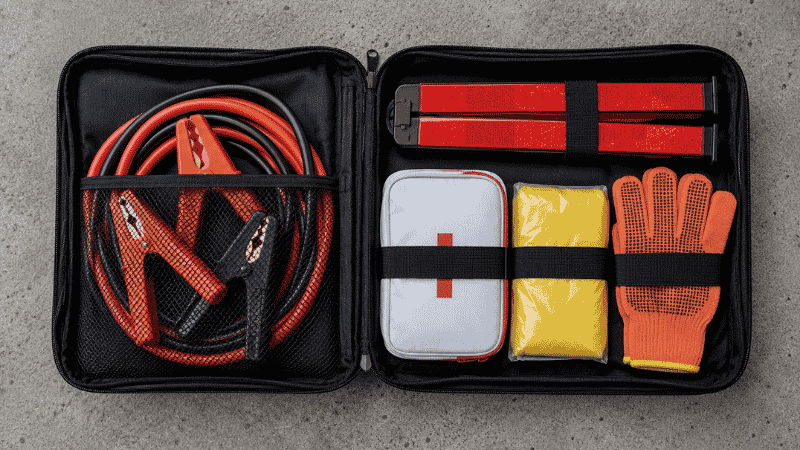
You don’t need to build this from scratch. Packaged roadside emergency kits — available from AAA, Lifeline, and several others — include the core items: jumper cables, reflective triangles, a basic first aid kit, a rain poncho, work gloves, and a few tools. A decent kit runs $30–50 and covers the most common scenarios.
The one upgrade worth making: replace the included jumper cables with your portable jump starter (above), and you’ve eliminated the need for another car to be present during a battery emergency.
Keep the kit in your trunk, in a bag or box that won’t slide around. Loose emergency items are useless when you’re stressed and searching in the dark.
A Flashlight — Dedicated, Not Your Phone
Your phone flashlight is fine for finding something under the seat. It is not adequate for changing a tire on the side of a road at night, checking under the hood, or signaling for help. Phone batteries die. Phones get damaged. A dedicated flashlight with fresh batteries is a non-negotiable backup.
The goal is something compact, bright, and impact-resistant. A headlamp is even better — it keeps your hands free when you need them. Anker and Black Diamond both make reliable headlamps under $25. Keep a spare set of batteries in the same compartment.
Tier 2: Emergency Tools — The Stuff That Solves Real Problems
A Tire Pressure Gauge
Even if you own an inflator, a standalone digital pressure gauge is worth having. They’re more accurate than the gauges built into many inflators, and they’re small enough to live in your glove box permanently. ThirtyA and Accutire make reliable digital gauges for $10–15. Check your tire pressure monthly — more often in winter, when cold air causes pressure to drop.
Jumper Cables (As a Backup)
Even with a portable jump starter, a set of quality jumper cables is worth keeping. Jump starters can fail, lose charge, or prove insufficient for large engines. Cables are foolproof as long as another vehicle is present. Get a set with at least 20-foot length and 4-gauge thickness — anything thinner struggles with trucks and SUVs.
A Multi-Tool or Basic Tool Kit
A compact multi-tool (Leatherman, Gerber, or similar) handles a surprising number of roadside situations: tightening a loose screw, cutting a stuck seatbelt in an emergency, prying open a stuck compartment. If you’d rather have dedicated tools, a basic automotive kit with pliers, a screwdriver set, and an adjustable wrench covers the most common needs and fits in a small bag in your trunk.
Duct Tape and Zip Ties
This sounds like a joke until you’ve used duct tape to temporarily reattach a bumper cover after a parking lot incident or zip-tied a rattling heat shield back into place on the highway. Neither is a permanent fix, but both have gotten drivers safely to a mechanic when they would otherwise have been stranded. Keep a small roll of each.
Tier 3: Daily-Use Basics — What Makes Every Drive Better
Microfiber Cloths (Keep at Least 3)
The most underrated item on this list. A microfiber cloth cleans your windshield interior, wipes down the dashboard, removes fingerprints from screens, dries wet hands without scratching anything, and cleans up spills before they set. Paper towels scratch plastic surfaces and streak glass. Cloth rags leave lint everywhere. Microfiber does everything better.
Buy a pack of 10 for $12–15 and keep three in your car. Wash them when they get grimy; they last for years.
An Ammonia-Free Glass Cleaner
Your windshield builds up an interior film over time — off-gassing from dashboard plastics, fingerprints, humidity residue. That hazy layer is most visible at night when oncoming headlights scatter through it. It’s also a visibility hazard that builds so gradually you stop noticing it.
Ammonia-free formulas (Stoner Invisible Glass, Chemical Guys CLD_202) are safe for tinted windows and touch screens. Spray on the cloth, not the glass. Wipe in one direction on the inside, a different direction on the outside, so you can identify which side any remaining streaks are on.
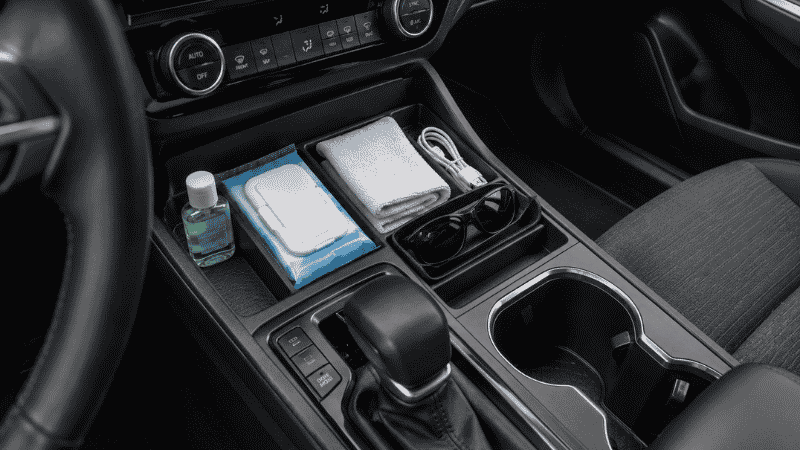
Hand Sanitizer and Sanitizing Wipes
A study published in the journal Microbiology found that gas pump handles are among the most contaminated public surfaces tested — more so than public restrooms. Steering wheels accumulate similar contamination from daily contact. Hand sanitizer before eating in the car and sanitizing wipes for quick surface cleanup are basic hygiene habits that make a real difference.
Keep a small bottle in the cupholder and a travel pack of wipes in the door pocket. This isn’t about being obsessive — it’s about not getting sick from touching your own steering wheel.
A Small Trash Receptacle
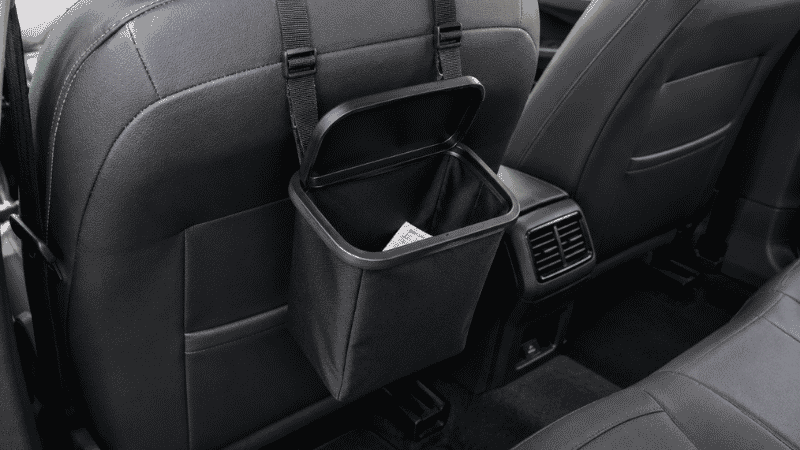
The number one cause of a messy car interior is not having anywhere for things to go. A small hanging trash bin — the kind that hooks over the headrest — costs $8–12 and eliminates the passive accumulation of receipts, wrappers, and bottles that turn into a floor-level disaster over weeks. Empty it when you get gas. Takes ten seconds.
Charging Cables and a Multi-Port USB Adapter
A dead phone on a long drive is an inconvenience. A dead phone during an emergency is a real problem. Keep charging cables for your devices (and any passengers’ devices you regularly transport), and a multi-port USB adapter so everyone can charge without negotiating. Anker’s compact multi-port adapters are reliable and under $20. If your car has USB-C ports, verify the output wattage — many factory ports charge slowly.
Sunglasses Stored in the Car
Low sun during morning and evening commutes causes a specific kind of glare that’s genuinely dangerous — particularly during the brief periods when the sun sits right at eye level and neither your visor nor your naked eye can handle it. Keep a pair of polarized sunglasses in your car at all times. Not your favorite pair — a dedicated car pair. Polarized lenses cut reflected glare significantly better than standard tinted lenses.
Tier 4: Comfort and Convenience — Earn Their Space or Don’t Come In
These are the items that make driving more pleasant. They’re worth having, but only after everything above is covered. If your budget is limited, work through Tiers 1–3 first.
A Compact Blanket
Useful more often than you’d expect: waiting for someone in a cold parking lot, an unexpected overnight situation, a passenger who’s cold while you’re comfortable. Fleece travel blankets compress down to almost nothing and live under a seat without taking up real estate. Under $20.
Wet Wipes or Baby Wipes
Distinct from sanitizing wipes — these are for cleaning your hands after pumping gas, handling car parts, or dealing with food spills without having access to a sink. Keep a travel pack in the center console. They’re cheap, they’re practical, and the moment you need one you’ll be genuinely glad it’s there.
A First Aid Kit (Beyond the Emergency Kit)
Your roadside emergency kit has a basic first aid section. But a slightly more comprehensive kit — with bandages in multiple sizes, antibiotic ointment, pain relievers (ibuprofen and acetaminophen), antacids, and any personal medications — means you’re covered for the everyday minor situations that have nothing to do with car emergencies. Compact kits designed specifically for vehicles are available from Adventure Medical Kits and similar brands for $20–35.
A Pen and Small Notepad
You need to write down a license plate. You need to sign a form. You need to jot down an address when you can’t look at your phone. A pen and a small notepad take up essentially no space and have saved more people from awkward situations than any smart gadget. Keep one in the glove box and stop forgetting about it.
The 10-Minute Setup: How to Stock Your Car Right Now
If you’ve read this far and your car currently has none of the above, here’s how to get from zero to covered quickly:
This week — spend $50–70: Start with a portable jump starter and a basic emergency kit. These two items cover the most consequential gaps. Order both online or pick them up at any auto parts store.
Within the month — spend another $40–50: Add the tire inflator, a multi-port USB adapter and cables, a pack of microfiber cloths, glass cleaner, and hand sanitizer. These are the daily-use basics that make immediate practical differences.
When convenient — round it out: Add the trash receptacle, a blanket, wet wipes, a first aid kit upgrade, and a pen. None of these are urgent, but all of them are worth having.
Total investment: roughly $100–130 to cover everything on this list. For what it prevents — emergency tows, damaged surfaces, avoidable discomfort — it’s one of the most practical purchases you can make as a car owner.
What You Don’t Need (The Skip List)
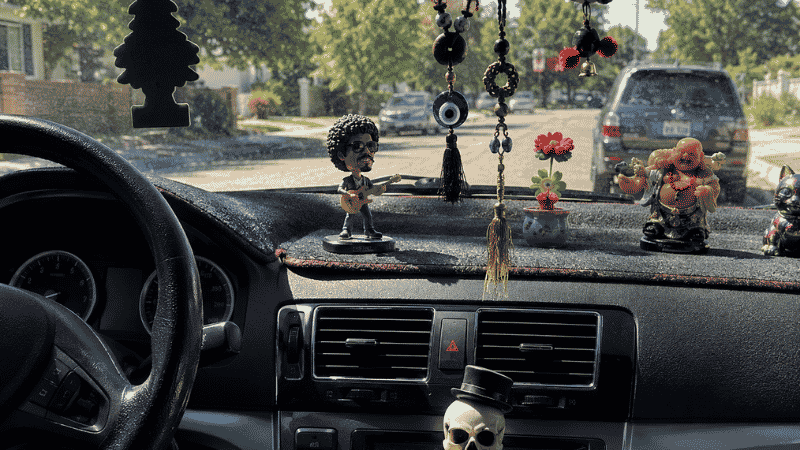
Just as important as knowing what to buy is knowing what not to buy. These items appear on nearly every “car essentials” list and earn their space in exactly zero real situations:
Decorative car accessories before functional ones. A steering wheel cover with a floral pattern is not an essential. Neither are ambient lighting strips, a custom gear shift knob, or seat covers that don’t fit your seats properly. Function before form, especially in the first year of ownership.
Multi-tools you’ll never use. If your “tool kit” includes 47 pieces and you don’t know what 40 of them are, you don’t need that kit. A good multi-tool and a basic set of screwdrivers will cover 95% of anything you’ll actually encounter.
Air fresheners that mask instead of eliminate. A hanging pine tree does not fix a mildew smell, a pet odor, or old fast food residue. It makes it worse by layering synthetic fragrance over an unchanged source. Fix the source first. (→ Related: How to Remove Car Odors That Actually Won’t Go Away)
A full set of everything “just in case.” Some lists recommend carrying extra oil, coolant, transmission fluid, and brake fluid in your trunk. Unless you’re doing extended travel in remote areas, this is overkill for daily driving. Modern cars have warning systems for all of these. Trust them.
How Often Should You Audit Your Car Essentials?
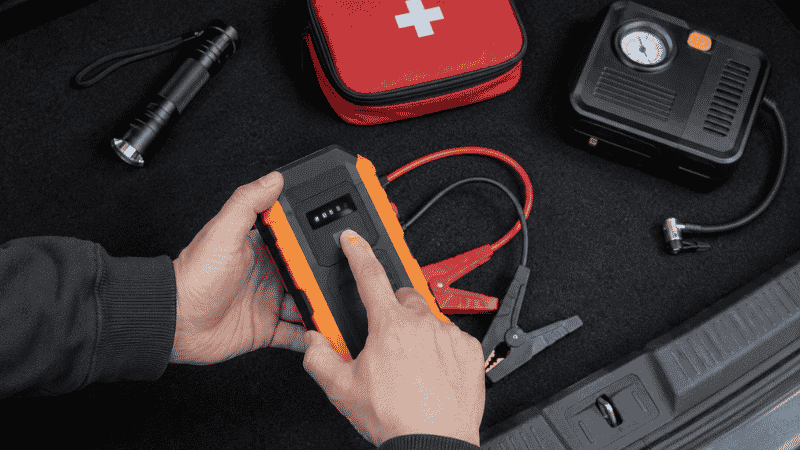
Every six months, spend 15 minutes going through what you have:
- Check your jump starter’s charge level and top it up
- Verify the first aid kit isn’t expired (pain relievers and antiseptics have shelf lives)
- Replace any batteries that might have drained
- Check your tire inflator still powers on
- Restock anything you used and didn’t replace
The right time to do this is when you change your clocks — spring and fall. It takes less time than changing the batteries in your smoke detectors, and it matters more than most people realize.
FAQ
What are the most important car essentials for a new driver? Start with the safety tier: a portable jump starter, a tire inflator, and a basic roadside emergency kit. These three items cover the most common emergencies and should be in every car before anything else. Add a flashlight and you’ve covered the basics for under $150.
What should I keep in my car for emergencies? At minimum: a jump starter or jumper cables, a tire inflator, reflective triangles or road flares, a basic first aid kit, a flashlight with fresh batteries, and a rain poncho. These items cover the most common roadside scenarios — dead battery, flat tire, breakdown visibility, and minor injuries.
How do I keep my car organized without spending a lot? A small hanging trash bin ($8–12) and a center console organizer ($15–20) solve most car organization problems. The goal is giving everything a designated home so it doesn’t migrate. Once things have a place, maintaining it becomes automatic.
What should every car have in the glove box? Your vehicle registration and proof of insurance (required by law), a pen, a small notepad, a tire pressure gauge, and hand sanitizer. Everything else should live elsewhere — the glove box is for documents and small daily-use items, not storage overflow.
Is a dash cam a car essential? It’s more of a strong recommendation than a strict essential. A dash cam provides evidence in case of an accident or insurance dispute, which can save significant money and stress. It’s not emergency equipment, but for daily drivers in congested areas, it’s one of the highest-value purchases you can make. (→ Related: Best Dash Cams Under $100 — What We Actually Tested)
Do I need a spare tire kit? If your car came with a full-size spare, make sure it’s properly inflated and the jack and handle are present — check this now, not during a flat tire. If your car came with a run-flat tire system or a small space-saver spare, understand its limitations (typically a maximum speed of 50 mph and a limited distance range). A portable tire inflator handles slow leaks and underinflation without needing to use the spare at all.
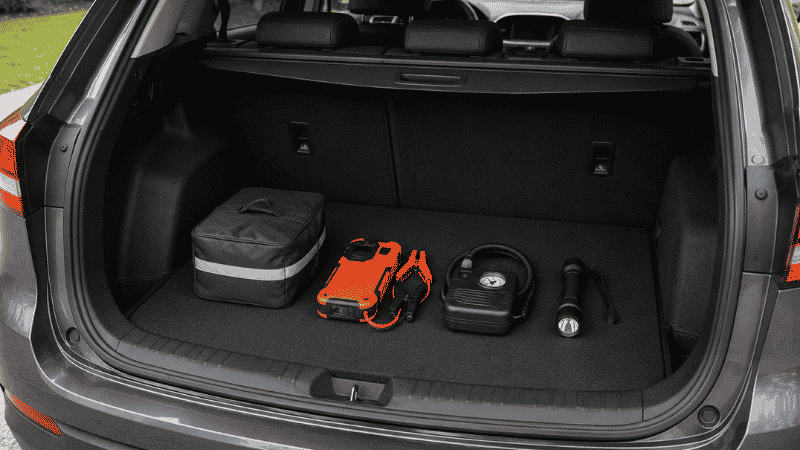
What’s the best way to store car essentials so I can find them in an emergency? Consistency is the entire strategy. Emergency items (jump starter, inflator, emergency kit, flashlight) stay in the trunk in a single bag or box, always. Daily-use items (wipes, chargers, microfiber cloths) stay in the cabin. The moment you start using the trunk as overflow storage, your emergency kit disappears under the debris. Treat the trunk emergency zone as permanent real estate that nothing else invades.
References
- U.S. Department of Transportation, NHTSA — Tire-Related Crashes on U.S. Highways (2022 Traffic Safety Facts)
- AAA — Roadside Assistance Call Data and Battery Failure Statistics (Annual Automotive Report, 2023)
- Lawn, S.A. et al. — Microbial contamination of high-touch public surfaces, published in Letters in Applied Microbiology (2021)
- U.S. Department of Transportation — Tire Safety: Everything Rides on It, Federal consumer guide
Have a question or something to add? Contact us — we read everything.