
Last updated: May 2026 | Reading time: 11 min | Category: New Driver Essentials
Key Takeaways
- Brake pads typically last 25,000–65,000 miles, but driving habits matter more than mileage — city drivers often replace pads twice as often as highway drivers
- Rotors last longer: 30,000–70,000 miles on average, but they can warp or thin out faster if you ride the brakes regularly
- The squealing sound is intentional — it’s a built-in metal wear indicator, not a sign your brakes are about to fail. Grinding, however, means they already have
- You can check your brake pad thickness yourself in under two minutes without any tools — we’ll show you exactly how
- Ignoring worn brakes doesn’t just increase stopping distance — it can destroy your rotors and turn a $150 pad replacement into a $600+ rotor job
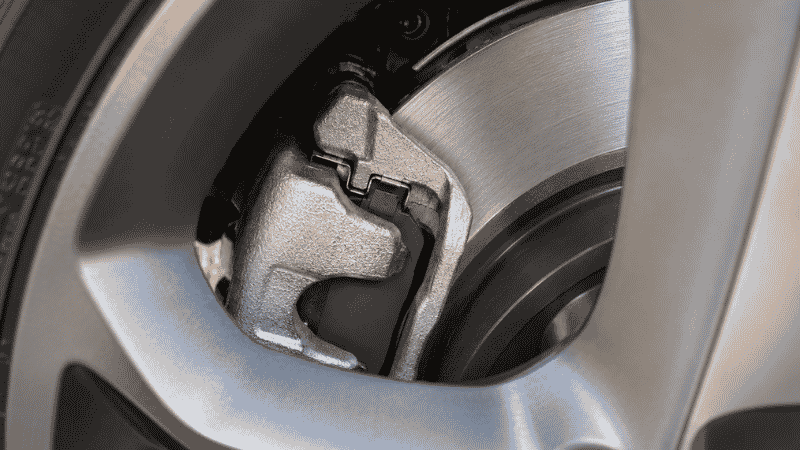
That Sound Your Car Makes When You Stop
You’re pulling into a parking lot, moving slowly, and you press the brake pedal. And there it is — a faint squeal, high-pitched, just for a second. You tell yourself it’s probably nothing. Maybe it rained last night. Maybe it’s just dust on the rotors. You turn up the radio.
Two weeks later, it’s louder. Three weeks later, it’s happening every time you brake. And now you’re not sure if you’re being paranoid or if something is actually wrong.
Here’s the thing: most new car owners have no idea what a normal brake system sounds like versus what a failing one sounds like. Nobody teaches you this. You get your license, you get your car, and you figure it out as you go. Which means a lot of people either panic over normal brake behavior or — worse — ignore warning signs until they’ve turned a small repair into a large one.
This guide fixes that. We’ll tell you exactly how long car brakes last under real driving conditions, what actually affects their lifespan, how to check them yourself in two minutes, and which warning signs mean “schedule an appointment this week” versus “get off the road right now.”
How Long Do Car Brakes Actually Last?
The honest answer is: it depends, and the range is wider than most people expect.
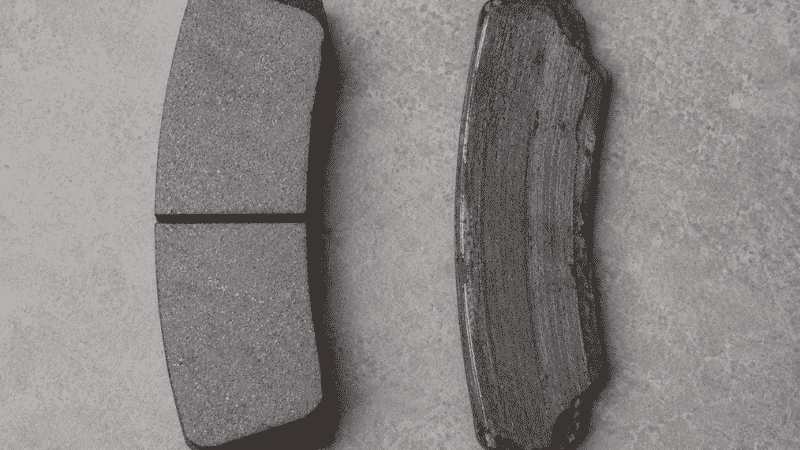
Brake pads: 25,000 to 65,000 miles for most passenger vehicles. The variation isn’t a manufacturer estimate hedge — it’s a genuine reflection of how differently people drive. A commuter doing 30 miles of city driving daily will burn through pads in 18 months. Someone doing 15,000 miles of mostly highway driving per year might not need new pads for four years on the same vehicle.
Rotors: 30,000 to 70,000 miles, often outlasting one full set of brake pads. In ideal conditions, you’d replace rotors with every other set of pads. In practice, how you drive determines whether your rotors wear evenly or develop the hot spots and warping that shorten their life dramatically.
Brake fluid: This one surprises most people — brake fluid absorbs moisture from the air over time, which lowers its boiling point and reduces braking performance. The National Highway Traffic Safety Administration (NHTSA) and most vehicle manufacturers recommend replacing brake fluid every 2 years or 24,000 miles, regardless of how the brakes feel. Most drivers never do this until something goes wrong.
The single most useful thing to understand about brake lifespan is that mileage is a rough guide, not a deadline. A car with 40,000 miles might need new pads urgently, while another at 55,000 miles might have another 15,000 miles of life left. The factors below matter more than the odometer.
What Actually Determines How Long Your Brakes Last
Your Driving Environment
City driving destroys brake pads. Stop-and-go traffic means constant braking, constant friction, constant heat. Highway driving is gentle on brakes by comparison — you’re holding speed, not constantly scrubbing it off.
If you commute in a dense urban area, budget for brake pad replacement closer to the 25,000–35,000 mile end of the range. If you do primarily highway miles, you might comfortably reach 50,000–60,000 miles.
Hilly terrain accelerates wear significantly. Driving regularly in mountainous areas means your brakes are doing constant work that flat-road drivers never experience. Brake fade — the temporary loss of braking effectiveness that happens when brakes overheat — is also more likely in hilly conditions, especially if you ride the brakes on long descents instead of downshifting.
How You Brake
This is the variable most within your control, and it’s the one that makes the biggest difference.
Hard, frequent braking — the kind where you accelerate close to the car ahead and then brake firmly — generates intense heat that wears pads faster and can warp rotors over time. Smooth, anticipatory braking — where you ease off the accelerator well before you need to stop and let the car slow gradually before applying the brakes — is dramatically gentler on the system.
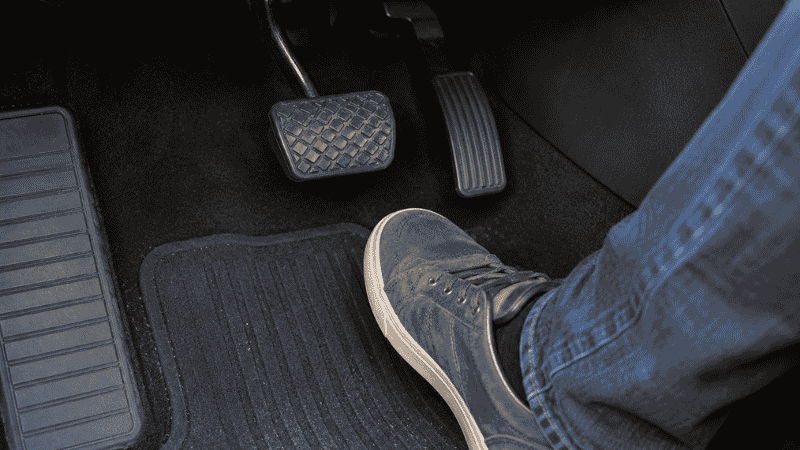
Brake scientists and automotive engineers sometimes call this “left foot braking” awareness — the habit of resting your left foot lightly on the brake pedal while driving. It’s common and most drivers don’t realize they’re doing it. That constant light contact generates heat and wear without actually slowing the car. If this is a habit you have, breaking it is one of the highest-impact things you can do for brake longevity.
Brake Pad Material
Not all brake pads are created equal, and the material affects both performance and lifespan significantly.
Organic (non-asbestos) pads: Soft, quiet, gentle on rotors, but wear faster. Common on economy vehicles and good for light city use.
Semi-metallic pads: The most common type. Better heat management and longer lifespan than organic, slightly more rotor wear, and more noise when cold. Good all-around choice for most drivers.
Ceramic pads: Longest lasting, cleanest (less brake dust), quietest, and most expensive. Excellent for daily drivers who want to minimize maintenance. Not ideal for high-performance or towing applications.
If you’re replacing pads and your mechanic suggests the cheapest option, it’s worth asking about ceramic or semi-metallic alternatives for your driving style. The $30–50 price difference per axle often pays for itself in extended lifespan.
Vehicle Weight and Towing
Heavier vehicles require more braking force to stop, which accelerates pad and rotor wear proportionally. A loaded SUV or a sedan towing a trailer will wear brakes significantly faster than the same vehicle unloaded. If you regularly tow or carry heavy loads, adjust your replacement expectations and inspection frequency accordingly.
How to Check Your Brake Pads Yourself in 2 Minutes
You don’t need to lift the car or remove the wheel. This works on most vehicles through the wheel spokes.
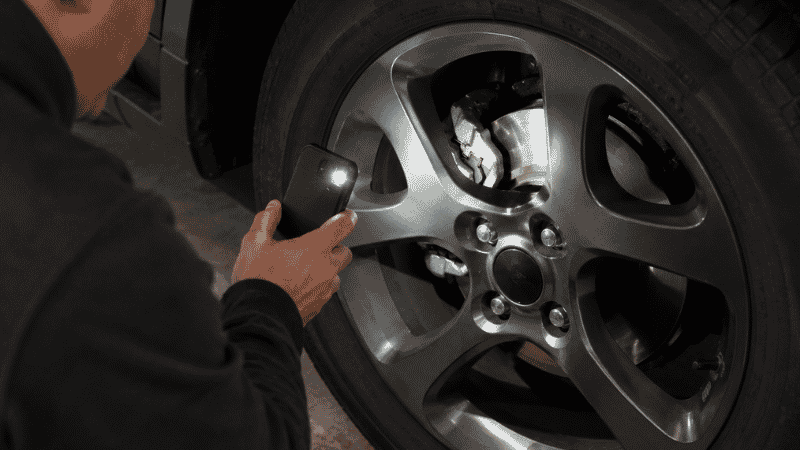
What you need: A flashlight (your phone works).
What you’re looking for: The brake pad is the flat material pressed against the metal rotor disc. Through the wheel spoke, you can see the outer pad clamped against the outer face of the rotor.
What the measurements mean:
- More than ¼ inch (about 6mm) of pad material: you’re fine
- Between ⅛ and ¼ inch: starting to get thin, schedule an inspection
- Less than ⅛ inch (about 3mm): replace soon — this is where wear indicators start screaming
- Metal on metal with no visible pad material: stop driving and call a mechanic
Most new brake pads start at 10–12mm of material. The wear indicator — the metal tab that causes that squealing sound — is typically set to trigger when about 2–3mm of pad remains. So by the time you hear the squeal, you have some time, but not a lot.
Do this check every time you rotate your tires, or roughly every 6,000 miles. It takes the same amount of time as checking your tire tread and gives you genuinely useful information.
Warning Signs — And Which Ones Are Actually Urgent
Not all brake symptoms are equal. Here’s how to triage what you’re experiencing.
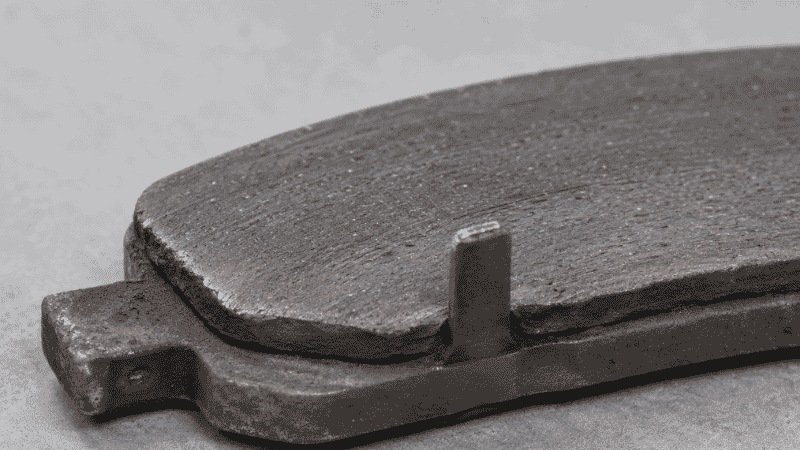
High-Pitched Squealing When Braking — Not an Emergency, But Act Within 2–4 Weeks
This is the wear indicator doing exactly what it was designed to do. A small metal tab embedded in the pad makes contact with the rotor when the pad wears thin, creating that distinctive high-pitched squeal. It doesn’t mean your brakes are failing right now. It means you have somewhere between 1,000 and 3,000 miles of remaining life, depending on how thin the pads already are.
Schedule an appointment. Don’t panic. Don’t ignore it either.
One important note: brake squeal when the car has been sitting overnight is usually surface rust on the rotors burning off in the first few stops. That disappears quickly and is completely normal, especially in humid climates. If the squeal persists through multiple braking events, that’s the wear indicator.
Grinding, Growling, or Metal-on-Metal Sound — Urgent: Repair This Week
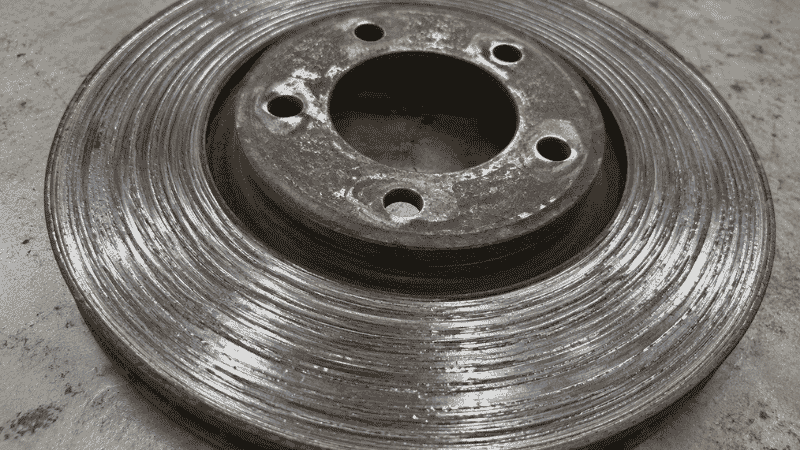
If the sound has progressed from a squeal to a low grinding or growling noise, the pad material has worn through completely. What you’re hearing is the metal backing plate of the pad grinding directly against the rotor. Every braking event is now gouging the rotor surface.
This situation has two immediate consequences: your stopping distance is increasing because metal-on-metal contact generates significantly less friction than pad-to-rotor contact, and you’re damaging the rotor with every stop. A rotor that might have been resurfaced or reused with a pad replacement alone now may need full replacement — often adding $200–400 to the repair cost.
Drive minimally. Get it repaired this week.
Brake Pedal Vibration or Pulsing — Schedule Soon
If you feel a rhythmic pulsation through the brake pedal when stopping — not a one-time shudder, but a consistent pulse — the rotors have likely warped. Rotor warping happens when the metal heats unevenly, often from prolonged hard braking or from cooling too quickly (like driving through a large puddle immediately after heavy braking).
Warped rotors don’t always mean replacement. Rotors within spec can often be resurfaced (also called “turned”) at a machine shop for $20–30 per rotor, versus $60–150 each for replacement. Whether resurfacing is viable depends on rotor thickness — they have a minimum thickness specification, and a rotor that’s already been resurfaced once may be too thin to resurface again.
This is a “schedule an appointment within two weeks” situation, not an emergency — unless the pulsation is severe enough to affect steering control, in which case treat it as urgent.
Soft or Spongy Brake Pedal — Urgent: Don’t Drive Until Inspected
A brake pedal that travels further than usual before engaging, or that feels soft or spongy underfoot, is a potential hydraulic system issue. Causes include air in the brake lines, a brake fluid leak, or a failing master cylinder. Unlike worn pad material, hydraulic problems can result in sudden, complete brake failure without further warning.
This is not a “I’ll get it looked at this weekend” situation. If your brake pedal feels noticeably different than it did before — requiring more travel, feeling less firm — have it inspected before your next drive if at all possible.
Pulling to One Side When Braking — Schedule Soon
If the car consistently pulls to the left or right when you apply the brakes, the brake system is applying uneven force. This could be a stuck caliper (which holds the brake pad against the rotor), uneven pad wear, or contaminated brake fluid on one side. It’s not an immediate safety crisis at low speeds, but it affects braking control at higher speeds and will worsen over time.
The Cost of Waiting Too Long
This is the part nobody explains to new car owners clearly enough, so let’s be direct about the math.
Brake pad replacement on most passenger vehicles costs $100–$200 per axle (front or rear), including parts and labor. It’s a routine, affordable maintenance item.
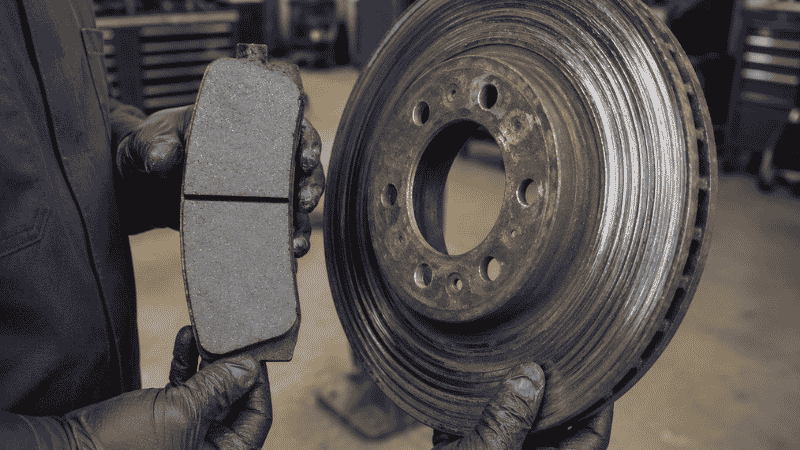
If you wait until the pads wear through to metal, you’ll typically need rotor replacement as well. Add $150–$300 per axle for rotors. If the caliper was stuck and caused uneven wear, add another $100–$200. A $150 job becomes a $400–600 job in a matter of weeks.
If you continue driving with severely worn brakes and experience brake fade, rotor cracking, or caliper seizure, you’re now looking at potential brake system rebuild territory — $800–$1,500 or more.
The squealing wear indicator exists precisely to prevent this cascade. It’s not there to annoy you. It’s there to save you money.
How to Make Your Brakes Last Longer — Practical Habits
These aren’t mechanical tips — they’re driving habit changes that compound over thousands of miles.
Increase your following distance. More space between you and the car ahead means less hard braking, which means less heat and less pad wear. This is the single most impactful change you can make.
Anticipate stops. When you see a red light ahead, lift off the accelerator early and let the car slow naturally before you apply the brakes. Engine braking and rolling friction do some of the work without touching the pads.
Don’t ride the brakes downhill. On long descents, use a lower gear to manage speed rather than constant light brake application. Continuous light braking generates steady heat without the cooling periods that heavy then light braking allows.
Avoid unnecessary weight. A heavier car requires more braking force. If you regularly carry heavy items in your trunk that you don’t need for daily driving, removing them reduces the load on every system — brakes included.
Flush your brake fluid on schedule. Most owners never do this. Degraded brake fluid with absorbed moisture has a lower boiling point, which increases the risk of brake fade and can cause internal corrosion in brake lines and calipers. It’s a $60–100 service that most shops can do in 30 minutes.
When to Stop Driving Immediately
Most brake issues fall into the “get it checked soon” category. But a few situations call for stopping the car and not driving further until repairs are made:
- The brake pedal travels to or near the floor before the brakes engage
- You experience a sudden, significant loss of braking effectiveness during normal driving
- Smoke or a burning smell comes from the wheel area after stopping (overheated brakes or a seized caliper)
- The ABS warning light comes on and stays on, accompanied by abnormal brake behavior
In any of these situations, pull over safely, turn off the car, and arrange a tow. These are not scenarios where driving carefully to the shop is a reasonable option.
FAQ
How long do brake pads last in miles? Most brake pads last between 25,000 and 65,000 miles, but your driving style matters more than any number. City drivers with frequent hard braking can hit 25,000 miles in under two years. Highway drivers with smooth habits can reach 60,000+ miles. Check your pads visually every 6,000 miles rather than relying solely on mileage.
How do I know if my brakes need replacing? The clearest sign is a persistent high-pitched squeal when braking — that’s the wear indicator telling you the pads are getting thin. A grinding or growling sound means the pads are gone and metal is contacting the rotor directly. You can also check visually through the wheel spokes with a flashlight: if you can see less than ¼ inch of pad material pressed against the rotor, it’s time.
Is it safe to drive with squeaky brakes? A brake squeal from the wear indicator is not an immediate safety crisis — you typically have 1,000–3,000 miles of pad life remaining when it starts. But it is a clear signal to schedule service within 2–4 weeks. Ignoring it past that point risks progressing to metal-on-metal grinding, which damages rotors and increases stopping distance.
How much does brake replacement cost? Brake pad replacement runs $100–$200 per axle including labor at most shops. If rotors need replacement as well, add $150–$300 per axle. Doing both axles at once (front and rear) is common when one set is worn and often comes with a slight discount versus two separate visits.
Do front or rear brakes wear faster? Front brakes wear significantly faster on most vehicles — typically 2–3 times faster than rear brakes. This is because the weight of the car shifts forward under braking, putting more load on the front wheels. It’s normal to replace front pads once or twice before rear pads need attention.
Can I replace brake pads myself? With basic tools and mechanical confidence, brake pad replacement is a manageable DIY job. It requires a car jack, jack stands, a lug wrench, and a few basic hand tools. Rotor replacement is slightly more involved. That said, brakes are a safety-critical system — if you’re not confident in what you’re doing, the $50–80 in labor savings is not worth the risk of an improper installation.
What happens if I don’t replace my brakes? Progressively worn brakes increase stopping distance, meaning you need more room to stop at any given speed. Eventually, worn pads cause rotor damage that turns a $150 job into a $500+ one. In extreme cases, completely failed brakes result in loss of braking control. This is not a system to defer maintenance on.
What’s Next
Brakes are the most safety-critical system on your car, but they’re not the only maintenance item new owners overlook. If you found this useful, these guides cover the next most important basics:
- Car essentials every new owner needs — including the emergency kit items that matter when something goes wrong on the road. (→ Car Essentials Every Driver Actually Needs)
- How to keep your car interior clean — because the inside of your car affects your driving environment more than most people realize. (→ How to Clean Your Car Interior the Right Way)
Understanding your car doesn’t require being a mechanic. It just requires knowing which systems matter, what to watch for, and when to ask for help.
References
- National Highway Traffic Safety Administration (NHTSA) — Brake Safety Awareness, Federal Motor Vehicle Safety Standards documentation
- NHTSA — Traffic Safety Facts: Motor Vehicle Crash Data (2023), brake-related incident statistics
- Society of Automotive Engineers (SAE) International — Brake Friction Material Standards and Testing Procedures, SAE J2430
- U.S. Department of Transportation — Tire and Brake Maintenance Consumer Guidelines, Federal Highway Administration
Have a brake question we didn’t cover? Contact us — we read every message.