
Ever notice how a car feels “light” or twitchy when you hit 70 mph on the highway? That isn’t just your imagination—it’s physics. In 2026, the vehicle anatomy of your car is no longer just about looking sharp; it’s a high-stakes game of controlling airflow. Whether you’re driving a gas-guzzling muscle car or a high-tech EV, your exterior design is the single biggest factor in how your car handles wind, heat, and gravity. At AutoixPro, we believe that once you understand the “why” behind the curves, you’ll never look at a spoiler or a vent the same way again.
The Science of Air: Drag vs. Downforce
Air might feel thin, but at high speeds, it acts like a thick soup that your car has to punch through. This is where aerodynamics comes into play.
Cutting the Wind: The Drag Coefficient
The lower your car’s Drag Coefficient ($C_d$), the easier it slices through the air. For 2026 models, engineers are obsessed with “Active Aero”—parts that move while you drive. Think of front flaps that close at high speeds to reduce turbulence. If your car exterior parts are designed for low drag, you get better fuel economy and a much quieter cabin.
Staying Grounded: The Magic of Downforce
While drag slows you down, downforce pushes you into the road. This is what gives you that “glued to the track” feeling in corners. Parts like splitters (at the front) and rear wings create a high-pressure zone above the car and low pressure underneath, essentially using the air to hold the car down.
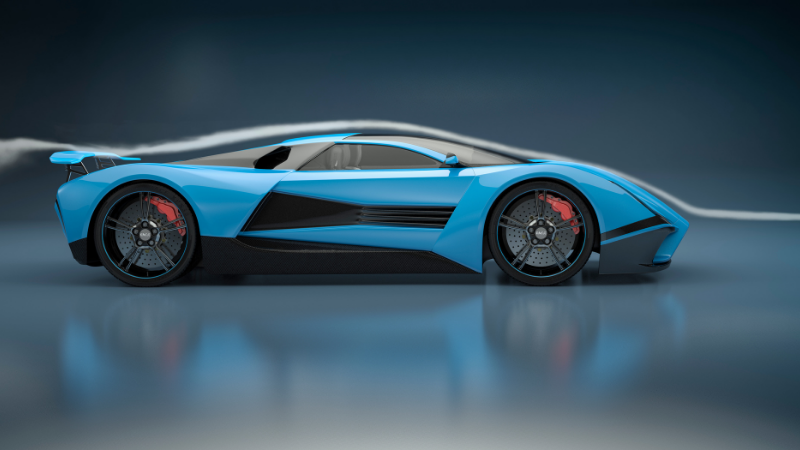
[Data-Driven] Anatomy of a Performance Kit
Does an aftermarket wing actually work? We’ve looked at the numbers. Adding a functional aero kit can change the physical load on your tires by hundreds of pounds at speed.
Thermal Management: Using Air to Cool
Your exterior design is also your car’s primary cooling system. High-performance driving generates massive heat in the brakes and engine/battery.
Functional Vents vs. Cosmetic Plastic
A “fake” vent is just a piece of plastic; a functional vent is a performance upgrade. Modern vehicle anatomy includes brake cooling ducts that funnel cold air directly onto the rotors. This prevents “brake fade,” ensuring your car stops just as fast on the 10th lap as it did on the first.
Underbody Airflow
The air under your car is just as important as the air over it. A flat underbody shield prevents air from getting “trapped” in the chassis, while a rear diffuser helps kick that air out quickly, creating a vacuum effect that sucks the car toward the pavement.
Material Anatomy: The Quest for Lightness
The most beautiful design in the world won’t perform if it’s too heavy. This is why Carbon Fiber has become the gold standard for performance-driven exterior body parts.
Replacing a standard factory hood with a carbon fiber version doesn’t just look aggressive—it improves your power-to-weight ratio. By shedding weight from the front of the car, you move the center of gravity backward and lower, which drastically improves how the car “turns in” to a corner.

For those interested in the rigorous engineering standards that define these shapes, the sets the global benchmarks for how exterior components must perform under extreme stress.
FAQ: Performance Myths Debunked
Q: Does a bigger wing always mean better performance? Not necessarily. A wing that is too big for the car’s speed creates “induced drag,” which will actually slow you down without providing useful grip. Balance is key.
Q: Can I improve my EV’s range with exterior parts? Absolutely. Adding “Aero Wheels” or removing bulky roof racks can increase your range by 3-5% by smoothing out the vehicle anatomy.
Q: Are “widebody kits” just for looks? Originally, widebody designs were created to fit wider tires for more mechanical grip. If you aren’t upgrading your tires/track width, a widebody kit is mostly a styling choice.
Conclusion: Mastering the Air
In 2026, your car’s exterior design is its most powerful tool. From the way the front splitter bites into the wind to how the rear diffuser releases it, every part of the vehicle anatomy works together to define your driving experience. If you want a car that feels stable, fast, and efficient, you have to respect the air.
Ready to transform your car’s performance? Browse the [AutoixPro Performance Aero Collection] and find the engineered parts your car was built to wear.