
If you’ve bought a car in the last five years, you’re likely driving a turbo engine. To dodge gas-guzzler taxes and meet EPA numbers, manufacturers have ditched the “lazy” V8 for tiny 1.5L or 2.0L four-cylinders that use forced induction to feel punchy.
But there’s a massive engineering trade-off that the salesperson didn’t mention: that turbocharger is spinning at a staggering 250,000 RPM—roughly 40 times faster than your engine—while glowing cherry red from 1,800°F exhaust gases. In a modern crossover or sedan, the turbo is the most abused component under the hood. A single “budget” oil change or one bad driving habit won’t just cause a leak; it’ll trigger a $4,000 mechanical meltdown that usually happens 5,000 miles after your warranty expires.
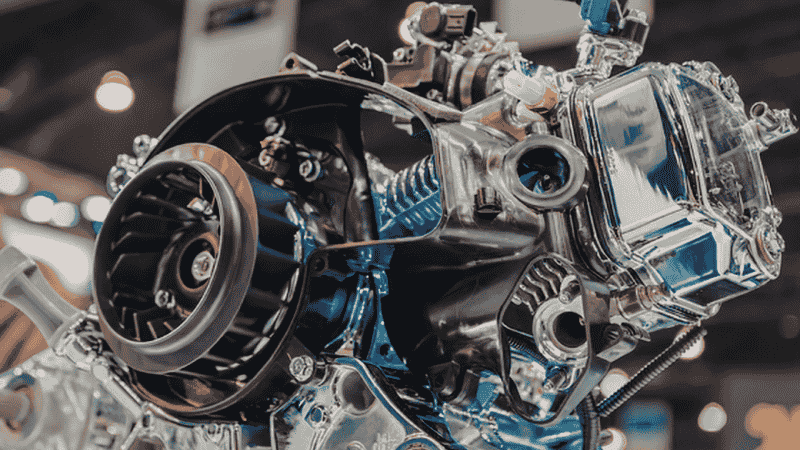
The “Big Three” Turbo Killers: Heat, Starvation, and Grit
A turbo is basically two fans on a toothpick. One side is driven by scorching exhaust (the turbine), and the other sucks in fresh air (the compressor). Because they share a shaft, the heat from the exhaust side is constantly trying to “cook” the oil that keeps the bearings from melting.
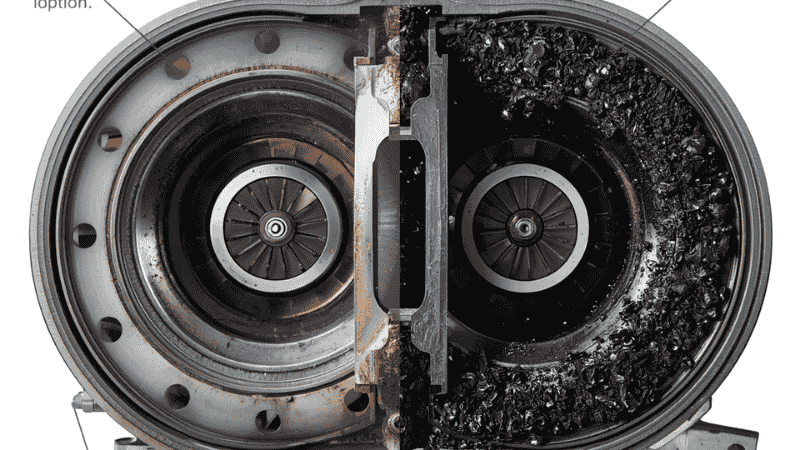
- Heat Soak & Coking: When you kill a hot engine, the oil stops moving but the heat stays put. This “bakes” the stationary oil into hard carbon chunks called coke. Think of it as pouring maple syrup into a hot frying pan—it turns into a crust that shreds bearings the next time you start the car.
- The “Dry” Start: Turbos need a pressurized oil film instantly. If you use the wrong viscosity, you’re looking at 2.5 to 4 seconds of metal-on-metal contact every time you start the car in the morning.
- Compressor Erosion: At 200,000+ RPM, a microscopic speck of dust through a $10 “no-name” air filter hits the compressor wheel like a sledgehammer. It’ll pit the blades, throw the shaft out of balance, and eventually lead to a snapped shaft.
[Internal Link: How to Check Your Oil Like a Pro → /how-to-check-oil-dipstick-guide]
Decision Guide: The Maintenance Essentials
Don’t let the marketing fluff fool you; turbo engines have specific chemical requirements. Here is what you should actually be buying:
- Best Overall: Pennzoil Platinum Full Synthetic. It is specifically engineered to meet the API SP specification, which is the only real defense against the piston-shattering phenomenon known as LSPI.
- Best for Performance: Royal Purple High Performance. If you’ve tuned your car or frequently drive in 100°F+ heat, you need the extra film strength this oil provides to prevent “shearing.”
- Best for Longevity: Mishimoto Baffled Oil Catch Can. If you plan to keep your direct-injection turbo car past 60,000 miles, this is the only way to prevent massive carbon buildup on your intake valves.
Real-World Case Studies: How to Snap a Piston
Case 1: The “Low-RPM Stomp” (LSPI Failure)
I recently saw a 1.6L turbo engine with a shattered piston. The driver was in 6th gear at 40 mph and floored the gas to pass someone without downshifting.
- What Happened: This created massive “boost” at low RPM. The engine suffered an LSPI hit—an uncontrolled explosion so violent it snapped the ring lands right off the piston.
- The Pro Tip: Never “lug” a turbo engine. If you need to move, downshift first. Get the RPMs above 2,500 before you bury the pedal.
Case 2: The “Gas Station Shutoff”
A driver towed a small trailer for three hours, pulled into a rest stop, and shut the engine off immediately to go inside.
- What Happened: The turbo was likely glowing orange. With the oil flow dead, the heat “soaked” into the bearing housing, carbonizing the oil and clogging the feed line. Six months later, the turbo seized from oil starvation.
- The Pro Tip: After a highway run, give it 60 seconds of idle time. This lets the oil and coolant pull that localized heat away from the turbo shaft.

What Most Car Owners Get Wrong
As a senior strategist in this space, I see thousands of “reliability” complaints that are actually maintenance errors. Here’s the truth:
- The “Lifetime” Air Filter Myth: In a turbo car, the air filter isn’t just for the engine; it’s the only shield for a compressor wheel spinning at Mach speeds. A “cheap” filter that lets in even fine silt will “sandblast” your turbo blades until they lose efficiency.
- Lugging the Engine: Many drivers think they are saving gas by staying in high gear at low speeds. In a turbo engine, this is the fastest way to cause a catastrophic LSPI event. If the car feels sluggish, shift down.
- Ignoring the “Dentist Drill” Sound: A failing turbo doesn’t always throw a code immediately. If your engine starts sounding like a high-pitched siren, the bearings are shot. Replacing the turbo now is a $1,500 job; waiting for it to explode and send metal into the intake is an $8,000 engine replacement.
The Mistakes Section: Marketing Myths vs. Mechanics
- The “10,000 Mile” Oil Change: This is a marketing dream to keep “cost of ownership” low. For a high-heat turbo, it’s a death sentence. Change your oil every 5,000 miles max. Oil is cheap; turbos are not.
- 87 Octane in a “Premium Preferred” Car: Most turbos can run on regular, but the ECU will pull timing to prevent knocking. You’ll lose about 2–4 MPG and a chunk of torque. Usually, the fuel savings of 87 octane are cancelled out by the loss in efficiency.
FAQ: Essential Turbo Troubleshooting
Q: Why does my turbo car burn a little oil? A: It’s the nature of the beast. Turbos use oil as a floating bearing. Under high boost, it’s normal for a tiny amount to get past the seals. If you’re losing a quart every 1,500 miles, though, you’ve got a seal issue.
Q: Is “Turbo Lag” a sign of a bad engine? A: No, that’s just physics. It takes a second for exhaust pressure to build. If the lag suddenly gets worse, check your “intercooler boots” (the rubber hoses)—they often crack or slip off, causing a boost leak.
Q: My turbo is glowing red after a drive. Is that normal? A: Yes, actually. After a hard climb, it’s common for the exhaust housing to reach 1,200°F+. Just don’t touch it, and for the love of your wallet, don’t shut the engine off immediately while it’s that hot.
Q: Can I use any synthetic oil? A: No. Look for the “API SP” or “SN Plus” logo on the back of the bottle. If it doesn’t have that, it isn’t rated to protect your pistons from LSPI.
Final Checklist for Turbo Longevity
- Oil: Change every 5,000 miles with API SP rated synthetic.
- Fuel: Use 91+ Octane if recommended (it saves your pistons).
- Driving: Downshift before flooring it; never “lug” the engine.
- Shut-down: Allow 60 seconds of idle after a hard or highway drive.
- Filtration: Use high-quality OEM or name-brand air filters only.