
Last updated: May 2026 | Reading time: 10 min | Category: Safety & Emergency
Key Takeaways
- Most vehicles need a tire rotation every 5,000–7,500 miles — which for the average driver means roughly every 6 months
- Front-wheel drive cars wear front tires 2–3x faster than rear tires — skipping rotations on FWD vehicles is especially costly
- You can check your tire tread depth right now with a quarter or a penny — no tools required, takes 30 seconds
- Uneven tire wear that’s already visible means rotation alone won’t fix it — you may also need a wheel alignment
- A tire rotation costs $20–$50 at most shops and takes 15–30 minutes — one of the cheapest maintenance items with the highest return
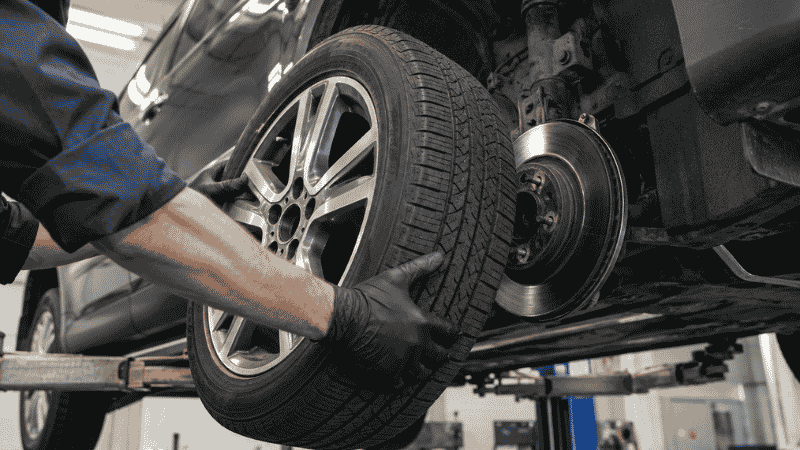
The Thing Nobody Tells You When You Drive Off the Lot
You just picked up your new car. The salesperson walked you through the features, showed you how to connect your phone, maybe pointed out where the spare tire lives. And then you drove away.
What they didn’t tell you: those four tires are wearing down at completely different rates, starting the moment you left the dealership. The front tires on most cars do far more work than the rear ones — they steer, they handle most of the braking force, and on front-wheel drive vehicles, they also power the car forward. Within 5,000 miles, the wear difference between front and rear tires on a FWD car can already be measurable.
Tire rotation is the simple, inexpensive fix that keeps this from becoming a problem. But “rotate your tires” is one of those pieces of advice that gets repeated without much explanation, which means most new drivers don’t actually know when to do it, why it matters as much as it does, or what happens when they skip it.
This guide answers all of that — including how to tell if your tires need attention right now, and what a rotation actually costs you.
How Often Should You Rotate Tires, Really?
The standard recommendation from most tire manufacturers and automotive organizations is every 5,000 to 7,500 miles. The Rubber Manufacturers Association and most major tire brands including Michelin, Bridgestone, and Goodyear consistently land in this range for passenger vehicles under normal driving conditions.
For the average American driver covering around 15,000 miles per year, that works out to a rotation every 4–6 months — roughly twice a year.
But “normal driving conditions” is doing a lot of work in that sentence. Here’s how different situations affect the actual interval you should use:
Every 5,000 miles if you:
- Drive a front-wheel drive vehicle (the most common type)
- Regularly carry heavy loads or passengers
- Do a lot of city driving with frequent stops and starts
- Drive in hilly terrain regularly
Every 6,000–7,500 miles if you:
- Drive primarily on highways at consistent speeds
- Have a rear-wheel drive or all-wheel drive vehicle
- Drive relatively few miles per year in mild conditions
Check your owner’s manual first. Some manufacturers — particularly for AWD and performance vehicles — specify shorter intervals or particular rotation patterns. When the manual says something different from the general recommendation, follow the manual.
The simplest habit: rotate your tires every oil change. With modern synthetic oils pushing oil change intervals to 5,000–7,500 miles, the two services align almost perfectly. Doing them together means you never have to track tire rotation separately.
Why Does It Matter Which Wheels the Tires Are On?
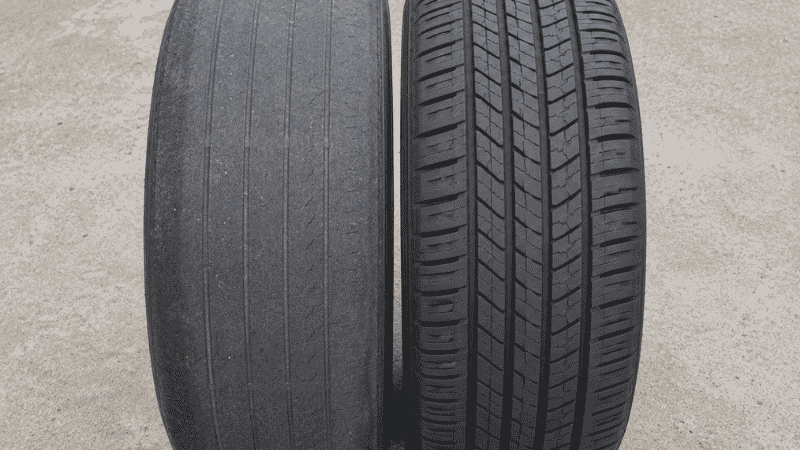
This is the part that most guides skip, and it’s actually the most important thing to understand about tire rotation.
Every tire position on your car experiences different forces. The difference is most dramatic on front-wheel drive vehicles, which account for the majority of passenger cars sold in the US:
- Front tires on FWD cars handle steering, braking, AND acceleration — three separate wear forces simultaneously
- Rear tires on FWD cars do almost nothing except roll — they primarily just support the car’s weight
The result is that front tires on FWD cars wear 2 to 3 times faster than rear tires under normal driving conditions. Left unaddressed, you’ll end up with front tires that need replacement while the rear tires still have years of life left — and you’ll be buying two tires while two others sit in your garage effectively unused.
Rear-wheel drive vehicles (common on trucks, sports cars, and some larger sedans) have the opposite problem: rear tires handle acceleration forces in addition to braking, so they wear faster than the fronts, just not as dramatically as FWD front tires.
All-wheel drive and four-wheel drive vehicles distribute power to all four wheels, which sounds like it would solve the problem. It doesn’t. Because of weight distribution and steering geometry, AWD tires still wear unevenly — just in more complex patterns that vary by vehicle. AWD systems are also sensitive to tire circumference differences between wheels; significant wear discrepancies can strain the drivetrain. Many AWD manufacturers actually recommend more frequent rotations, not fewer.
Tire rotation solves all of this by moving tires to positions where they experience different forces — evening out the wear across all four and extending the life of the complete set.
How to Check Your Tire Tread Depth Right Now

You don’t need a gauge to do a basic tread check. Two coins in your pocket will tell you most of what you need to know.
The Quarter Test: Insert a quarter into the tread groove with Washington’s head pointing down into the tire. If you can see the top of Washington’s head, your tread is below 4/32″ — you’re in the range where you should be shopping for replacements, especially for wet weather driving.
The Penny Test: Insert a penny with Lincoln’s head pointing into the tread. If you can see the top of Lincoln’s head, your tread is below 2/32″ — which is the legal minimum in most states and the point where wet-road stopping distance increases significantly. Replace immediately.
What you’re actually looking for: Tires in good condition should show at least 4/32″ of tread depth — about 3mm. New tires typically start at 10/32″ (roughly 8mm). The wear indicator bars molded into the grooves of every modern tire become flush with the tread surface at 2/32″ — when you can see those bars even with the tread, the tire is legally worn out.
Check all four tires, not just one. And check in multiple spots around each tire — because uneven wear (more worn in the center, or more worn on one edge) tells you something different from even wear across the tread. We’ll get to what different wear patterns mean below.
Do this check any time you fill up your tires with air, which you should be doing at least monthly. Takes 30 seconds per tire.
Tire Wear Patterns: What Your Tires Are Trying to Tell You
The way your tires are wearing isn’t just about rotation intervals — it’s diagnostic information. Different wear patterns point to different problems.
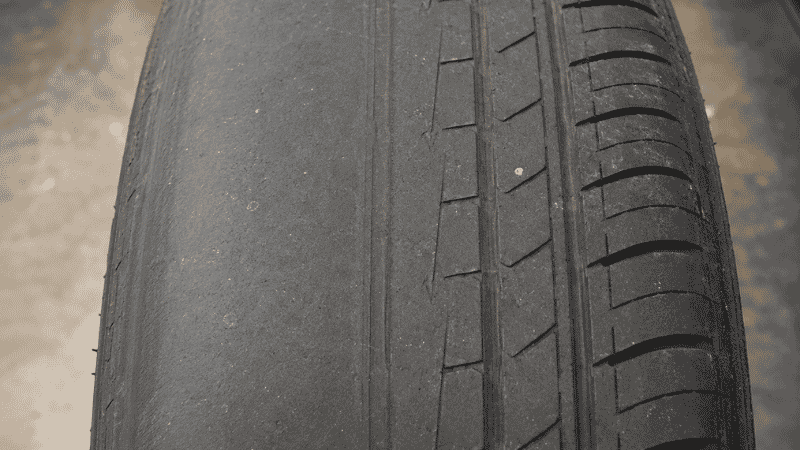
Wear Only on the Outer or Inner Edge
This is camber wear, caused by wheels that are tilted out of alignment. The tire is contacting the road at an angle instead of flat, which concentrates wear on one side. Rotation alone won’t fix this. You need a wheel alignment — typically $75–$100 — to correct the angle, or the new tires will wear exactly the same way.
Wear Only in the Center of the Tread
Overinflation. Too much air pressure causes the tire to bow in the middle, putting more contact on the center strip and lifting the edges. Check your recommended tire pressure (on the sticker inside your driver’s door, not the tire sidewall) and deflate to the correct level.
Wear Only on Both Outer Edges
Underinflation. Low pressure causes the tire to sag and contact the road on both outer edges while the center stays slightly elevated. This is the most common tire wear problem and also a safety issue — underinflated tires are more prone to blowouts, especially in hot weather or at highway speeds.
Cupping or Scalloping (Wavy, Uneven Surface)
Suspension issue — usually worn shock absorbers or struts. The tire is bouncing as it rolls instead of maintaining consistent road contact. This wear pattern causes vibration and road noise, and suspension repair is needed, not just rotation.
Feathering (Smooth on One Side, Sharp on the Other)
Toe misalignment — the wheels are angled slightly inward or outward relative to each other. Another alignment issue that rotation alone can’t solve.
The practical takeaway: If your tires show any of these wear patterns, bring them to a shop for both rotation and inspection. The mechanic can usually identify the underlying cause quickly. Continuing to rotate tires without fixing an alignment or suspension issue just moves the problem from tire to tire.
What Actually Happens When You Skip Rotations
Skipping one rotation isn’t catastrophic. Skipping several creates a compounding problem.
Here’s the realistic progression for a FWD driver who ignores tire rotation:
- At 15,000–20,000 miles without rotation: Front tires are visibly more worn than rear tires. Traction difference between front and rear starts affecting handling in wet conditions.
- At 25,000–30,000 miles without rotation: Front tires may need replacement while rear tires still have 50%+ life remaining. You’re now buying two tires and essentially wasting the remaining value in the rear tires.
- Alternatively: Some drivers try to “fix” the mileage gap by rotating very late — moving tires with very different wear levels. This can actually cause handling problems, because tires with dramatically different tread depths behave differently under braking and cornering. On AWD vehicles, extreme tread depth differences can also damage the center differential.
The National Highway Traffic Safety Administration (NHTSA) reports that tire-related factors contribute to approximately 11,000 crashes annually in the US. While these aren’t all attributable to skipped rotations specifically, uneven tire wear is a contributing factor in reduced traction performance that affects accident risk.
Regular rotation prevents all of this for roughly $20–$50 per service.
Rotation, Balancing, and Alignment — What’s the Difference?
These three services often get mentioned together and confused with each other. They’re related but distinct:
Tire Rotation: Moving tires to different wheel positions to even out wear. Every 5,000–7,500 miles. Typically $20–$50.
Wheel Balancing: Ensuring the weight of the tire and wheel assembly is evenly distributed around the axle. Small weights are attached to the wheel rim to correct imbalances. Unbalanced wheels cause vibration, especially at highway speeds. Typically done when tires are mounted and every 12,000–15,000 miles after. Typically $10–$15 per wheel.
Wheel Alignment: Adjusting the angles of the wheels so they’re positioned correctly relative to each other and perpendicular to the road. Misalignment causes uneven wear and pulling to one side. Typically needed every 2–3 years or after hitting a significant pothole or curb. Typically $75–$100.
Many shops offer a combined rotation and balance service for $50–$80, which is good value and makes sense to do together since the wheels need to come off for both.
Rotation Patterns: Why the Order Matters
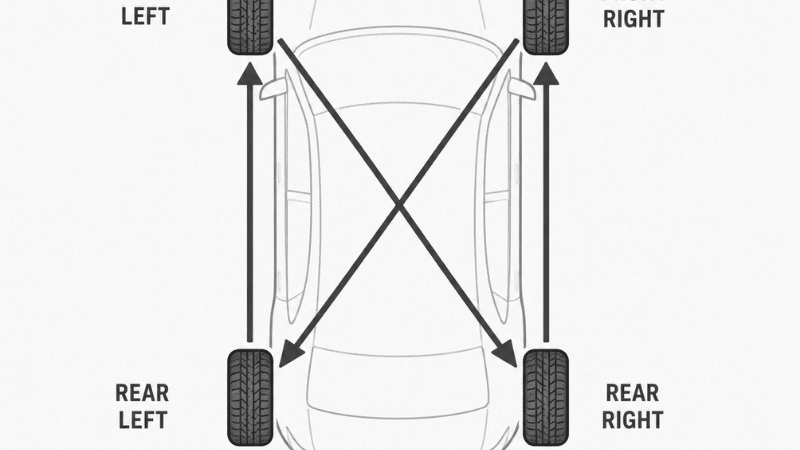
When a shop rotates your tires, they’re not just swapping front and back randomly. There are established patterns based on your vehicle’s drive type, and using the wrong pattern for your vehicle can cause problems.
For most FWD vehicles — Forward Cross Pattern: Rear tires move straight to the front. Front tires cross to opposite rear positions (front-left to rear-right, front-right to rear-left). This is the most common pattern.
For RWD and AWD vehicles — Rearward Cross Pattern: Front tires move straight to the rear. Rear tires cross to opposite front positions.
For vehicles with directional tires (tires that can only roll in one direction): Front-to-rear same side only — no crossing. These tires have an arrow or “rotation direction” marking on the sidewall. Check before any rotation.
For vehicles with staggered fitment (different size front and rear tires): Many sports cars run wider tires on the rear. These typically cannot be rotated front-to-back. Side-to-side rotation may be possible if tires are non-directional.
You don’t need to know which pattern your mechanic uses, but you should know if your tires are directional (check the sidewall), because a shop that accidentally crosses a directional tire will cause immediate handling problems.
DIY vs Professional Rotation — When It Makes Sense to Do Each
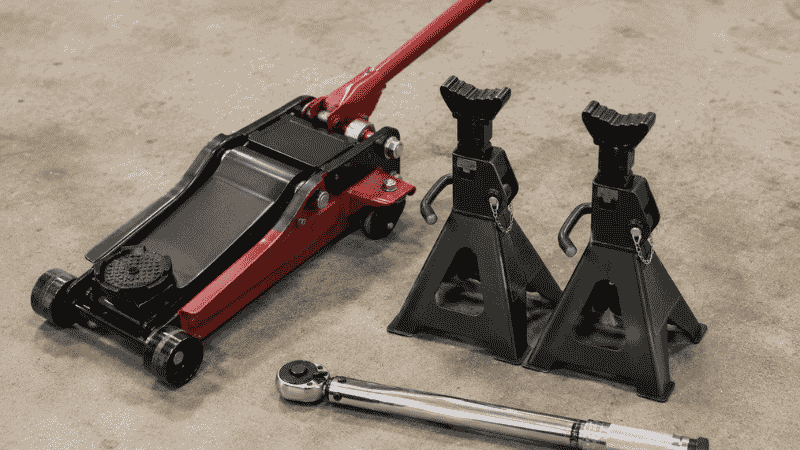
Professional rotation ($20–$50) makes sense when:
- You don’t have a floor jack, jack stands, and torque wrench
- You want rotation combined with balancing or inspection
- You’re doing it during an oil change anyway (most efficient use of time)
- You’re not comfortable working under a vehicle
DIY rotation makes sense when:
- You already own the necessary equipment (floor jack, 2 jack stands minimum, torque wrench)
- You’re comfortable safely lifting and securing a vehicle
- You want to save the labor cost and have the time
The non-negotiable for DIY: A torque wrench to properly tighten lug nuts. Hand-tightening is insufficient and can cause wheel wobble or in rare cases a wheel coming loose. Your vehicle’s lug nut torque specification is in the owner’s manual — typically 80–100 ft-lbs for most passenger cars.
If you’re lifting the car: always use jack stands. Never rely on a floor jack alone to support the vehicle while you work under it. Place stands under the vehicle’s designated jack points (listed in your owner’s manual), not under the frame randomly.
When Rotation Alone Isn’t Enough — When to See a Professional
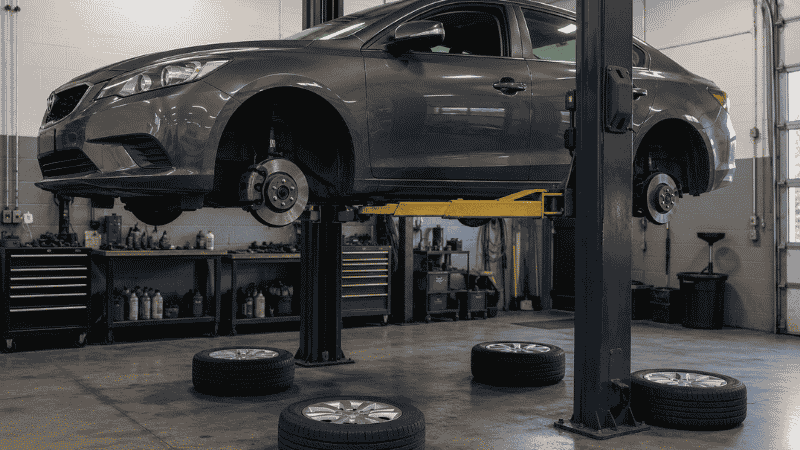
Schedule a shop visit — not just a rotation — when:
- You notice any of the uneven wear patterns described above (edge wear, center wear, cupping)
- The car pulls noticeably to one side when driving straight
- You feel steering wheel vibration at highway speeds that doesn’t resolve after rotation and balancing
- Tires are below 4/32″ tread depth in any position
- Your tires are more than 6 years old, regardless of tread depth (rubber degrades internally with age; the U.S. Tire Manufacturers Association recommends replacement after 6–10 years)
Age matters more than most drivers realize. A tire with plenty of visible tread but 8 years of age may have compromised internal structure that won’t show in a visual inspection. Check the DOT date code on the tire sidewall — it’s a 4-digit number, last two digits are the year of manufacture. A tire showing “2318” was made in the 23rd week of 2018.
The Honest 10-Minute Check You Can Do Right Now
If you’re not sure when your last rotation was or whether your tires need attention, here’s what to do in your driveway before your next drive:
- Check each tire’s tread with a quarter — visible top of Washington’s head means shop visit soon
- Look at the inside and outside edges of each tire — if one edge looks more worn than the other, that’s alignment
- Compare front tires to rear tires — dramatically more worn fronts on a FWD car means an overdue rotation
- Check tire pressure (most gas stations have gauges, or buy a digital gauge for $10) — look for the sticker inside your driver’s door for the correct PSI
That’s it. Four checks, 10 minutes, no tools needed except optionally a pressure gauge. It tells you whether you’re fine, due for routine rotation, or have a problem that needs professional attention.
FAQ
How often should you rotate tires? Every 5,000 to 7,500 miles for most vehicles under normal driving conditions. For front-wheel drive vehicles especially, staying closer to the 5,000-mile end of that range extends tire life most effectively. The simplest approach: rotate every time you change your oil.
What happens if you don’t rotate your tires? Tires wear unevenly, with the more heavily loaded tires (front tires on FWD vehicles) wearing out significantly faster than the others. You’ll end up replacing tires prematurely and unevenly — often buying two tires while two others still have significant life left. On AWD vehicles, large tread depth differences between tires can also stress the drivetrain.
How much does a tire rotation cost? Typically $20–$50 at most shops. Many dealerships and tire shops include free rotations with tire purchases. Combined rotation and wheel balancing usually runs $50–$80 and is worth doing together since the wheels need to be removed for both.
Can you rotate tires yourself? Yes, with proper equipment: a floor jack, at least two jack stands, and a torque wrench. The torque wrench is the non-negotiable item — lug nuts must be tightened to the manufacturer’s specified torque, not just hand-tightened. If you don’t have jack stands, don’t attempt it.
Do all-wheel drive vehicles need tire rotation? Yes, and some AWD manufacturers recommend more frequent rotation than FWD vehicles — as often as every 3,000–5,000 miles. AWD systems distribute power to all four wheels and are sensitive to tread depth differences between tires. Check your owner’s manual for the specific recommendation.
How do I know if my tires need rotation or replacement? Use the quarter test: insert a quarter into the tread with Washington’s head pointing into the tread. If you can see the top of his head, you’re at 4/32″ or less — shop for replacements soon. At 2/32″ (visible Lincoln’s head in the penny test), replace immediately. Uneven wear across tires indicates overdue rotation; uneven wear within a single tire (one edge more worn) indicates alignment issues.
Can I rotate directional tires? Directional tires (look for an arrow or rotation direction marking on the sidewall) can only be rotated front-to-rear on the same side — they cannot cross to the opposite side of the vehicle without dismounting and remounting the tire on the wheel. If you’re not sure whether your tires are directional, check the sidewall or ask a tire shop before any rotation.
What’s Next
Tire rotation is one piece of a simple maintenance routine that keeps your car safe and your costs down. The next most important checks to build into the same schedule:
- How long do car brakes last — brakes and tires work together as your primary safety systems, and new drivers often don’t know the warning signs for either. (→ How Long Do Car Brakes Last — And the Warning Signs Most New Drivers Miss)
- Car essentials every driver should have — including the tire pressure gauge and portable inflator that make between-rotation maintenance a two-minute task. (→ Car Essentials Every Driver Actually Needs)
The drivers who spend the least on car repairs over time aren’t the ones who know the most about cars. They’re the ones who catch small issues before they become big ones.
References
- U.S. Tire Manufacturers Association (USTMA) — Tire Care & Safety: Rotation, Inflation, and Replacement Guidelines (2024)
- National Highway Traffic Safety Administration (NHTSA) — Tire Safety: Everything Rides on It, Federal consumer safety publication
- Rubber Manufacturers Association — Passenger and Light Truck Tire Care and Safety Guide
- NHTSA — Traffic Safety Facts: Tire-Related Crashes (2022 Annual Data)
Have a tire question we didn’t cover? Contact us — we read every message.