
Key Takeaways
- On a 90°F day, a car’s interior can reach 150–170°F within an hour — hot enough to warp your dashboard, crack leather seats, and degrade electronics
- A good car sun shade can reduce interior temperatures by 40–50°F — not eliminating heat, but making a significant real-world difference when you return to the car
- Fit matters more than price — a $10 shade that fits your windshield perfectly outperforms a $40 universal shade with gaps on the sides
- The reflective silver side faces out — this seems obvious but about half of people install it backward, significantly reducing effectiveness
- Sun shades also protect your dashboard and leather from UV-related cracking and fading — arguably the more valuable long-term benefit than the temperature reduction
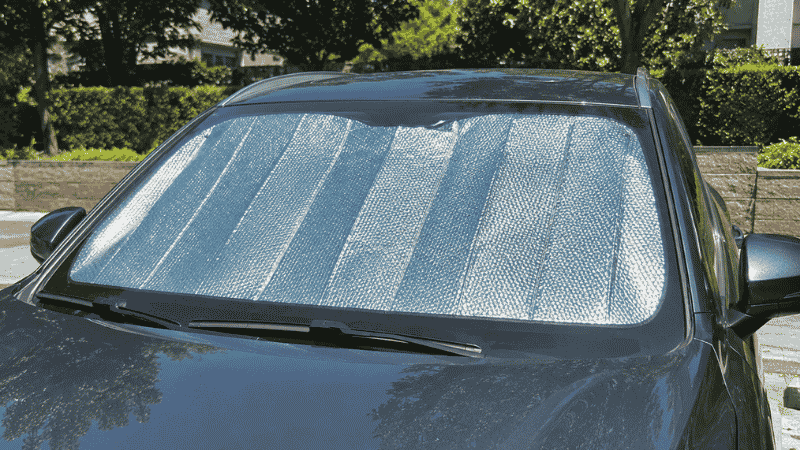
That Moment You Open the Car Door in July
You know the one. You’ve been inside for an hour, maybe two. You reach for the door handle — which is actually hot to the touch — and the wave of heat hits you before you’re even fully inside. The steering wheel is untouchable. The seatbelt buckle is a burn risk. The seat feels like a sauna bench. And your phone, sitting in the cupholder, is displaying that little temperature warning icon it shows right before it shuts itself down.
This happens to every car owner, in every warm climate, every summer. And most people do nothing about it except silently suffer through the 10 minutes of air conditioning it takes to make the car habitable again.
A car sun shade won’t eliminate this problem. But it does make it significantly less bad — and the people who actually use one consistently are always surprised by how much of a difference a piece of reflective polyester can make. The science is pretty straightforward, even if the product market is genuinely confusing.
This guide explains what’s actually happening inside your parked car, what a sun shade does (and doesn’t do), and how to pick one that fits and works — without spending more than you need to.
What’s Actually Happening Inside a Parked Car
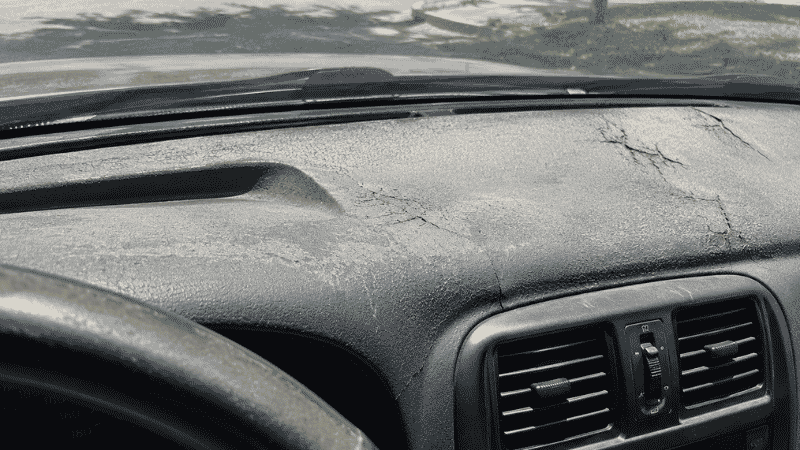
The temperatures inside a parked car are genuinely alarming once you know the numbers. Research published in the journal Pediatrics found that on a 72°F day — not even hot by summer standards — the interior of a parked car reaches 117°F within an hour. On a 90°F day, interior temperatures routinely exceed 150°F.
This happens because of two compounding effects.
The greenhouse effect: Glass transmits solar radiation in but blocks the longer-wavelength infrared radiation that the heated interior surfaces try to emit. Heat gets in, can’t get out. Every surface inside the car — dashboard, seats, door panels — absorbs that radiation and radiates it back as heat, warming the air inside far beyond the outside temperature.
Thermal mass: All those interior surfaces (especially dark ones) absorb enormous amounts of heat. A black leather dashboard can reach 180°F. Once a car is thoroughly heated, it takes a long time for air conditioning to cool down the thermal mass of those surfaces — which is why you’re still uncomfortable 10 minutes after turning the AC on full blast.
A sun shade addresses the first problem by reflecting a significant portion of solar radiation before it enters the cabin. It doesn’t eliminate the greenhouse effect, but it reduces the initial radiation load that the car’s interior has to absorb. The result: lower peak temperatures, cooler surfaces when you return, and a car that’s actually habitable again faster once you turn on the AC.
What a Sun Shade Actually Reduces (And What It Can’t Do)
Being honest about this matters, because sun shade marketing tends toward the optimistic.
What it genuinely does:
- Reduces interior peak temperature by 25–50°F depending on shade quality, fit, and ambient conditions
- Keeps dashboard surface temperature significantly lower — which prevents cracking, fading, and warping of the dashboard material
- Protects leather seats from UV degradation — leather cracking from sun exposure is a slow, cumulative process that a sun shade meaningfully slows
- Reduces the time it takes for AC to cool the car to comfortable temperatures
- Protects electronics — phones, tablets, and built-in infotainment systems have operating temperature limits, and a car interior in summer can exceed them
What it can’t do:
- Keep the car cool on a hot day. After several hours in direct sun, even the best sun shade results in an interior that’s still very warm — just significantly less extreme than without it
- Eliminate the need for air conditioning
- Protect side windows or the rear window (most people use windshield shades only — side window shades exist and add protection)
The dashboard and leather protection benefit is often more valuable than people realize. Dashboard replacement on modern vehicles costs $500–2,000+ depending on the car. A sun shade that prevents that cracking over five years of summer parking is worth its price many times over — even if you never noticed the temperature difference.
Types of Car Sun Shades
Accordion/Folding Windshield Shades
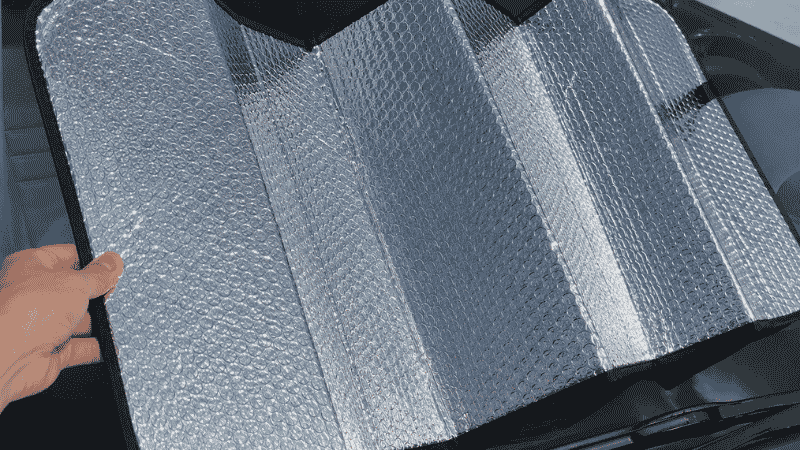
The most common type. A rigid or semi-rigid reflective panel that folds accordion-style for compact storage. Easy to use — unfold, place, done. Folds back flat for storage in the trunk or behind the seat.
Best for: Daily drivers who want convenience. Quick to deploy, quick to store.
The limitation: Accordion shades are almost always universal fit. They come in sizes like “compact,” “midsize,” and “full-size SUV” — but windshield shapes vary dramatically by vehicle, and a universal shade will have gaps at the edges of curved windshields. Those gaps let in direct sunlight that reduces effectiveness.
Custom-Fit Windshield Shades
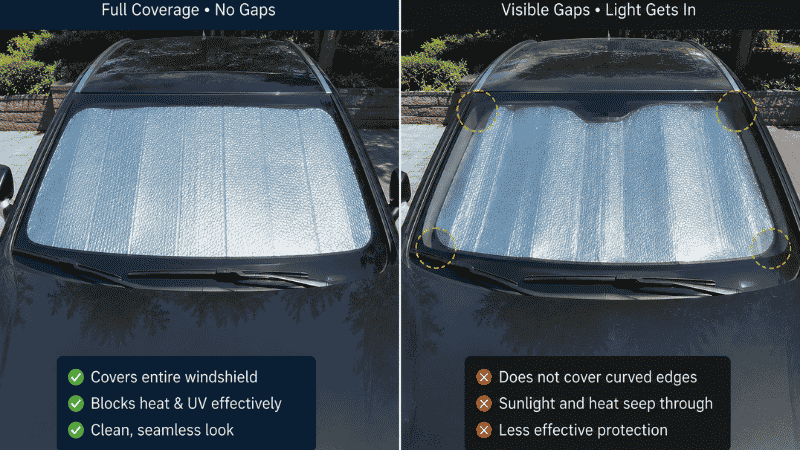
Made to match the exact dimensions and shape of a specific vehicle’s windshield. They cover the glass completely, including the curves at the edges that universal shades miss. Covercraft’s UVS100 is the best-known brand in this category.
Best for: Anyone who parks in direct sun regularly and wants maximum coverage. The price difference over universal shades ($30–50 vs $15–25) is real but the coverage improvement is noticeable.
Editor’s note: If you park in a covered garage most of the time and only occasionally need a shade, universal is fine. If you park outdoors every day in a hot climate, custom-fit is worth the extra $20.
Roll-Up/Retractable Shades
A fabric shade that rolls up similar to a window blind. Mounts permanently to the side windows and pulls down when parked. Primarily used for side and rear windows, less common for windshields.
Best for: Parents with kids in the back seat — side window shades block direct sun hitting rear passengers during driving, which accordion shades can’t do. Also useful for privacy.
Static Cling / Fabric Side Window Shades
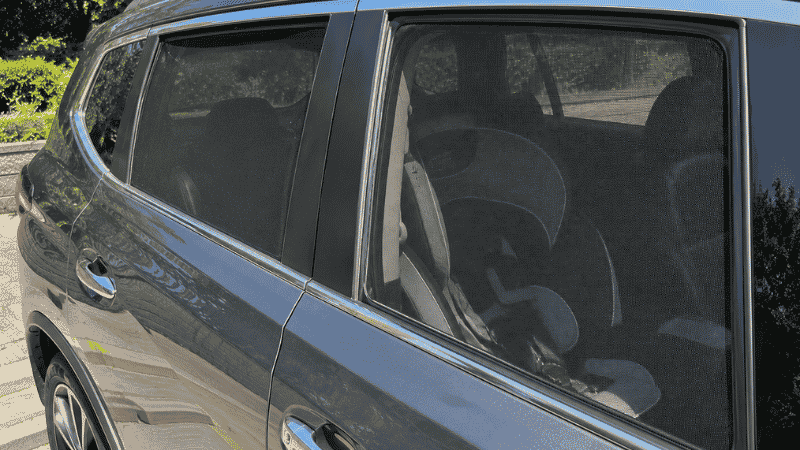
Mesh or fabric shades that attach to side windows via static cling or suction cups. Can be used while driving (mesh versions allow visibility) or while parked. Common for rear passenger windows.
Best for: UV protection for rear passengers, particularly children and pets. The mesh versions are especially useful because they can stay on while driving.
How to Choose the Right Car Sun Shade
Step 1: Decide on Custom vs. Universal
Choose custom-fit if:
- You park in direct sun regularly (daily, all day)
- You drive a car with a notably curved windshield (sports cars, many sedans)
- You care about the dashboard and leather protection benefit (custom coverage is meaningfully better)
- Budget isn’t a primary concern
Choose universal if:
- You park in sun occasionally, not daily
- Storage space is a concern (universal shades are typically more compact)
- Price is the primary factor
- You drive a vehicle with a relatively flat windshield (trucks, vans, some SUVs)
Step 2: Get the Right Size
If going universal, measure your windshield width and height before buying. Most product listings show dimensions. Err toward larger — a shade slightly too big is better than one too small, because you can fold the edges. A shade too small leaves gaps.
If going custom, you just need your vehicle’s year, make, and model. The manufacturer matches the shade to your specific windshield.
Step 3: Consider the Material
Reflective foil (most common): The classic crinkly silver material. Reflects the most sunlight, provides the most temperature reduction. Can look tacky. Folds easily but creases over time.
Mylar/metallic fabric: A smoother reflective material that wraps a fabric backing. More durable than pure foil, holds its shape better, folds more neatly. Usually slightly more expensive.
Non-woven fabric with reflective coating: Softer, less crinkly, easier to store without creasing. The reflective coating is less aggressive than pure foil, so slightly less effective at temperature reduction, but the difference is modest.
Black foam or fabric (non-reflective): These block light but absorb heat rather than reflecting it. The dark color means the shade itself gets very hot, and that heat radiates back into the car. Significantly less effective than reflective types. Generally avoid these for windshield shades unless visibility is the only goal.
Step 4: Think About Storage
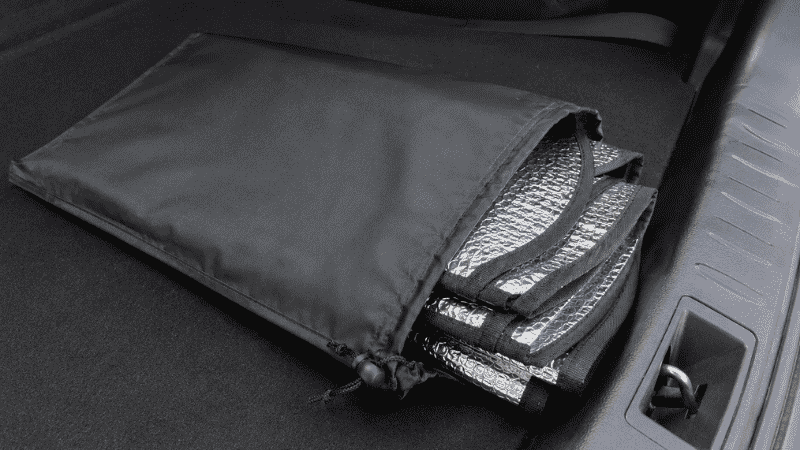
The best sun shade is the one you actually use. If it’s annoying to fold and store, you’ll leave it in the trunk permanently. Consider:
- Accordion folds are fast but take up more space
- Roll-up styles are compact but can be slower to deploy
- Some shades come with storage pouches that make car storage neater
A shade that lives in your trunk unused is a waste of money. The storage method that works with your habits is the right one.
Installation: The Common Mistakes
Mistake 1: Installing it backward
The reflective side goes toward the sun — facing out through the windshield. The non-reflective (often black or gray) side faces into the car interior. If you install it backward, the reflective surface is facing your car’s interior, which doesn’t help. Sounds obvious, but it’s a very common error that completely undermines the shade’s effectiveness.
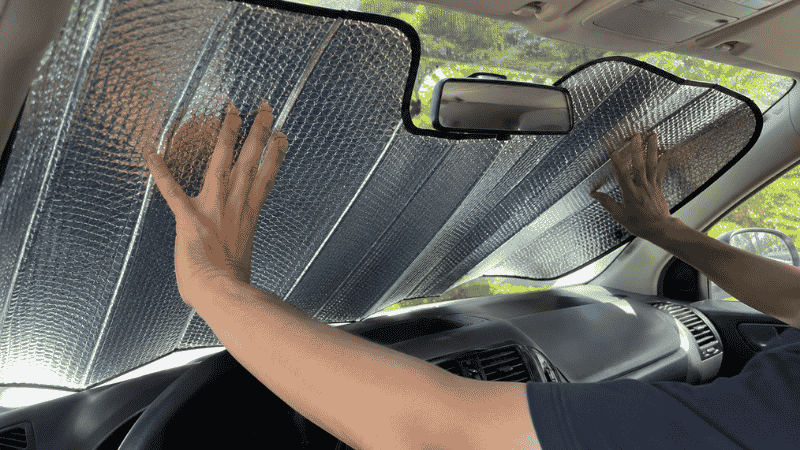
Mistake 2: Not deploying the sun visor clips
Many windshield shades have tabs or flaps designed to fold down behind the sun visors to hold the shade in place. Skipping this step lets the shade sag away from the glass, creating a gap that lets in significant sunlight. Spend the extra 20 seconds doing it properly.
Mistake 3: Leaving it deployed when driving
This one seems obvious but is worth stating: a windshield shade blocks your entire forward view. Remove it completely before driving. Some drivers have started to pull away with the shade still deployed — it’s an extremely dangerous situation.
Mistake 4: Only covering the windshield
The windshield is the primary target because it’s the largest glass area facing direct sun when parked facing south. But side windows admit significant sun as well, especially in the afternoon. Side window shades — either the static cling or roll-up type — add meaningful protection for the passenger compartment, particularly for rear passengers.
What to Expect: Realistic Temperature Outcomes
Based on testing data from multiple automotive research sources:
| Condition | Interior Without Shade | Interior With Shade | Reduction |
|---|---|---|---|
| 75°F ambient, 4 hrs direct sun | ~130°F | ~90°F | ~40°F |
| 90°F ambient, 4 hrs direct sun | ~155°F | ~110°F | ~45°F |
| 100°F ambient, 4 hrs direct sun | ~175°F | ~130°F | ~45°F |
Key takeaway: a sun shade doesn’t keep your car cool. It keeps it significantly less scorching. The AC will still need to run to get the interior to a comfortable temperature — but it’ll get there faster, and the surfaces you touch (steering wheel, seat belt buckle, gear shift) will be meaningfully less punishing.
The dashboard temperature reduction is even more significant because the sun shade directly intercepts the radiation that would hit the dashboard surface — research suggests dashboard temperatures can be reduced by 60–70°F with a properly fitted reflective shade.
The Winter Bonus: Snow and Frost
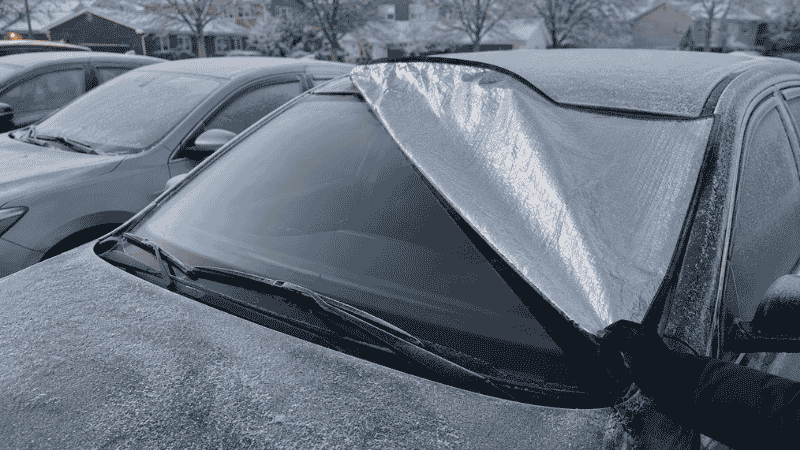
Sun shades aren’t just for summer. Placed on the windshield before an overnight snowfall or frost, they dramatically reduce or eliminate the need to scrape ice. Just remove the shade in the morning and the glass underneath is clear — the ice and snow came off with the shade.
This application works particularly well with custom-fit shades because the complete coverage prevents ice from forming at the edges. Universal shades with gaps at the edges can still form ice in those uncovered areas, requiring scraping at the perimeter.
Some manufacturers make dedicated winter windshield covers, but a standard sun shade works almost as well for this purpose and eliminates the need for a separate product.
FAQ
Do car sun shades actually work? Yes, meaningfully — with realistic expectations. Research consistently shows interior temperature reductions of 25–50°F in direct summer sun conditions. The dashboard and leather UV protection may be the more valuable benefit over time, since sun damage is cumulative and a cracked dashboard is expensive to replace.
What size sun shade do I need? Measure your windshield width at its widest point. Most universal shades list their dimensions; choose one slightly larger than your measurement. For a guaranteed fit, use a custom-fit shade that’s made for your specific vehicle’s windshield shape.
Which side of a sun shade faces out? The reflective (silver/metallic) side faces outward toward the sun. The non-reflective side faces inward toward you. If you install it backward, the shade absorbs heat instead of reflecting it, which significantly reduces effectiveness.
Are custom fit sun shades worth the extra money? If you park in direct sun daily and live in a warm climate — yes. The coverage difference at the curved edges of the windshield is real, and complete coverage meaningfully improves both temperature reduction and UV protection. If you park in sun occasionally, a well-sized universal shade is adequate.
Can I leave a sun shade up while driving? No. A windshield sun shade blocks your forward view completely. Remove it before driving, every time.
Do sun shades work for side windows too? Yes — side window shades (static cling or suction cup mesh types) are effective and can be used while driving (mesh versions). They’re particularly useful for rear passenger windows and for protecting rear-seat passengers from direct sun. They add meaningfully to interior temperature reduction alongside a windshield shade.
How long do car sun shades last? A quality reflective sun shade typically lasts 2–5 years with regular use before the reflective coating degrades and the shade loses effectiveness. Signs it needs replacement: visible peeling of the reflective coating, tears, or noticeably less temperature reduction compared to when it was new.
What’s Next
A sun shade is one of the simplest and most effective interior accessories you can add to your car. These guides cover related interior care and protection:
- How to clean car seats — UV protection from a sun shade helps, but fabric and leather still need regular cleaning to stay in good condition. (→ How to Clean Car Seats — Fabric, Leather & Every Stain Type)
- How to clean car windows — clean windows improve sun shade effectiveness and reduce the interior film that UV exposure accelerates. (→ How to Clean Car Windows Without Streaks)
- Car essentials every driver should have — the complete list of practical items worth having in every car, with what to skip. (→ Car Essentials Every Driver Actually Needs)
A $20 sun shade protecting a $1,500 leather interior from UV cracking is one of the best return-on-investment car accessories you can buy. The math isn’t complicated — it just takes actually doing it.
References
- Pediatrics — “Heat Stress from Enclosed Vehicles: Moderate Ambient Temperatures Cause Significant Temperature Rise in Enclosed Vehicles” (McLaren et al., 2005), published in the American Academy of Pediatrics journal; interior vehicle temperature research data
- U.S. Department of Energy — Heat Island Effect and Vehicle Interior Temperature, Lawrence Berkeley National Laboratory research on solar heat gain in vehicle interiors
- National Renewable Energy Laboratory (NREL) — Vehicle Ancillary Load Reduction Project: Cool Car Seats and Interior Materials, NREL Technical Report, thermal comfort and temperature reduction data for automotive interiors
- Skin Cancer Foundation — UV Radiation and Automotive Glass, UV transmission data and skin protection guidelines relevant to interior UV exposure
This article contains affiliate links. AutoIXPro may earn a small commission on purchases through our links at no extra cost to you. All recommendations are based on genuine research and practical value. See our Affiliate Disclosure for details.
Have a sun shade question for your specific vehicle? Contact us — we read every message.