
Last updated: May 2026 | Reading time: 11 min | Category: Car Care & Cleaning
Key Takeaways
- The streaks aren’t from dirty glass — they’re from cleaning solution drying before you wipe it off, almost always caused by cleaning in direct sunlight or on warm glass
- Never use ammonia-based cleaners (including standard Windex) on car windows — ammonia degrades window tint film and certain heat-reflective coatings permanently
- The hazy film on your car’s interior windshield is VOC off-gassing from dashboard plastics combined with body oils — it’s not dirt, which is why a dry cloth won’t remove it
- Roll the window down one inch before cleaning — the top edge of every window collects more grime than any other section and most drivers never clean it
- For genuine streak-free results, wipe in one direction on the inside, a different direction on the outside — this lets you identify which side any remaining streaks are on
The Frustration That Sent You Here
You’re pulling out of the driveway at 7 a.m. The sun hits your windshield at exactly the wrong angle. And instead of seeing the road, you’re staring through a constellation of streaks, smears, and what looks like a thin layer of fog that no amount of wiping has ever fully cleared.
Or maybe you cleaned the windows last weekend. Sprayed, wiped, stepped back — and somehow the glass looks worse than before you started. The streaks catch the light at every angle. The inside of the windshield has that hazy film that returns within days of cleaning no matter what you do.
This happens to nearly every driver who tries to clean car windows the same way they clean bathroom mirrors. Car glass has different exposure, different contamination sources, and different coatings than household glass — and the standard grab-a-paper-towel-and-spray approach that works fine on a bathroom mirror reliably produces streaked car windows.
This guide explains why it keeps going wrong, what to do differently on each surface, and how to actually get streak-free windows — including the interior windshield film that most cleaning routines completely fail to address.
Why Car Windows Streak — The Real Causes
Before buying a different product or trying a different technique, it helps to understand what’s actually happening when windows streak.
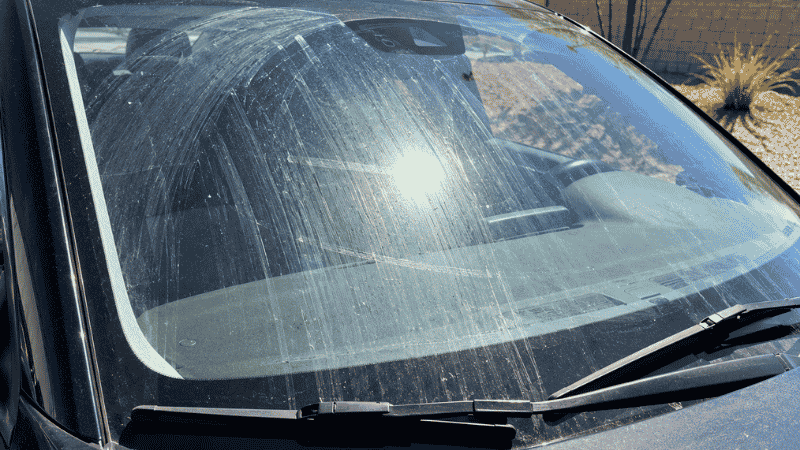
Cause 1: Cleaning in the sun or on warm glass This is responsible for the majority of streaking. Cleaning solution evaporates faster than you can wipe it away, leaving a thin residue of whatever was dissolved in the liquid — minerals from water, surfactants from the cleaner, soap compounds. That residue is the streak. The fix is simple but not obvious: clean windows in shade, ideally in the morning before the car heats up, or in the evening.
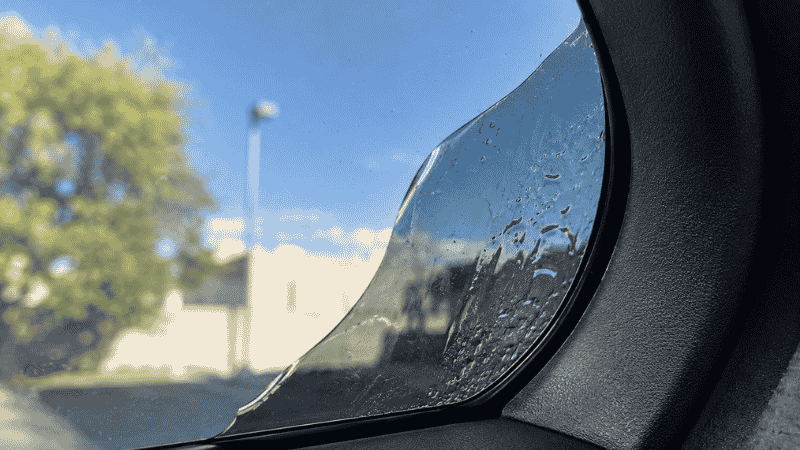
Cause 2: Wrong product Standard glass cleaners designed for home use often contain ammonia. On household glass this is fine — but car windows frequently have aftermarket or factory tint film, UV-reflective coatings, or rain-repellent treatments applied to the glass surface. Ammonia attacks these coatings and tint adhesives, causing them to bubble, haze, or peel over time. Once tint film is damaged by ammonia, the damage is irreversible.
Cause 3: Wrong cloth Paper towels are abrasive enough to leave micro-scratches on glass surfaces over time, and they shed fibers that are visible as streaks in certain light. Old cotton rags often have residue from previous cleaning products that transfer back to the glass. Microfiber cloth is the correct tool because it has a large surface area, holds dirt and moisture away from the glass surface, and doesn’t shed.
Cause 4: Too much product More cleaner doesn’t mean cleaner glass. Excess liquid pools in the window seal, runs down the glass, and evaporates unevenly. The correct amount is a light mist — enough to dampen the cloth, not drench it.
Cause 5: Cleaning the outside and inside the same way The exterior and interior of car windows have completely different contamination profiles and require different approaches. Treating both surfaces identically is one of the most common mistakes.
What You Actually Need (And What to Skip)
The Right Glass Cleaner
Use: An ammonia-free automotive glass cleaner. Stoner Invisible Glass ($8–10) and Chemical Guys CLD_202 ($10–12) are both widely recommended and consistently deliver streak-free results. Griot’s Garage Glass Cleaner is another solid option at a similar price point.
Avoid: Any cleaner containing ammonia. Check the ingredient list — if you see “ammonium hydroxide” or the label says “contains ammonia,” don’t use it on your car windows. This includes most blue-tinted household glass cleaners regardless of brand.
DIY option: 50% distilled water + 50% isopropyl alcohol (70%+) in a spray bottle. This solution evaporates quickly, leaves no residue, and is safe for tinted windows and coatings. The isopropyl alcohol cuts grease and the oil-film residue on interior glass more effectively than most commercial cleaners. Add a small splash of white vinegar to help cut mineral deposits.
Use distilled water rather than tap water if you’re making your own solution. Tap water contains dissolved minerals that leave white spots as the water evaporates — the same reason tap water leaves spots on dishes.
The Right Cloth
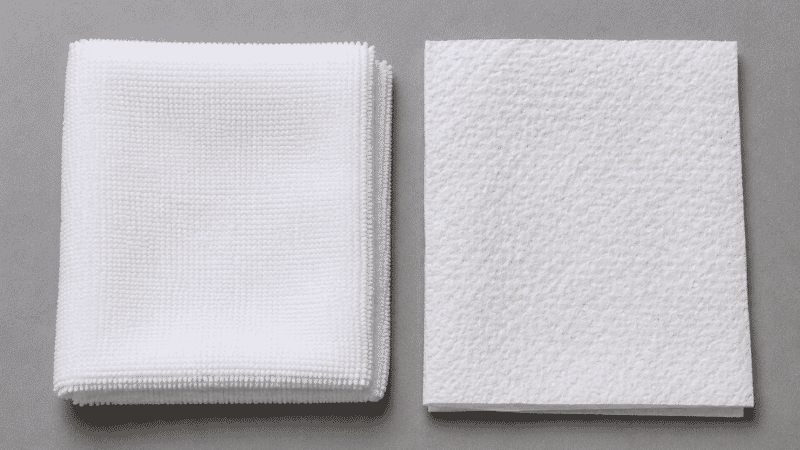
Two or three microfiber cloths per cleaning session, minimum. One for applying the cleaner, one for buffing dry. Microfiber with a GSM (grams per square meter) rating of 300–400 is ideal for glass — finer than general-purpose microfiber but not so delicate it’s hard to work with.
What doesn’t work:
- Paper towels — abrasive, leave lint, streak on glass
- Regular cotton rags — fiber transfer, often have product residue
- Newspaper — used to be recommended, no longer relevant; modern newspaper ink transfers to glass
One dedicated glass towel per session per side. Don’t use the same cloth you used on the dashboard or seats to clean windows — any residue from other surfaces transfers directly to the glass as a streak.
How to Clean Car Windows — Interior and Exterior Separately
Cleaning the Exterior Windows
The outside of your windows picks up road grime, bug residue, water spots from mineral-heavy rain, and tree sap. These require slightly more mechanical action than the interior.
Best time: Early morning before direct sun, or any time the car is in shade. Avoid cleaning in direct sunlight entirely.
Step 1: If the car has been driven through rain or sprinkled by sprinklers recently, rinse the exterior glass with clean water first to remove loose grit. Dry grit dragged across glass under a cloth causes fine scratches.
Step 2: Spray cleaner onto a microfiber cloth — not directly onto the glass. Spraying directly on a hot exterior panel causes immediate partial evaporation before you can work the solution.
Step 3: Wipe the glass using an S-stroke or Z-stroke motion — overlapping horizontal passes from top to bottom. This prevents re-contaminating areas you’ve already cleaned.
Step 4: Immediately buff with a clean dry microfiber using vertical strokes. The different direction tells you at a glance whether any remaining streaks are on this side or the interior.
Step 5: For stubborn water spots** (mineral deposits from sprinkler water or hard rain): apply isopropyl alcohol directly to a cloth and rub firmly on the spot. Water spots are mineral deposits — acidic solutions dissolve them. A diluted white vinegar solution also works. Commercial water spot removers like Rain-X Water Spot Remover or Meguiar’s Water Spot Remover are useful for severe cases.
Step 6: Roll each window down about an inch and clean the top edge. This strip of glass disappears into the door frame every time the window is closed and is almost never cleaned. It collects more grime than any other section of the glass and transfers that grime back to the visible portion every time the window is opened. Two passes with a damp cloth, then dry — 10 seconds per window, never skipped.
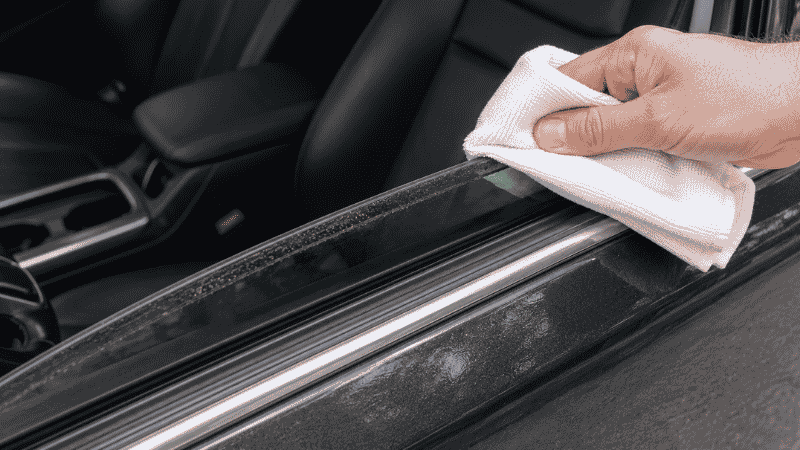
Cleaning the Interior Windows
Interior glass has a fundamentally different contamination problem from exterior glass, and most of the frustration people feel about “windows that won’t come clean” is actually an interior glass problem.
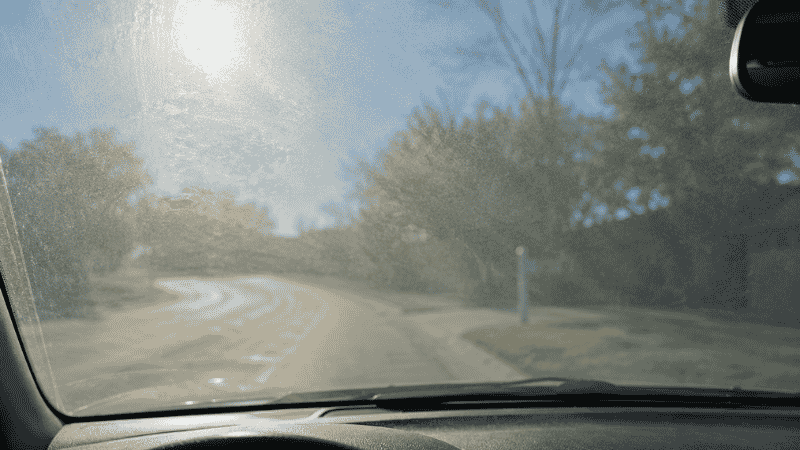
The film on your windshield interior isn’t dust.
It’s a combination of two things: volatile organic compounds (VOCs) off-gassing from dashboard plastics and vinyl — a process that’s most intense in new cars but continues for years — and body oils and skin residue deposited by breathing, touching, and proximity. This film is hydrophobic and oily, which is why wiping with a dry cloth or a damp cloth without the right cleaner does nothing. You’re not moving it — you’re just smearing it.
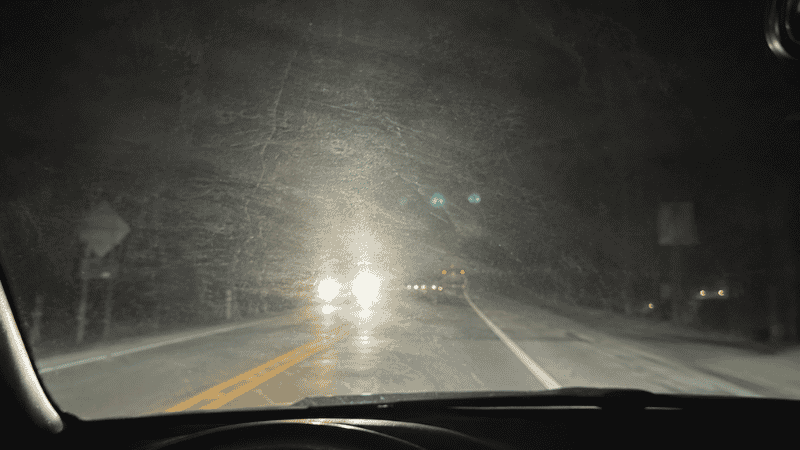
This film is also the reason you get that distinctive glare and rainbow halo effect when oncoming headlights hit your windshield at night. The film refracts light in a way that clean glass doesn’t.
Step 1: The interior requires extra reach and an awkward angle — especially for the windshield. Some drivers find it helpful to start with the passenger side where there’s more body clearance. For the driver’s side windshield, sit slightly sideways or use a long-handled glass tool if the position is uncomfortable.
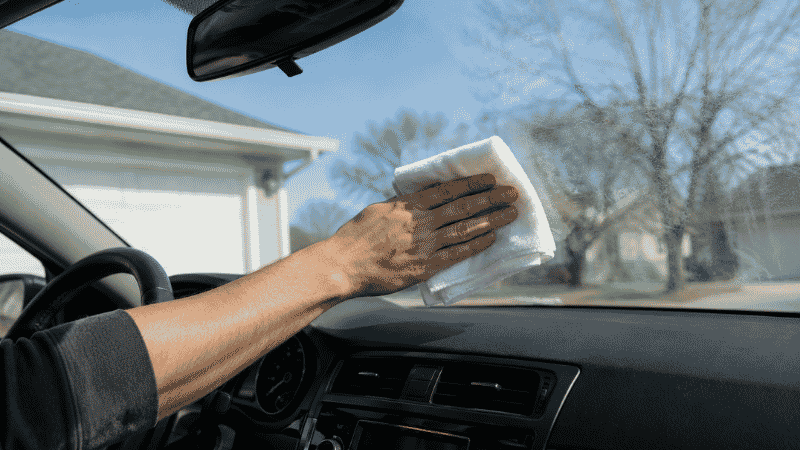
Step 2: Spray cleaner onto your microfiber cloth first — directly spraying onto the interior glass risks overspray on the dashboard, infotainment screen, or rearview mirror, all of which you don’t want to expose to glass cleaner. Apply a damp cloth, wipe in one direction (horizontal passes work well for the windshield), then buff dry with a clean cloth using vertical passes.
Step 3: For the persistent oily film — especially on the windshield — isopropyl alcohol is more effective than most commercial glass cleaners. Apply directly to a cloth and wipe firmly. The alcohol cuts through the VOC residue and skin oils that water-based cleaners only smear. Buff immediately before the alcohol evaporates.
Step 4: For the rearview mirror and door glass:** standard glass cleaner on a cloth, same technique. The rearview mirror is small enough that a single spray on the cloth handles it in one pass.
Step 5: Don’t spray anything on the infotainment touchscreen.** If it needs cleaning, a dry microfiber or a cloth barely dampened with distilled water only. Most touchscreens have oleophobic coatings that alcohol and glass cleaners damage permanently over time.
Why Your Windshield Interior Keeps Getting Foggy
If you clean the windshield interior thoroughly and it looks hazy again within a week or two, this is normal — not a sign that something is wrong with your cleaning technique.
The VOC off-gassing from dashboard plastics is an ongoing process. New cars produce the most — that’s the “new car smell” that’s actually a complex mix of chemical compounds. But even older vehicles continue to release small amounts as temperature cycles cause the plastics to expand and contract.
The buildup rate depends on:
- How long the car sits in the sun (heat accelerates off-gassing)
- Whether you use a dashboard protectant (some products increase off-gassing; silicone-free, matte-finish protectants are better)
- How many people regularly ride in the car (each person contributes body oil and exhaled moisture)
The only management strategy is regular cleaning — monthly is realistic for most drivers — and ensuring good ventilation when driving to help off-gas compounds escape rather than deposit on the glass.
The 10-Minute Quick Clean
When you need the windows presentable fast:
- Park in shade — non-negotiable even for a quick clean
- Two cloths out: one damp with glass cleaner, one dry
- Interior windshield first — it has the most impact on visibility and is the most neglected surface
- Roll each window down an inch, wipe the top edge, roll up, wipe the visible surface
- Exterior windshield last — a quick wipe removes the surface layer without a full treatment
This takes under 10 minutes and addresses the surfaces that most affect driving visibility. It’s not a full detail, but it’s genuinely better than nothing.
What to Do When Streaks Won’t Go Away
Still streaking after multiple attempts?
Check: Are you cleaning in shade? Is the glass cool to the touch? If yes to both and streaks persist, the issue is likely product residue buildup — layers of different cleaners applied over time that have created a chemistry problem. Strip the glass with undiluted isopropyl alcohol on a cloth, buff dry, then apply your regular glass cleaner as a finishing step.
Cloudy or hazy interior that won’t clear?
If the cloudiness is uniform (not streaky) and doesn’t respond to glass cleaner, inspect the glass carefully. Some interior haze is actually inside the glass — between glass layers in certain laminated windshields — and no amount of cleaning the surface will address it. This requires windshield assessment by a professional.
Stubborn exterior spots that won’t budge?
Tree sap requires a dedicated sap remover or a dab of isopropyl alcohol held against the spot for 30 seconds before wiping. Bug residue on the windshield responds to a wet cloth held against the spot for a minute to soften it before wiping. Never scrape car glass with fingernails, credit cards, or any rigid tool — glass scratches permanently.
Water beads weirdly or smears in rain?
Your wiper blades may be leaving a silicone or wax residue on the glass from previous treatments. Clean the wiper blade rubber with isopropyl alcohol and a cloth — wipe along the blade edge, rinse the cloth, repeat until no more residue comes off. This often resolves the smearing immediately.
Glass Protection: Making Clean Last Longer
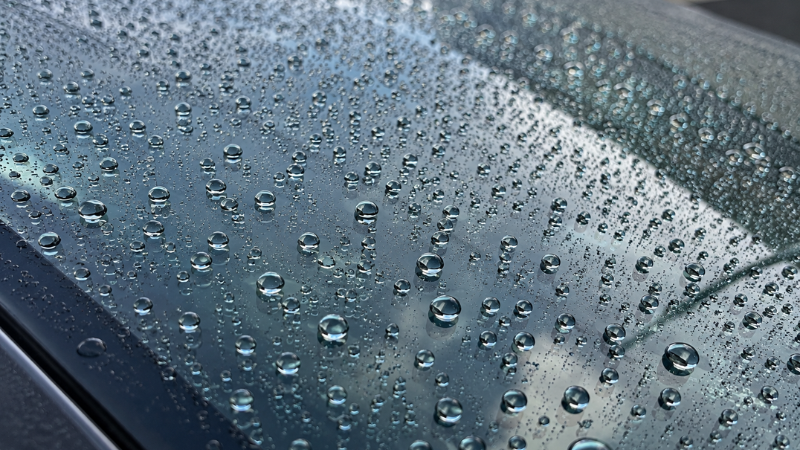
Once the glass is properly clean, a hydrophobic glass treatment dramatically extends the time before the next cleaning is needed — and significantly improves rainy weather visibility.
Rain-X Original ($5–8) is the most widely used option. Applied to a clean exterior windshield, it causes water to bead and sheet off at speeds above 35 mph without needing wipers. It wears off after 1–3 months depending on conditions and needs reapplication.
How to apply: Clean glass thoroughly first — any contamination under the treatment creates adhesion problems. Apply a small amount to a cloth, work in circular overlapping passes across the dry glass. Allow to haze for 3–5 minutes (it will look foggy briefly), then buff off firmly with a clean dry cloth. Streak-free result requires full buffing — the haziness is a sign it’s working, not that something went wrong.
What to avoid: Any glass protectant on the interior windshield. Interior glass doesn’t need hydrophobic treatment, and some products make the surface more prone to catching the VOC film described above.
FAQ
What is the best way to clean car windows without streaks? Clean in shade on cool glass, use an ammonia-free glass cleaner sprayed onto a microfiber cloth (never directly on the glass), wipe in one direction, buff dry immediately with a clean cloth in the opposite direction. The two-direction technique lets you identify which side any remaining streaks are on. Never clean in direct sunlight.
Can I use Windex on car windows? Standard blue Windex contains ammonia, which damages window tint film and certain heat-reflective or UV-blocking glass coatings. Use ammonia-free alternatives specifically formulated for automotive glass — Stoner Invisible Glass, Chemical Guys CLD_202, or a 50/50 isopropyl alcohol and distilled water solution.
Why does my car windshield look hazy inside? The film on the interior windshield is a combination of VOC compounds off-gassing from dashboard plastics and body oils from proximity and contact. It requires a cleaner that cuts through oily residue — plain water doesn’t work. Isopropyl alcohol on a cloth is the most effective solution for this specific type of contamination.
Why do my car windows streak even after cleaning? Most streaking comes from cleaning in direct sunlight or on warm glass (the cleaner evaporates before you wipe it away), using too much product, or not switching to a dry cloth for the final buff. The sequence matters: apply to cloth, wipe, immediately buff dry with a second clean cloth.
How often should I clean my car windows? Exterior windows: whenever visibility is reduced or after rain in hard-water areas. Interior windows: once a month is realistic for most drivers; more often for new cars that off-gas more actively. The interior windshield specifically affects night driving visibility and is worth cleaning more frequently than the side windows.
Is newspaper still a good way to clean car windows? No. The newspaper recommendation comes from an era when newspaper ink had properties that aided glass cleaning. Modern newspaper ink formulations are different and can transfer to glass, window trim, and clothing. Microfiber cloth is superior in every respect.
Should I use glass cleaner or water on tinted windows? Water alone isn’t sufficient to remove the oily contamination that affects glass. Use an ammonia-free glass cleaner — specifically confirm “ammonia-free” on the label. Tint film is damaged by ammonia, not by glass cleaners in general. All four of the recommended products in this guide are safe for tinted windows.
What’s Next
Clean windows are one part of a well-maintained interior. The other surfaces benefit from the same attention:
- How to clean your full car interior — windows are one element; the dashboard, seats, and floor mats each have their own methods and the same principle of using the right product for the right surface. (→ How to Clean Your Car Interior the Right Way)
- How to clean car seats — the fabric and leather surfaces that absorb the most daily use and most often need targeted attention. (→ How to Clean Car Seats — Fabric, Leather & Every Stain Type)
- Car essentials every driver should have — including the ammonia-free glass cleaner and microfiber cloths that make window maintenance a 10-minute monthly habit. (→ Car Essentials Every Driver Actually Needs)
Clear windows aren’t just about appearance. Reduced visibility through contaminated glass — especially the interior windshield at night — is a genuine safety issue. Five minutes of regular maintenance is considerably cheaper than the alternative.
References
- U.S. Environmental Protection Agency (EPA) — Volatile Organic Compounds’ Impact on Indoor Air Quality, technical overview of VOC off-gassing from common household and vehicle materials
- National Highway Traffic Safety Administration (NHTSA) — Driver Distraction and Visibility Impairment, traffic safety factors research
- Society of Automotive Engineers (SAE) International — Automotive Glass Coating Performance Standards, SAE J1846
- American Chemical Society — Chemistry of automotive glass coatings and the effects of alkaline cleaning agents on hydrophobic surface treatments (2020)
This article contains affiliate links. AutoIXPro may earn a small commission on purchases through our links at no extra cost to you. All recommendations are based on genuine research and real-world performance. See our Affiliate Disclosure for details.
Have a specific window cleaning question? Contact us — we read every message.