
Last updated: May 2026 | Reading time: 11 min | Category: Safety & Emergency
Key Takeaways
- The brake warning light has multiple possible causes ranging from completely harmless (parking brake still engaged) to immediately dangerous (hydraulic pressure loss) — the difference matters enormously
- Check the parking brake first, every single time. It’s the most common cause by a wide margin, takes 10 seconds to rule out, and costs nothing
- Low brake fluid is never “just” low brake fluid — it means either brake pads are significantly worn or there’s a hydraulic leak. Both need investigation, not just a top-up
- If the brake warning light comes on AND the brake pedal feels soft, spongy, or sinks toward the floor, pull over immediately. This combination indicates a hydraulic failure
- Brake warning light with ABS light simultaneously usually means a shared wheel speed sensor fault — serious but less immediately dangerous than a hydraulic issue
The Light You Should Never Ignore
Most dashboard warning lights exist on a spectrum. Some are informational, some are cautions, some can wait a week. The brake warning light is different — it belongs in a separate category entirely, because the system it monitors is the one that stops the car.
Here’s the uncomfortable reality: the brake warning light can mean something as trivial as a parking brake you forgot to release, or something as serious as a brake system that is actively losing hydraulic pressure and will soon be unable to stop the vehicle. The light looks identical in both cases.
This is why the standard advice of “if a warning light comes on, schedule service when you can” does not apply here. Before deciding what to do, you need to do a 60-second assessment that tells you which situation you’re actually in. This guide walks you through that assessment and explains every cause behind the brake warning light — including the ones most articles skip.
Do This First: The 60-Second Assessment
Before reading anything else, do these two checks right now if your brake warning light is on.
Check 1: Is the parking brake released?
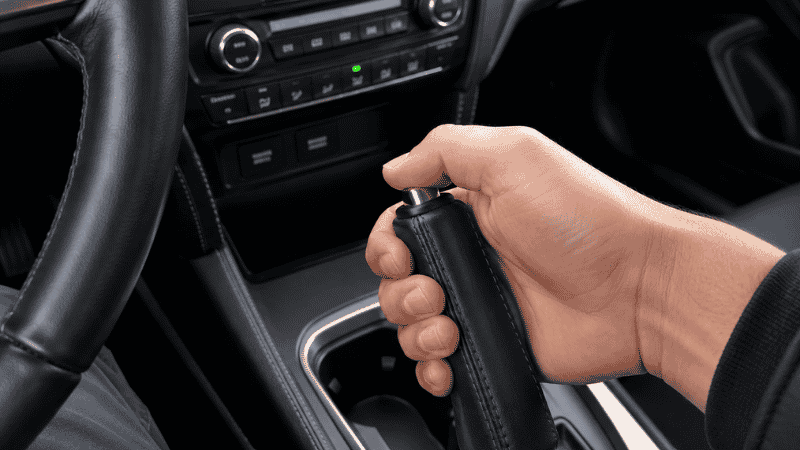
Fully release the parking brake — push down the pedal fully (foot-operated parking brakes), lower the handle completely (center console lever), or press the electronic parking brake button to disengage (button-operated). If the light goes off, that was the cause. No further action needed.
If you’re certain the parking brake is released and the light remains on, proceed to Check 2.
Check 2: How does the brake pedal feel?
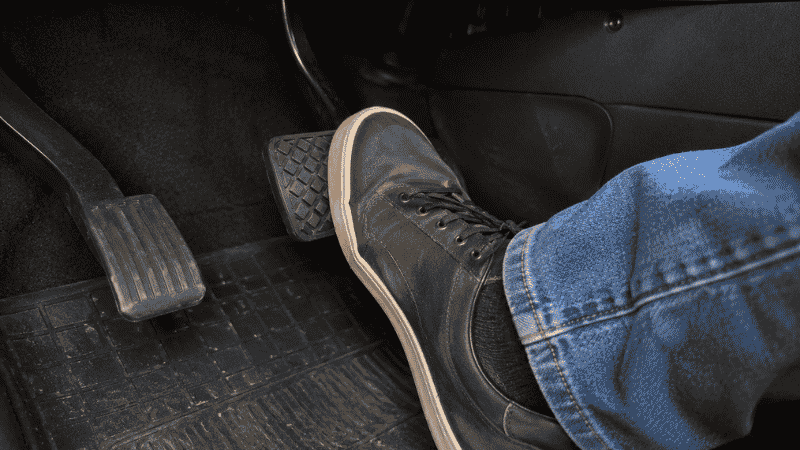
With the car stationary, press the brake pedal firmly and hold it for 10 seconds. Note how it feels:
- Firm and stays firm: The hydraulic system is pressurized and intact. This is a less urgent situation — continue reading to identify the specific cause.
- Soft, spongy, or gradually sinks toward the floor: This indicates hydraulic pressure loss or an internal master cylinder leak. Do not drive this vehicle. Call for roadside assistance or a tow.
The combination of brake warning light + spongy/sinking pedal is the version that requires immediate action. Everything else can be assessed more calmly.
What the Brake Warning Light Looks Like
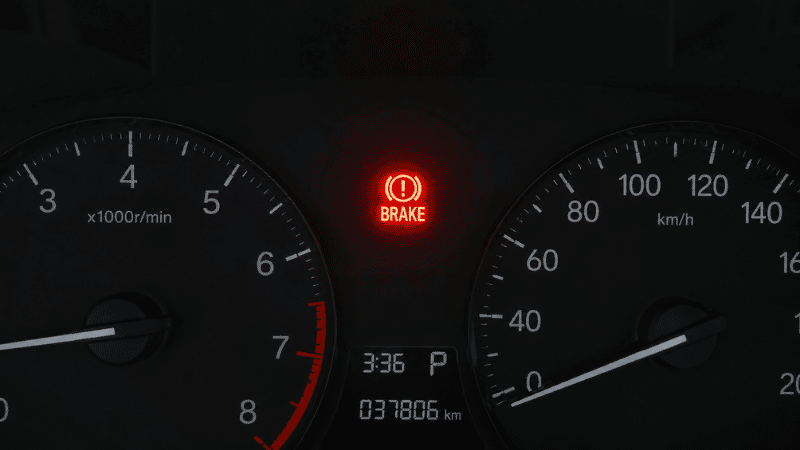
The brake warning light varies slightly by vehicle but typically appears as one of:
- An exclamation mark (!) inside a circle, often with the letter P or the word BRAKE
- The word BRAKE in red text
- An exclamation mark inside a circle without a letter
On most vehicles this light is red, consistent with its status as a critical system warning. Some vehicles also have a separate yellow/amber brake pad wear indicator — a different light, discussed in the brake pad wear section below.
The ABS light (letters “ABS” in a circle) is a separate indicator that monitors a different but related system. If both lights appear simultaneously, see the ABS section below.
The Six Causes of the Brake Warning Light
Cause 1: Parking Brake Still Engaged (Most Common)
The parking brake engages a sensor that illuminates the brake warning light as a reminder that you’re about to drive with the parking brake on. In most vehicles, the same light that warns about brake system faults also serves as the parking brake indicator.
New drivers are the most common victims of this — the foot-operated parking brake pedal (found on many older vehicles) is easy to partially engage without realizing it, and the indicator looks identical to a genuine brake system warning.
The fix: Fully disengage the parking brake. If the light goes out, you’re done.
If it doesn’t go out: The parking brake switch itself may be stuck or faulty — it’s telling the computer the parking brake is still engaged even when it isn’t. A mechanic can diagnose and replace the switch for $50–$150 depending on the vehicle.
Cause 2: Low Brake Fluid
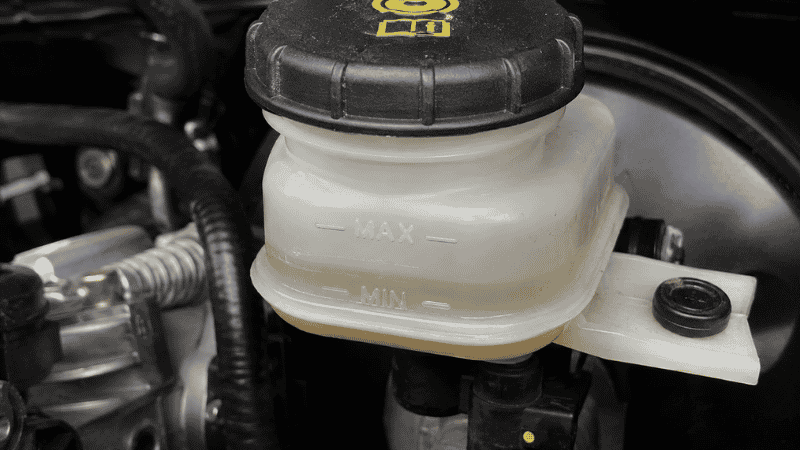
The brake fluid reservoir has a float sensor that triggers the warning light when the fluid level drops below the minimum mark.
Here is the critical point that most guides skip: brake fluid doesn’t evaporate. It doesn’t slowly disappear through normal use the way engine oil or coolant can be gradually consumed. If your brake fluid is low, something specific caused it to be low, and that something needs to be identified.
Reason A: Brake pads are worn
As brake pads wear down, the caliper pistons extend further to maintain contact with the rotor. This increased piston extension draws fluid out of the reservoir — which is why the fluid level gradually drops as pads wear. A brake fluid level that has gradually dropped to minimum typically means the brake pads are near the end of their service life.
What to do: Have the brake pads inspected and replaced. Once new pads are installed, the pistons retract and the reservoir level will rise back to normal. Don’t just top up the fluid — address the pads.
Reason B: There is a hydraulic leak
A sudden drop in brake fluid level, or low fluid in a car whose brake pads are not significantly worn, indicates a leak somewhere in the hydraulic system. This is more urgent. Possible leak locations: brake lines, caliper seals, wheel cylinder seals (on rear drum brakes), or the master cylinder.
What to do: If the level is low and you know your brake pads are relatively new, have the system inspected immediately. Look for wet spots on the inside of your wheels or on the ground under the car. Don’t add fluid and drive on — find the leak first.
What not to do: Top up the fluid and ignore the light. If the low level is due to pad wear, topping up masks the real message (replace the pads). If it’s due to a leak, you’re adding fluid to a leaking system that will continue to lose it.
Cause 3: Brake Pad Wear Sensor Triggered
Many modern vehicles — particularly European brands like BMW, Mercedes, Audi, and Volkswagen, plus some newer American and Japanese vehicles — have electronic wear sensors embedded in the brake pads. When the pad wears down to the sensor wire, the wire contacts the rotor and completes an electrical circuit that triggers the warning light.
This is specifically a brake pad replacement signal, not a hydraulic system warning.
How to identify this cause: The brake pedal feels normal. Fluid level is normal or slightly low. The vehicle has electronic brake pad wear sensors (check owner’s manual). The vehicle has significant mileage since the last brake service.
What to do: Schedule brake pad replacement. You can typically drive for a short period — a few days to a week — before the pads reach metal-on-metal contact. Don’t delay beyond that: metal pads grinding directly on rotors causes rotor damage that turns a $200 pad replacement into a $500+ pad-and-rotor job.
Important: The wear sensor wire is designed to be destroyed when it contacts the rotor. It must be replaced every time you do a brake job, even if it doesn’t look damaged — the heat from normal braking accelerates wire insulation degradation. Reusing a worn sensor wire is a common cause of false brake warning lights after a brake job.
Cause 4: Hydraulic System Fault (Master Cylinder / Pressure Differential)
This is the version of the brake warning light that represents a genuine emergency.
Modern brake systems are split into two independent hydraulic circuits — typically front-left/rear-right and front-right/rear-left. This split exists as a safety measure: if one circuit fails, you retain 50% of braking power. A pressure differential switch monitors both circuits and triggers the brake warning light if one circuit loses pressure relative to the other.
When this happens, the brake pedal typically feels different — softer than normal, possibly requiring more pedal travel to generate the same stopping force, or slowly sinking toward the floor when held under pressure. These pedal sensations are the key diagnostic indicator.
Possible causes:
- Failed master cylinder internal seal (internal leak between circuits)
- Ruptured brake line (external leak)
- Failed caliper seal (fluid leaking past the caliper piston seal)
- Air in the hydraulic system from an external leak that has partially depleted
What to do: If the pedal feels anything other than completely normal, do not drive. Have the vehicle towed. A hydraulic brake system that is losing pressure is not safe to operate, regardless of how short the trip.
Cause 5: ABS System Fault (Both Lights On)
When both the brake warning light and the ABS light illuminate simultaneously, the most common cause is a wheel speed sensor failure — the same sensor shared by the ABS and traction control systems. A faulty wheel speed sensor can trigger both lights at once.
In this combination:
- Normal (non-ABS) braking is typically unaffected — the hydraulic system is fine
- ABS function is disabled — in an emergency stop, wheels may lock
- Traction control is often also disabled
This is a less immediately dangerous situation than a hydraulic failure — you retain normal braking capability but lose the electronic assistance that prevents wheel lockup. Increase following distance and schedule a diagnostic.
What to do: Read fault codes with an enhanced OBD2 scanner that can access ABS modules. The code will identify which wheel speed sensor is failing. Typical repair cost: $150–$400.
Cause 6: Brake Light Switch Fault
The brake light switch is a small switch located on the brake pedal arm that activates your rear brake lights when the pedal is pressed. On some vehicles, a faulty brake light switch can also trigger the dashboard brake warning light.
This is one of the less common causes but worth considering if:
- The brake warning light came on suddenly without any change in pedal feel
- Your rear brake lights aren’t functioning properly
- The pedal feel is completely normal and all fluid levels check out
A brake light switch typically costs $15–$40 for the part and is a straightforward replacement at most shops.
Can You Drive With the Brake Warning Light On?
| Situation | Action |
|---|---|
| Parking brake was the cause (now resolved) | ✅ Drive normally |
| Pad wear sensor triggered, pedal feels normal | ⚠️ Drive to shop this week |
| Low fluid from worn pads, pedal feels normal | ⚠️ Drive to shop today |
| ABS light also on, pedal feels normal | ⚠️ Drive carefully, avoid hard stops |
| Brake light switch fault, pedal feels normal | ⚠️ Drive to shop soon |
| Pedal soft, spongy, or sinks to floor | 🚫 Do not drive — call for tow |
| Sudden brake fluid drop, cause unknown | 🚫 Do not drive — call for tow |
| Any loss of stopping power sensation | 🚫 Do not drive — call for tow |
The pedal feel assessment is the single most important factor. Normal pedal + brake light = probably manageable. Abnormal pedal + brake light = don’t drive.
Brake Warning Light After a Brake Job — Why It Won’t Go Off
This is one of the most common brake warning light questions — the light came on, you replaced the pads, and the light is still on. Common reasons:
Wear sensor not replaced: The old sensor wire was destroyed by contact with the rotor and was not replaced with the new pads. A new sensor wire ($10–$30 per axle) is required to reset the wear sensor circuit.
Brake fluid not topped off: After compressing the caliper pistons to install new pads, fluid is pushed back into the reservoir. If the reservoir was already at the minimum mark, the level should be confirmed after the job.
Fault code not cleared: On vehicles with electronic wear sensors, the fault code may need to be cleared with an OBD2 scanner even after the physical repair is complete.
Parking brake switch disturbed: During brake work on the rear axle, the parking brake mechanism can be disturbed. Check that all connectors are properly seated.
FAQ
What does the brake warning light mean? It signals a condition in the braking system that requires attention. Possible causes range from a parking brake still engaged (harmless) to low brake fluid (requires investigation) to hydraulic pressure loss (requires immediate action). Check the parking brake first, then assess the pedal feel — those two checks tell you the urgency level before anything else.
Can I drive with the brake warning light on? Depends on the cause. If the pedal feels completely normal and the parking brake is confirmed released, you can often drive carefully to a shop. If the pedal feels soft, spongy, or sinks toward the floor, do not drive — call for a tow.
Why is my brake warning light on but brakes feel fine? Most likely causes with normal pedal feel: parking brake partially engaged, low brake fluid from worn pads, electronic wear sensor triggered, or a brake light switch fault. None of these are immediately dangerous but all should be investigated within the week.
What does it mean when the brake light and ABS light are both on? Both lights simultaneously usually indicates a wheel speed sensor failure. Normal braking is typically unaffected; ABS function is disabled. Read the fault codes with an enhanced OBD2 scanner to identify which sensor is the issue.
Why did my brake light come on after an oil change? A sensor connector may have been disturbed during service, or the parking brake was engaged and not fully released. Check the parking brake first. If the shop touched the brake area, a connector may need to be reseated.
Is it safe to top up brake fluid and keep driving? Only as a very short-term measure if the cause is known worn brake pads and you’re driving directly to a shop. Topping up doesn’t fix the underlying cause — it silences the warning while the actual problem continues. Never add fluid and assume the problem is resolved.
How much does it cost to fix a brake warning light? Depends entirely on the cause: parking brake switch ($50–$150), wear sensor included with brake pad job ($150–$400 total), master cylinder ($300–$600), brake line repair ($150–$400), wheel speed sensor ($150–$400). Proper diagnosis before any repair prevents paying for the wrong fix.
What’s Next
The brake warning light is one of the most important dashboard signals your car sends. These guides cover the connected systems:
- How long do car brakes last — brake pad wear is the most common cause of brake warning lights; this guide covers warning signs, self-check methods, and replacement timing. (→ How Long Do Car Brakes Last)
- Car dashboard symbols — the complete guide to every warning light and urgency level, including when multiple lights appear simultaneously. (→ Car Dashboard Symbols Explained)
- How to check car fluids — brake fluid is one of six fluids to monitor monthly; this guide covers all of them in one 10-minute routine. (→ How to Check Car Fluids)
- Car maintenance checklist — where brake inspection fits in a complete annual maintenance schedule. (→ Car Maintenance Checklist)
Your brakes are the most important safety system your car has. The warning light exists to give you advance notice before a problem becomes dangerous — responding promptly is one of the highest-value things you can do as a driver.
References
- National Highway Traffic Safety Administration (NHTSA) — Federal Motor Vehicle Safety Standard No. 105, Hydraulic and Electric Brake Systems; split hydraulic circuit safety requirements
- Society of Automotive Engineers (SAE) International — SAE J1673: Hydraulic Master Cylinders for Motor Vehicle Braking Systems, performance standards
- Insurance Institute for Highway Safety (IIHS) — Brake System Safety Research, brake maintenance and failure data
- U.S. Department of Transportation (DOT) — Brake Fluid Standards, DOT 3, DOT 4, and DOT 5.1 classification requirements
This article contains affiliate links. AutoIXPro may earn a small commission on purchases through our links at no extra cost to you. All recommendations are based on genuine research and safety value. See our Affiliate Disclosure for details.
Brake warning light situation we didn’t cover? Contact us — we read every message.