
Last updated: May 2026 | Reading time: 15 min | Category: Safety & Emergency
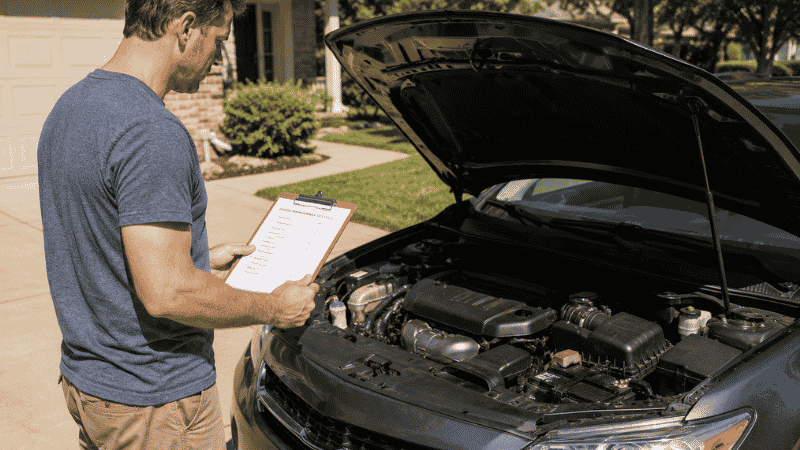
Key Takeaways
- Most car breakdowns are preventable — the AAA estimates that 2 out of 3 roadside emergencies result from maintenance that was skipped or delayed
- The most important single habit is checking tire pressure monthly — it affects safety, fuel economy, and tire life simultaneously
- New drivers often spend $400–800 more per year on repairs than drivers who follow a basic maintenance schedule, because small issues go undetected until they become expensive
- You don’t need to memorize everything — your owner’s manual has your car’s complete maintenance schedule tailored to your specific engine, transmission, and systems
- This checklist covers 3 organizing frameworks: by time (monthly/quarterly/annually), by mileage (5K/30K/60K/100K), and by season (spring/fall/winter)
Why Most Cars Break Down Unnecessarily
Here’s an uncomfortable truth: the vast majority of car breakdowns aren’t random bad luck. They’re the predictable result of maintenance that was postponed, forgotten, or never learned about in the first place.
The American Automobile Association (AAA) responds to tens of millions of roadside calls every year. Their data consistently shows that the overwhelming majority of those calls — dead batteries, flat tires, overheating engines — involve vehicles where the problem had been developing for weeks or months. The signs were there. Nobody noticed, or nobody knew what to look for.
New car owners are disproportionately affected. You’ve been handed an asset worth $25,000–50,000 and a set of keys. Nobody gave you a maintenance education. The owner’s manual is 400 pages and written in technical language. The windshield sticker from the oil change shop tells you to come back in 3,000 miles — which may or may not be accurate for your specific car.
This guide is the practical version of that education. It tells you what to check, when to check it, and why each item matters — and it links to detailed guides for the tasks that need more than a one-sentence explanation.
How to Use This Checklist
There are three ways to organize car maintenance, and all three are valid:
By time: Monthly, every 3 months, every 6 months, annually By mileage: Every 5,000 miles, 15,000 miles, 30,000 miles, 60,000 miles, 100,000 miles By season: Spring prep, summer, fall prep, winter
Most drivers use a combination. The safest approach: combine time and mileage — whichever comes first triggers the check. A driver doing 5,000 miles a month should check oil more frequently by calendar than a driver doing 8,000 miles a year.
All mileage intervals in this guide are for modern vehicles with full synthetic oil. If your car uses conventional oil or is older, use shorter intervals — check your owner’s manual.
Monthly Car Maintenance Checklist
These checks take under 15 minutes and should happen every month regardless of mileage. They catch the most common problems early.
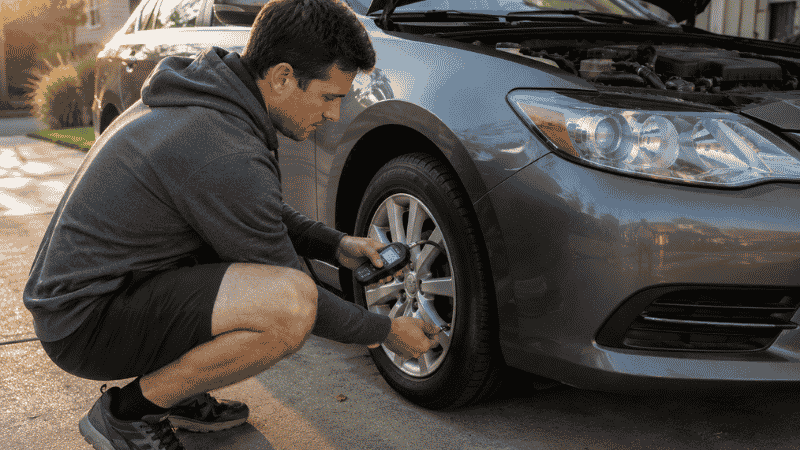
✅ Tire Pressure
Check all four tires, including the spare if accessible. Your recommended pressure is on the sticker inside your driver’s door jamb — not on the tire sidewall (that’s the maximum, not the target). Tires lose approximately 1 PSI per month under normal conditions, and cold weather accelerates the loss (1 PSI per 10°F temperature drop).
Underinflated tires reduce fuel economy, wear unevenly, and are more susceptible to blowout — especially in heat. Overinflated tires reduce traction and wear faster in the center.
→ Full guide: How to Check Tire Pressure the Right Way
✅ Engine Oil Level and Condition
Check the dipstick with the engine cold, car on level ground. Look at both the level (between MIN and MAX) and the color (amber to light brown = healthy; dark brown = due for change; milky gray = serious problem, stop driving).
If you’re consistently adding oil between changes, you have a leak or your engine is consuming oil — both worth investigating.
→ Full guide: How to Check Car Fluids
✅ Coolant Level
Look through the translucent reservoir — no need to open the cap unless the level is below MIN. Never open the radiator cap on a warm engine. If the level keeps dropping between checks, you have a leak.
✅ Brake Fluid Level
Check through the reservoir. Unlike other fluids, brake fluid doesn’t evaporate — if the level is low, it means brake pads are wearing down or there’s a hydraulic leak. Either situation warrants a brake inspection.
→ Full guide: How Long Do Car Brakes Last
✅ Windshield Washer Fluid
The only check with no mechanical consequence — but running out at the wrong moment significantly affects visibility. Top it up and use a fluid rated for your climate’s temperature range.
✅ All Exterior Lights
Walk around the car and verify headlights, brake lights, turn signals, and reverse lights are functioning. Brake lights are impossible to check alone — push the pedal and look at your reflection in a garage door, or ask someone to stand behind the car.
✅ Visual Check Under the Car
Any puddle or stain on the ground where you park tells you something is leaking. Dark brown and oily = engine oil. Bright colored and sweet-smelling = coolant. Clear and slippery = brake or power steering fluid. Reddish = transmission fluid. Identify the source before the next drive.
Quarterly Car Maintenance Checklist (Every 3 Months)
✅ Tire Tread Depth
Use the quarter test: insert a quarter into the tread groove with Washington’s head pointing into the tread. If you can see the top of his head, you’re at 4/32″ or below — start shopping for replacements. At 2/32″ (Lincoln’s head fully visible with a penny), replace immediately.
Also check the wear pattern: even wear across the tread is normal. Wear only on edges means underinflation. Wear only in the center means overinflation. Wear on one edge means an alignment issue.
→ Full guide: How Often to Rotate Tires
✅ Battery Terminals
Look for corrosion — a white, blue, or greenish fuzzy buildup on the terminal posts. Light corrosion can be cleaned with baking soda, water, and a wire brush. Heavy corrosion or a swollen/leaking battery requires professional assessment.
Battery life averages 3–5 years. A battery tester ($15–25 at any auto parts store) can tell you remaining capacity before it fails at the worst possible moment.
✅ Wiper Blades
Test in both wet and dry conditions. Streaking, skipping, or chattering across the windshield means the rubber has hardened or cracked. Most wiper blades last 6–12 months. Replace them in pairs — if one is worn, the other is likely close behind.
✅ Power Steering Fluid
Check the reservoir if your car has hydraulic power steering (many post-2015 vehicles use electric power steering with no fluid). Low power steering fluid often indicates a leak. A whining or groaning noise when turning is the primary symptom.
✅ Transmission Fluid (If Dipstick Equipped)
Many modern vehicles have sealed transmissions with no dipstick. For those with a dipstick, check with the engine warm and running. Healthy fluid is pink to light red. Dark brown or burnt-smelling fluid needs professional service.
Every 5,000–7,500 Miles
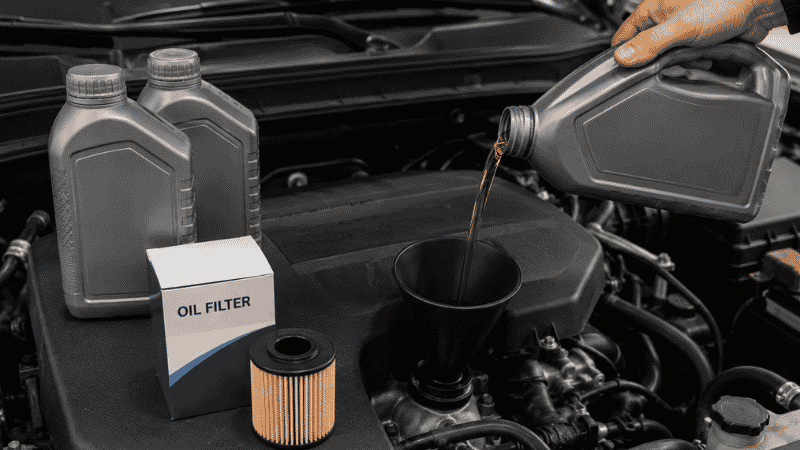
✅ Oil and Filter Change
This is the single most impactful maintenance item for engine longevity. Modern full synthetic oil in a modern engine typically runs 7,500–10,000 miles between changes — not 3,000 miles as older guidance suggested. Use the interval in your owner’s manual, not the sticker the shop applies to your windshield.
Change the filter every time you change the oil. The filter holds contaminants from the previous cycle that immediately contaminate fresh oil if not replaced.
→ Full guide: How to Do an Oil Change
✅ Tire Rotation
Moving tires to different positions evens out the wear. Front tires on FWD vehicles wear 2–3x faster than rear tires — skipping rotation means replacing the fronts early while the rears still have significant life. Most mechanics rotate at every oil change, which aligns the intervals conveniently.
→ Full guide: How Often to Rotate Tires
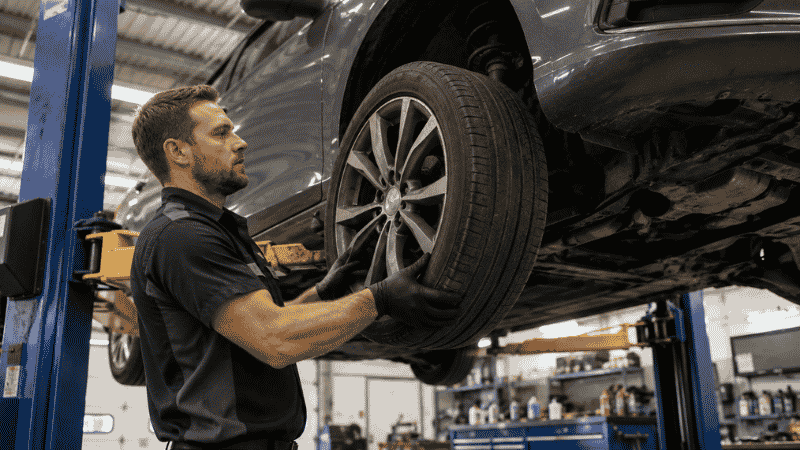
✅ Visual Brake Inspection
Through the wheel spokes with a flashlight: the brake pad pressed against the rotor should have at least ¼ inch (6mm) of material remaining. Less than ⅛ inch means schedule a replacement. No visible pad material means stop driving and call a mechanic.
Every 15,000–20,000 Miles
✅ Engine Air Filter
Located in a black plastic box under the hood — usually held by a few clips or bolts. Hold it up to light. A clean filter looks white or light gray. A filter that’s dark gray, brown, or visibly clogged with debris needs replacement. A dirty engine air filter reduces power and fuel economy.
Cost: $15–30 at any auto parts store. Replacement takes 5 minutes and requires no tools.
✅ Cabin Air Filter
Located behind the glovebox on most vehicles — your owner’s manual shows the exact location. The cabin filter cleans air entering the passenger compartment. A clogged cabin filter reduces AC and heat effectiveness and can cause a musty smell when the fan runs.
Cost: $15–25. Replacement typically takes under 10 minutes.
This is one of the most common quick-lube shop upsells — knowing your filter’s actual condition lets you decline confidently or confirm legitimately.
✅ Wheel Alignment Check
If the car pulls to one side when you drive straight, or if you’ve hit a significant pothole or curb recently, have alignment checked. Poor alignment causes rapid, uneven tire wear and affects fuel economy. Alignment service typically costs $75–100.
Every 30,000 Miles
✅ Brake Fluid Replacement
Brake fluid is hygroscopic — it absorbs moisture from the air over time. Absorbed moisture lowers the fluid’s boiling point, which can cause brake fade during hard use, and promotes internal corrosion in brake components. Most manufacturers recommend replacement every 2 years or 30,000 miles, whichever comes first.
A brake fluid test strip ($3–5) or a shop test can tell you the moisture content without guessing.
✅ Coolant Flush
Old coolant becomes acidic and loses its corrosion inhibitors, eventually damaging the metal components of the cooling system. A full flush removes degraded fluid and scales. Typical interval: 30,000–50,000 miles depending on coolant type (green conventional coolant vs. orange/pink long-life formula).
✅ Spark Plug Inspection
Conventional spark plugs: replace every 30,000–45,000 miles. Iridium or platinum plugs: 60,000–100,000 miles. Worn plugs cause rough idle, harder starting, reduced fuel economy, and in severe cases misfires that can damage the catalytic converter.
✅ Power Steering Fluid Flush (If Hydraulic)
Power steering fluid degrades over time and can become contaminated, affecting steering feel and component life. Check your owner’s manual for the interval — not all vehicles specify this service.
Every 60,000 Miles
✅ Timing Belt or Chain Inspection
This is the most consequential maintenance item on the list for many vehicles.
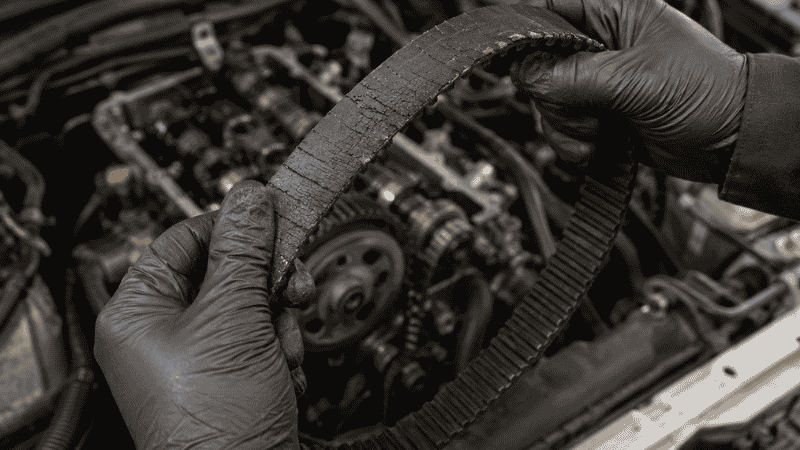
Many engines use a rubber timing belt (as opposed to a metal chain) to synchronize the crankshaft and camshaft. When a timing belt fails — and it fails suddenly, without warning — the results are typically catastrophic: bent valves, destroyed pistons, engine replacement.
Timing belt replacement intervals: 60,000–100,000 miles depending on the manufacturer. The replacement itself costs $500–1,000 at a shop — but an engine destroyed by a failed belt costs $3,000–8,000.
Check your owner’s manual to determine whether your engine has a belt or a chain. Chains typically last the life of the engine with proper oil maintenance. Belts have a firm replacement deadline.
✅ Transmission Fluid Service
Transmission fluid degrades over time and accumulated metal particles accelerate wear. Service intervals range from 30,000–60,000 miles for severe use to 60,000–100,000 miles for normal driving. A sealed transmission should have fluid inspected by a shop at this interval even without a dipstick.
Ignoring transmission fluid is how a $200 fluid service turns into a $2,000–5,000 transmission rebuild.
✅ Brake Pads and Rotor Inspection (Full)
At 60,000 miles, have a mechanic do a complete brake system inspection rather than just a visual pad check. This includes caliper function, rotor thickness and condition, brake hose condition, and ABS sensor function.
→ Full guide: How Long Do Car Brakes Last
Every 100,000 Miles
✅ Timing Belt Replacement (If Not Done at 60K)
Non-negotiable if your engine uses a rubber timing belt. See the 60,000-mile section above.
✅ Water Pump
Often replaced with the timing belt because the water pump is accessed during belt replacement anyway. Replacing both together saves significant labor costs — the water pump alone would cost $150–300 in labor to access, but costs almost nothing additional when done alongside the belt.
✅ Serpentine Belt
The serpentine belt drives the alternator, power steering pump, AC compressor, and water pump simultaneously. A failed serpentine belt strands you immediately and, depending on the engine, can cause rapid overheating. Inspect for cracking, glazing, or fraying. Replace at 100,000 miles proactively.
✅ Battery Replacement
At 5+ years old, a battery should be tested annually and replaced proactively if it shows reduced capacity. Battery failure is the number one cause of roadside assistance calls according to AAA data. A new battery costs $100–200 — far less than an emergency service call.
✅ Suspension and Steering Components
At high mileage, have a mechanic inspect shock absorbers, struts, ball joints, tie rod ends, and bushings. Worn suspension affects vehicle stability, braking distance, and tire wear. A failing ball joint can cause sudden loss of steering control.
Seasonal Car Maintenance Checklist
Spring Checklist (After Winter)
Winter is the harshest season for most vehicle systems. This checklist addresses what winter leaves behind.
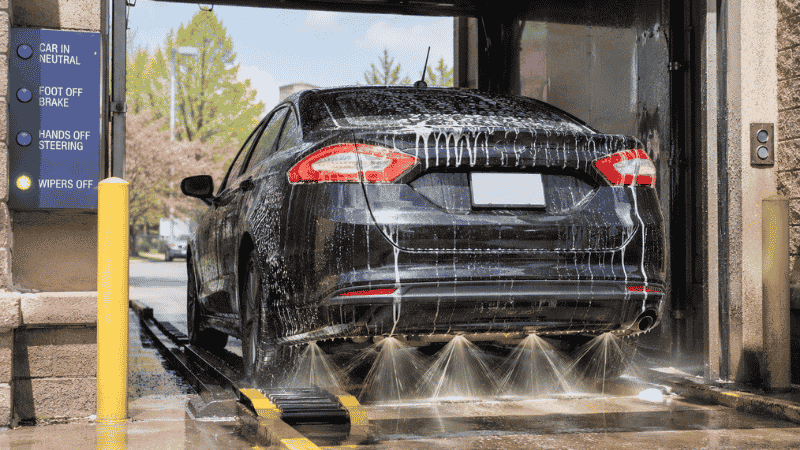
✅ Wash the undercarriage thoroughly — road salt used for ice control accelerates corrosion on brake lines, exhaust components, and frame members. A thorough undercarriage wash removes accumulated salt before spring warmth speeds up the corrosion process.
✅ Inspect tires for winter damage — potholes are most common in late winter when freeze-thaw cycles have damaged road surfaces. Check for bulges, bubbles, or sidewall damage from impact. Also check wheel alignment if the car pulls to one side.
✅ Switch from winter to all-season tires (if you run dedicated winter tires) — winter tires wear rapidly in warm temperatures and provide no performance advantage above 45°F.
✅ Check wiper blades — winter wipers (if used) should be swapped for standard blades. Inspect standard blades for cracking or hardening from cold.
✅ Test the AC system — the first warm day of spring is the right time to verify the AC is cooling properly, not July when you actually need it. If it blows warm, a refrigerant recharge typically costs $100–200.
✅ Check brake performance — winter driving and road salt accelerate brake wear. Inspect pads, rotors, and brake lines visually if accessible.
Fall Checklist (Before Winter)
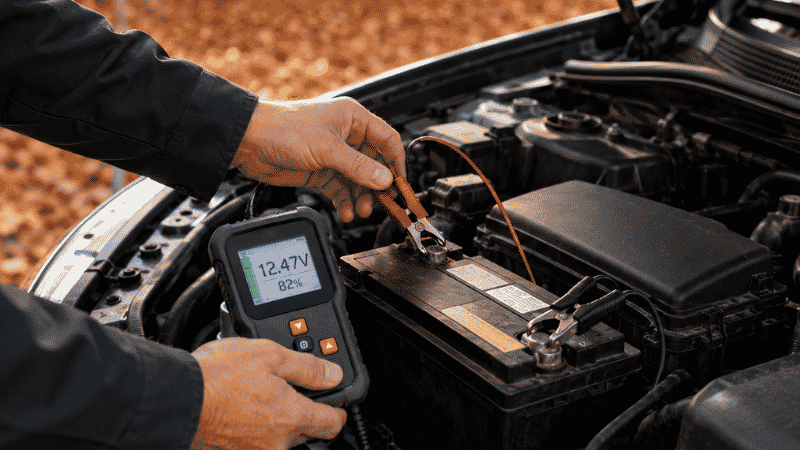
✅ Battery test — cold temperatures reduce battery capacity significantly. A battery that starts the car fine in September may not have enough cold cranking amps (CCA) to start it in January. Have it tested for free at any AutoZone, O’Reilly, or Advance Auto Parts.
✅ Antifreeze concentration check — the cooling system’s freeze protection depends on the coolant-to-water ratio. An antifreeze tester strip or refractometer (available for $5–15) tells you what temperature your coolant is protected to. Most systems should be protected to -34°F (-37°C) minimum.
✅ Check tire tread for winter readiness — below 4/32″ tread depth, tires lose significant snow traction. If you’re borderline, winter is not the time to find out.
✅ Switch to winter tires (if applicable) — dedicated winter tires outperform all-season tires in temperatures below 45°F and in snow and ice conditions. The performance difference in emergency braking distances is significant.
✅ Check all lights — shorter daylight hours mean more driving in darkness. A burned-out headlight is both a safety issue and a ticket risk.
✅ Inspect wiper blades — consider switching to winter wiper blades designed to prevent snow and ice buildup in the blade assembly.
✅ Emergency kit check — winter roadside emergencies are more dangerous than summer ones. Verify your emergency kit has a blanket, extra gloves, an ice scraper, sand or kitty litter for traction, and jumper cables or a jump starter.
→ Full guide: Car Essentials Every Driver Actually Needs
Winter Driving Checks (Ongoing)
✅ Monitor tire pressure weekly — cold temperatures cause pressure to drop. A tire that’s properly inflated at 35 PSI in fall may read 30 PSI in deep winter without any air escaping.
✅ Keep the fuel tank above quarter-full — a full tank reduces the risk of fuel line freeze in extreme cold, adds weight over the drive wheels for traction, and ensures you’re not stranded if you get stuck.
✅ Check washer fluid regularly — winter driving consumes washer fluid rapidly. Use a fluid rated for -20°F or colder to prevent freezing in the reservoir and on the windshield.
By-Mileage Reference Table
| Mileage Interval | Key Tasks |
|---|---|
| Every 5,000–7,500 mi | Oil & filter change, tire rotation, brake visual check |
| Every 15,000–20,000 mi | Engine air filter, cabin air filter, alignment check |
| Every 30,000 mi | Brake fluid flush, coolant flush, spark plugs (conventional), power steering flush |
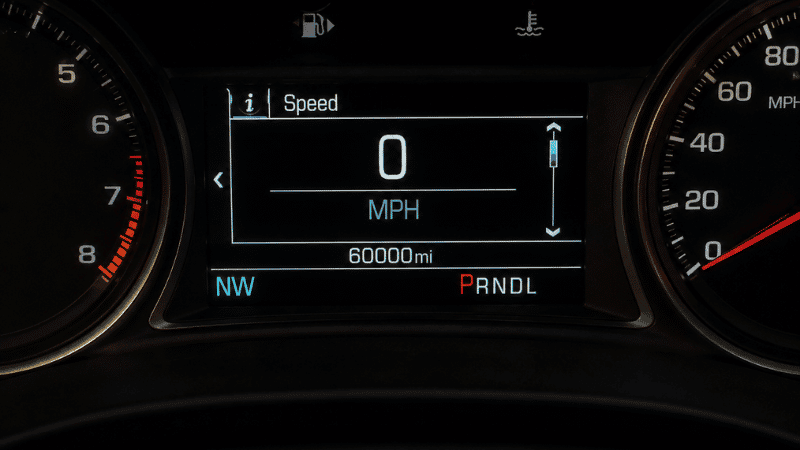
| Every 60,000 mi | Timing belt inspection, transmission fluid service, full brake system inspection |
| Every 100,000 mi | Timing belt replacement, water pump, serpentine belt, battery assessment, suspension inspection |
What Happens If You Skip Maintenance — The Real Cost
This section is worth reading because it quantifies what most guides leave abstract.
Skipped oil changes: Engine oil breakdown leads to sludge formation. Sludge repair (if caught early): $200–500 for an engine flush. Sludge caught late: engine replacement, $3,000–8,000. Cost of 10 years of regular oil changes: $800–1,500.
Ignored brake wear indicators: Pad replacement: $100–200 per axle. Waiting until metal-on-metal: add $150–300 per axle for rotor replacement. Waiting until caliper seizes: add another $150–250 per caliper.
Failed timing belt: Preventive replacement: $500–1,000. Engine damage from failure: $3,000–8,000. The replacement pays for itself many times over.
Consistently underinflated tires: Tire lifespan reduced 25–30%. Fuel economy reduced 1–2 MPG. On 15,000 miles per year at current fuel prices, that’s a meaningful annual cost just from soft tires.
Neglected battery: New battery: $100–200. Emergency roadside service: $75–150 (if you don’t have coverage). AAA membership pays for itself in a single call.
The pattern is consistent: a small, scheduled maintenance expense prevents a large, unexpected repair bill.
The 5-Minute Monthly Habit That Covers 80% of What Matters
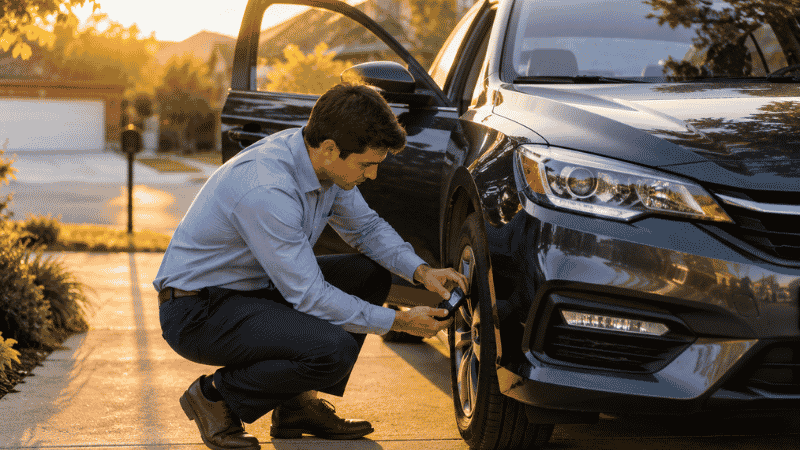
If you take away only one thing from this guide, make it this routine:
First of every month, before your first drive:
- Check tire pressure on all four tires (2 minutes)
- Check engine oil level on the dipstick (1 minute)
- Glance at coolant and brake fluid reservoirs (30 seconds)
- Look at the ground under where the car was parked (30 seconds)
- Turn on your headlights and walk around the car (1 minute)
That’s it. Five minutes. It catches 80% of the problems that strand drivers on the side of the road. Everything else on this checklist can be scheduled and managed — but this monthly check is what bridges the gaps.
FAQ
How often should you service your car? Oil changes every 7,500–10,000 miles with full synthetic oil in a modern engine. Tire rotation every 5,000–7,500 miles. Beyond that, follow the maintenance schedule in your owner’s manual — it’s tailored to your specific vehicle. Most manufacturers schedule a major service inspection annually or every 15,000–20,000 miles.
What is the most important car maintenance to do? Oil changes, in terms of frequency and consequence. Tires, in terms of safety impact. Brakes, in terms of immediate safety consequence. Battery, in terms of likelihood of leaving you stranded. These four systems cover the vast majority of both maintenance needs and roadside emergencies.
How do I keep track of car maintenance? Options range from the maintenance log in your glove box (most cars include one) to a simple note in your phone tracking the date and mileage of each service. Apps like Drivvo, Car Minder, or simply a spreadsheet work well. The most important thing is recording the date and mileage of each oil change so you know when the next one is due.
Is it okay to go over your oil change interval? Modern full synthetic oil has enough additive life to handle occasional overages. Going 500–1,000 miles over your interval occasionally won’t damage a healthy engine. Making it a habit, or going significantly over, reduces engine protection. The interval exists for a reason — treat it as a deadline, not a suggestion.
What car maintenance can I do myself vs. what requires a shop? DIY-friendly: oil changes, air filter replacement (engine and cabin), tire pressure checks and inflation, battery terminal cleaning, wiper blade replacement, lightbulb replacement on most vehicles, fluid top-offs.
Shop-recommended: timing belt, brake pad and rotor replacement (unless you’re mechanically experienced), transmission service, coolant flush, wheel alignment, suspension inspection.
How does car maintenance affect resale value? Significantly. A maintained vehicle with documented service records typically sells for $1,000–3,000 more than an identical vehicle with no service history, according to Carfax research. Buyers pay a premium for certainty — documented maintenance provides that certainty.
What’s the difference between a car service and car maintenance? These terms are often used interchangeably. Strictly speaking, “service” typically refers to a scheduled shop visit that may include an oil change, multi-point inspection, and any items the manufacturer schedules at that mileage. “Maintenance” is the broader category of all care tasks, including what you can do at home.
What’s Next — Go Deeper on Each System
This checklist gives you the what and when. These guides give you the how:
- How to check car fluids — engine oil, coolant, brake fluid, transmission fluid, and two more, all in one 10-minute monthly check. (→ How to Check Car Fluids)
- How to check tire pressure — what the TPMS light actually means, why the windshield sticker interval is wrong, and how to read your door jamb sticker correctly. (→ How to Check Tire Pressure)
- How long do car brakes last — the warning sounds, what they mean, how to check pads yourself, and when “soon” means today. (→ How Long Do Car Brakes Last)
- How often to rotate tires — why FWD cars need rotation more urgently than RWD, and what different wear patterns are telling you. (→ How Often to Rotate Tires)
- How to do an oil change — DIY cost breakdown, which shop upsells to refuse, and the 3,000-mile myth explained. (→ How to Do an Oil Change)
- How to change a flat tire — the calm step-by-step for when it happens, and what to do if you don’t have a spare. (→ How to Change a Flat Tire)
- Car essentials every driver should have — the emergency kit, tools, and daily-use items that make all of the above easier and safer. (→ Car Essentials Every Driver Actually Needs)
A car that’s maintained doesn’t demand your attention at inconvenient moments. It just works. And when you know what to look for, the early warning signs are almost always there — you just have to know you’re looking.
References
- American Automobile Association (AAA) — 2023 Your Driving Costs Study; roadside assistance call data and breakdown cause analysis
- National Highway Traffic Safety Administration (NHTSA) — Tire Safety: Everything Rides on It; tire maintenance impact on safety
- American Petroleum Institute (API) — Engine Oil Licensing and Certification System; oil change interval guidance by oil type
- U.S. Department of Energy — Keeping Your Car in Shape, fueleconomy.gov; maintenance impact on fuel economy
- Society of Automotive Engineers (SAE) International — Powertrain and Fluid Systems Standards, maintenance interval technical references
This article contains affiliate links. AutoIXPro may earn a small commission on purchases through our links at no extra cost to you. All recommendations are based on genuine research and safety value. See our Affiliate Disclosure for details.
Question about your specific car’s maintenance schedule? Contact us — we read every message.