
Last updated: May 2026 | Reading time: 12 min | Category: Safety & Emergency
Key Takeaways
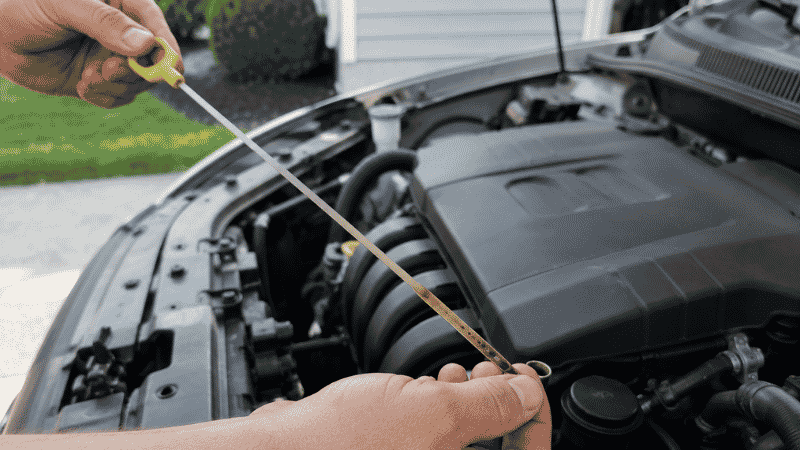
- Most cars have 6 fluids to monitor — engine oil, coolant, brake fluid, transmission fluid, power steering fluid, and windshield washer fluid — but not all need the same attention frequency
- Color is your most reliable diagnostic tool — healthy fluids have specific colors; dark, cloudy, or milky appearance signals a problem before you feel any symptoms
- Engine oil should be checked monthly with the engine cold — checking on a warm engine gives a falsely low reading due to thermal expansion
- Low brake fluid is always worth investigating — unlike other fluids, brake fluid level doesn’t drop from evaporation; it drops because brake pads are wearing down or there’s a leak
- Modern vehicles with sealed transmissions have no dipstick — if yours is one of them, transmission fluid condition can only be checked by a shop
The Warning Light That Came On — And the One That Didn’t
Picture two scenarios. In the first, your oil pressure warning light comes on while you’re driving. You pull over immediately, call for help, and the mechanic finds your engine oil was critically low. In the second scenario, no light ever came on. Your coolant level was gradually dropping for weeks — a slow leak you never noticed — until one afternoon the engine overheated on the highway.
Modern warning systems catch a lot. But they catch problems at the threshold of serious damage, not at the early stage when correction is simple and cheap. By the time a dashboard light tells you about a fluid problem, you’ve already been operating with compromised lubrication, cooling, or braking for some time.
This is why knowing how to check car fluids yourself — taking five minutes once a month — is genuinely one of the most protective things a car owner can do. You’ll catch the slow coolant leak before the engine overheats. You’ll notice the brake fluid that’s darker than it should be before it affects stopping power. You’ll see the oil level that’s two quarts low before it causes engine wear.
This guide walks through every fluid your car needs, how to check each one correctly, what normal looks like, and — critically — what abnormal looks like and what to do about it.
Before You Start: Two Rules That Apply to Every Fluid Check
Rule 1: Park on level ground. Fluid levels are only accurate when the car is horizontal. Checking on an incline gives you a false reading on every fluid that uses a min/max marker system.
Rule 2: Check most fluids with the engine cold. The exception is transmission fluid, which is typically checked with the engine warm and running. For everything else — engine oil especially — wait at least 30 minutes after driving, or check first thing in the morning before the car has been started. Heat causes fluids to expand, and warm engine oil partially drains back into the pan, giving a falsely low dipstick reading.
Pop the hood. The hood release is typically a lever under the left side of the dashboard. Pull it, then press the secondary latch under the hood edge to lift it. Most hoods have a prop rod — locate it and set it in the prop hole before reaching under the hood.
How to Check Engine Oil — The Most Important Monthly Habit
Engine oil is the single most critical fluid in your car. It lubricates hundreds of moving metal parts in the engine — without it, those parts grind against each other and generate catastrophic heat. Most engines can sustain permanent damage within minutes of running without adequate oil pressure.
Finding the Dipstick
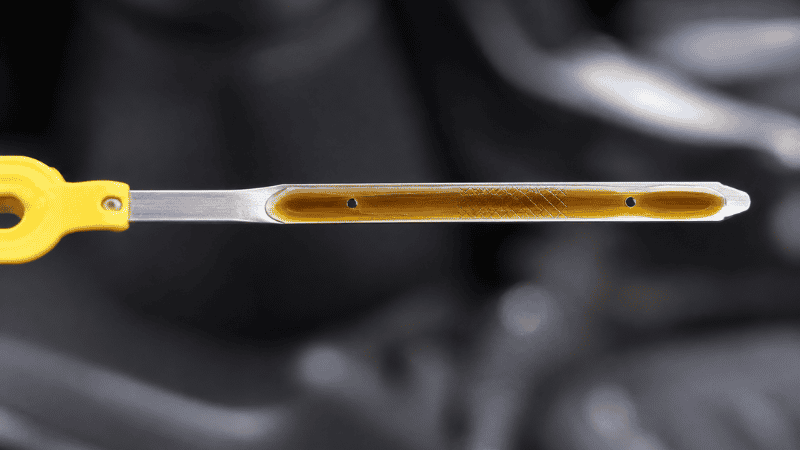
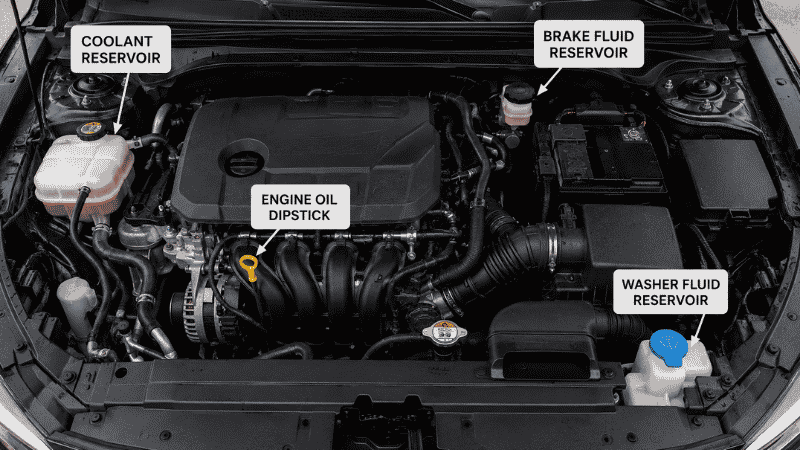
Look for a brightly colored handle — usually yellow or orange — protruding from the engine block. It’s labeled “Engine Oil” on most vehicles. If you can’t locate it, check your owner’s manual for a diagram.
How to Read It Correctly
- Pull the dipstick out completely and wipe it clean with a lint-free cloth or paper towel
- Reinsert it fully — push it all the way back in
- Pull it out again and hold it horizontally to read
- The oil level should fall between the two markers (MIN and MAX, or Low and Full, or indicated dots)
What the color tells you:
- Amber/golden: Fresh oil, excellent condition
- Light brown: Normal used oil, still healthy
- Dark brown/black: Oil is dirty and due for a change — not an emergency but schedule it soon
- Milky/gray/creamy: This is serious — coolant has entered the oil, likely from a blown head gasket. Do not drive; have the car towed to a shop
- Gritty texture: Metal particles in the oil — engine internal damage. Stop driving immediately
What the level tells you: If the oil is below the MIN mark, add oil before driving further. Use the viscosity specified in your owner’s manual (usually printed on the oil cap — something like “5W-30”). Do not overfill above the MAX mark — excess oil creates foaming that reduces lubrication effectiveness.
How often: Monthly, and before any trip over 200 miles.
How to Check Coolant — The Overflow Reservoir Method
Coolant (also called antifreeze) prevents your engine from overheating in summer and freezing in winter. It circulates through the engine and radiator continuously while the car is running.
⚠️ Critical Safety Warning
Never open the radiator cap on a warm engine. The cooling system is pressurized. Opening the cap when hot releases superheated steam and coolant that causes severe burns. Always check coolant through the translucent overflow reservoir instead.
Where to Find It
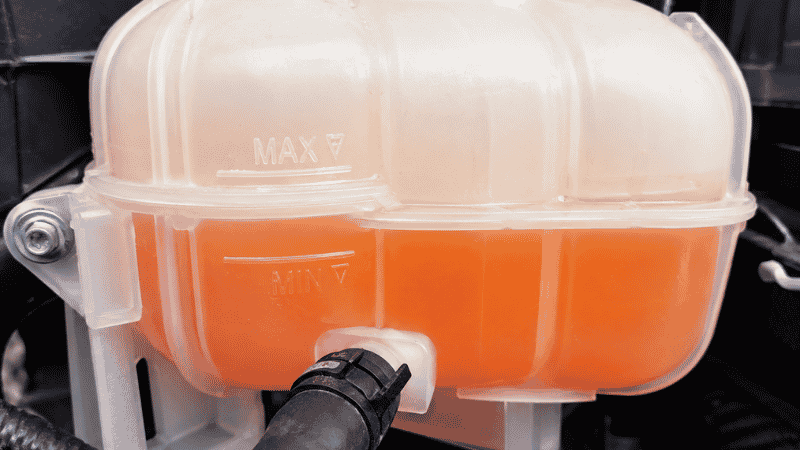
The coolant reservoir is a semi-transparent plastic tank, usually white or yellow, with a colored cap (often yellow). It’s connected to the radiator by a rubber hose. The fluid inside should be visible through the translucent walls — no need to open it for a routine level check.
What the level tells you: The reservoir has MIN and MAX lines molded into the plastic. The fluid should be between them when the engine is cold. Significantly below MIN means you need to add coolant.
What the color tells you:
- Bright green: Traditional coolant, still common in older vehicles
- Orange/pink/red: Long-life coolant (OAT or HOAT formula) — common in newer vehicles
- Blue/purple: European formula coolant
- Rusty brown/murky: Coolant is degraded or contaminated — needs flush
- Milky/oily: Oil has entered the cooling system — blown head gasket. Stop driving
Important: Don’t mix coolant types without checking compatibility, and always mix with distilled water (typically 50/50 ratio) rather than tap water.
How often: Check monthly. Coolant doesn’t evaporate under normal conditions — if the level keeps dropping between checks, there’s a leak somewhere in the system worth investigating.
How to Check Brake Fluid — The One You Should Never Ignore
Brake fluid is a hydraulic fluid that transmits the force from your foot on the brake pedal to the brake calipers at each wheel. Without adequate pressure, braking becomes spongy, soft, or unresponsive.
Where to Find It
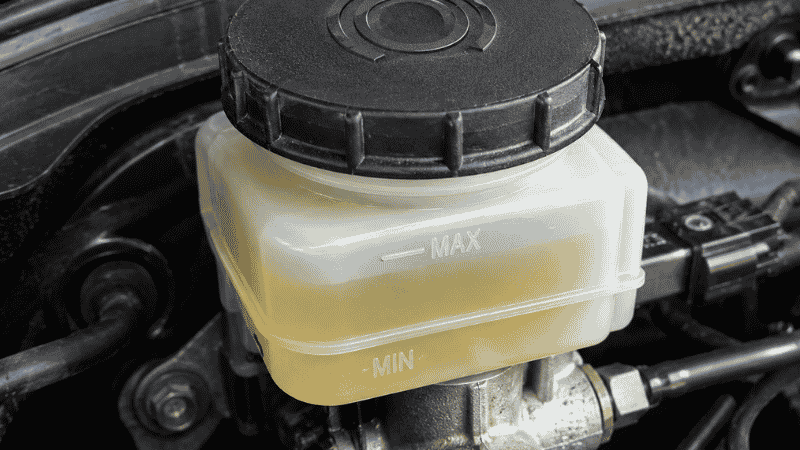
The brake fluid reservoir is a small plastic container, usually located near the firewall on the driver’s side. It has a cap marked with a brake symbol (circle with lines) and the words “Brake Fluid.”
What the level tells you: Like coolant, you can see the level through the translucent reservoir. It should be between MIN and MAX.
Here’s what most guides don’t explain: brake fluid level dropping is not normal in the way other fluids dropping is normal. Brake fluid doesn’t evaporate. If your level is low, one of two things is happening:
- Your brake pads are wearing down — as pads thin, the caliper pistons extend further to maintain contact with the rotor, which draws fluid from the reservoir. This is normal wear and means your brake pads need inspection soon
- There’s a leak in the hydraulic system — this is urgent and requires immediate professional attention
A steadily dropping brake fluid level is a brake wear indicator disguised as a fluid check. Take it seriously.
What the color tells you:
- Clear/light yellow: Fresh fluid in excellent condition
- Light amber: Normal aged fluid, acceptable
- Dark brown: Fluid has absorbed moisture over time and should be replaced — brake fluid is hygroscopic (absorbs water from the air), which lowers its boiling point and reduces braking effectiveness under hard use
- Black: Severely degraded, replace immediately
How often: Check monthly. Replace fluid every 2 years or 30,000 miles regardless of appearance, as moisture absorption isn’t always visible.
How to Check Transmission Fluid
The transmission fluid lubricates the complex gear system that translates engine power into wheel movement. Degraded or low transmission fluid causes rough shifting, slipping gears, and eventually transmission failure — one of the most expensive car repairs at $2,000–$5,000+.
Does Your Car Have a Dipstick?
Many modern vehicles have sealed transmissions with no dipstick. This is increasingly common in vehicles made after 2010. If you look under the hood and can’t find a second dipstick after locating the oil dipstick, check your owner’s manual. If it says “transmission fluid is lifetime fill” or “sealed transmission,” the fluid condition can only be assessed by a shop with specialized equipment.
For vehicles with a dipstick:
- Check with the engine warm and running (unlike engine oil)
- Shift through each gear position briefly, then return to Park or Neutral
- Pull the dipstick, wipe, reinsert, pull again, and read
What the color tells you:
- Pink/red: Fresh fluid, excellent condition
- Light brown: Normal aged fluid
- Dark red/brown: Fluid is degrading — consider a service
- Dark brown with burnt smell: Fluid has overheated — transmission service needed soon
- Black with metallic particles: Internal transmission damage — professional assessment required
How often: Check every 3 months or 3,000 miles for vehicles with a dipstick.
How to Check Power Steering Fluid
Power steering fluid enables the hydraulic-assisted turning that makes modern vehicles easy to steer. Low power steering fluid causes a whining or groaning noise when turning and eventually makes the steering wheel very heavy.
Note: Many newer vehicles use electric power steering (EPS) which has no fluid at all — the system is electronically assisted. If your car was built after roughly 2015, check whether it has hydraulic or electric power steering before looking for this fluid.
For Hydraulic Power Steering Systems
The reservoir is typically a small plastic cylinder with a cap marked with a steering wheel symbol. Check the level through the translucent reservoir or use the integrated dipstick on the cap.
What normal looks like: Clear to light amber, between MIN and MAX marks.
Warning signs: Dark brown or milky fluid, whining noise when turning, stiff steering, or the wheel pulling to one side under light contact.
How often: Check monthly. Low power steering fluid often indicates a leak in the system — find and fix the source rather than repeatedly topping up.
How to Check Windshield Washer Fluid
Windshield washer fluid is the only one on this list with no mechanical consequence — but it significantly affects visibility. Running out of washer fluid when you need it most (driving into a dirty spray from a truck, for instance) is genuinely dangerous.
The reservoir is typically marked with a windshield wiper symbol and is the most accessible of all fluid reservoirs. Simply open the cap, check the level visually, and refill with premixed washer fluid.
Don’t use water: Water alone doesn’t contain the detergents needed to remove road grime, leaves streaks, and freezes in winter. In cold climates, use a washer fluid rated for freezing temperatures to prevent the reservoir from cracking.
How often: Check monthly or before long trips.
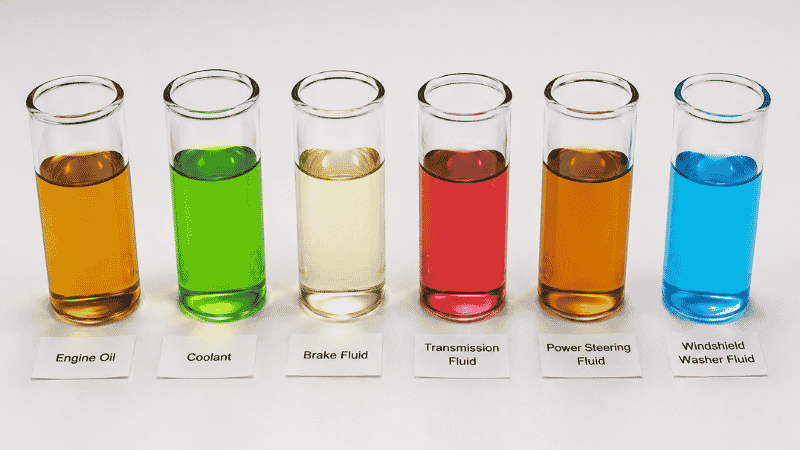
Color Reference: Quick Visual Guide to All Six Fluids
| Fluid | Healthy Color | Warning Color | Emergency Color |
|---|---|---|---|
| Engine Oil | Amber to light brown | Dark brown | Black or milky/gray |
| Coolant | Clear green, orange, or pink | Rusty brown | Milky or oily |
| Brake Fluid | Clear to light yellow | Dark amber | Black |
| Transmission Fluid | Pink to light red | Dark red-brown | Black with burnt smell |
| Power Steering | Clear to light amber | Dark brown | Milky |
| Washer Fluid | Blue, green, or pink | N/A | N/A |
The Smell Diagnostic: What Different Engine Odors Mean

Most fluid problems announce themselves by smell before they cause a warning light. Learning to identify engine odors is one of the most practical diagnostic skills a driver can develop.
Sweet or maple syrup smell: Coolant. Usually indicates a coolant leak — check the reservoir level and look for wet spots around the radiator or hoses. Never ignore a sweet smell from the engine compartment.
Burning oil smell: Usually means oil is dripping onto a hot exhaust component. Check for leaks around the valve cover gasket, oil pan, or around the drain plug. Also check that the oil cap is fully seated.
Rotten egg smell: Sulfur compounds from a failing catalytic converter. Not a fluid issue — a mechanical problem. Have it inspected.
Burning rubber smell: Often brake pads overheating (especially after hard braking or if a caliper is sticking) or a belt issue. If you smell burning rubber after normal driving, have the brakes inspected.
Gasoline smell: Could indicate a fuel line leak or a fuel injector issue. Do not ignore fuel smells — fire risk.
The 10-Minute Monthly Check Routine
You don’t need to check every fluid separately on different days. Build a monthly 10-minute routine:
- Park on level ground, engine cold (or after sitting for 30 minutes)
- Pop the hood
- Engine oil — dipstick check, note color and level (2 min)
- Coolant — visual through reservoir (30 sec)
- Brake fluid — visual through reservoir, note level trend (30 sec)
- Power steering — visual check if applicable (30 sec)
- Washer fluid — glance at reservoir (15 sec)
- Transmission — dipstick if applicable, with engine warm (2 min, can do separately)
- Quick visual scan under the car — any puddles or stains? (1 min)
The puddle check is worth adding: fresh oil is dark brown and oily, coolant is colorful and slightly sweet-smelling, brake fluid is clear and oily, transmission fluid is reddish. A puddle under your car is always worth identifying before it becomes a repair bill.
When to Go Straight to a Mechanic — Don’t DIY These
Some fluid situations require professional diagnosis, not a top-up:
- Milky or gray engine oil — blown head gasket, serious internal engine damage. Tow, don’t drive
- Coolant level dropping consistently — leak that needs to be found and fixed, not just refilled
- Brake fluid consistently low — either worn brake pads needing replacement or a hydraulic leak. Both require professional attention
- Transmission fluid with a burnt smell or metal particles — transmission internal damage
- Any fuel smell that persists — fire hazard, needs immediate inspection
- Any dashboard warning light that stays on after checking fluids — sensors indicate a problem beyond fluid level
FAQ
How often should you check car fluids? Engine oil monthly, coolant monthly, brake fluid monthly, power steering monthly. Transmission fluid every 3 months for vehicles with a dipstick. Washer fluid as needed. The monthly check takes under 10 minutes and catches problems before they become failures.
What happens if you never check your car fluids? Small, fixable issues become large, expensive ones. Low engine oil leads to accelerated wear and potential engine failure ($3,000–$8,000+ to repair). A slow coolant leak causes overheating and possible head gasket failure ($1,500–$3,000). A hydraulic brake fluid leak can cause brake failure. Regular checks cost nothing; ignoring them can cost thousands.
How do I know if my car is leaking fluid? Check the ground where you park regularly. A fresh stain on a clean driveway tells you something is leaking. Color identification: dark brown/black oily = engine oil, bright colored and sweet = coolant, clear and slippery = brake or power steering fluid, reddish = transmission fluid. Any leak warrants investigation.
Can I mix different brands of the same fluid? For engine oil: generally yes within the same viscosity grade, though it’s better practice to use the same brand. For coolant: no — mixing different coolant formulas (green vs. orange, for instance) can cause chemical reactions that degrade both. Use the correct type specified in your owner’s manual. For brake fluid: check the DOT rating (DOT 3, DOT 4, DOT 5) — only mix the same rating.
My car has no transmission dipstick. How do I check the fluid? You can’t check it yourself without specialized tools. Manufacturers of sealed transmissions claim the fluid is “lifetime fill” — but mechanics generally recommend having it inspected every 60,000–100,000 miles. A shop can check it via the fill plug with the right equipment.
What’s the difference between coolant and antifreeze? Antifreeze is the concentrated chemical (usually ethylene glycol). Coolant is antifreeze mixed with water (typically 50/50) — it’s the diluted, ready-to-use version. Most stores sell both; for topping up, use pre-mixed coolant rather than straight antifreeze, which needs to be diluted before use.
How do I add engine oil without spilling it? Locate the oil fill cap on top of the engine (usually has an oil can symbol). Use a funnel — available at any auto parts store for $2–3. Add oil in small amounts (half a quart at a time), then recheck the dipstick before adding more. It’s very easy to accidentally overfill, which causes its own problems.
What’s Next
Fluid checks are one part of keeping your car running reliably. The other habits that pay dividends:
- How long do car brakes last — brake fluid level is directly connected to brake pad wear; understanding both together gives you the full picture. (→ How Long Do Car Brakes Last)
- How to check tire pressure — tires and fluids are the two most impactful monthly checks for safety and fuel economy. (→ How to Check Tire Pressure)
- Car essentials every driver should have — including the funnel, lint-free cloths, and flashlight that make fluid checks clean and easy. (→ Car Essentials Every Driver Actually Needs)
A car that’s properly maintained doesn’t suddenly break down. It gives you warnings — subtle ones, if you’re paying attention. Fluid checks are how you listen.
References
- National Highway Traffic Safety Administration (NHTSA) — Vehicle Maintenance and Safety, Federal consumer guidance on fluid maintenance and warning sign recognition
- Society of Automotive Engineers (SAE) International — Engine Oil Viscosity Classification, SAE J300; Hydraulic Brake Fluid Standards, SAE J1703
- American Automobile Association (AAA) — Car Care: Fluid Maintenance Guide, consumer vehicle maintenance research (2023)
- U.S. Department of Energy — Vehicle Maintenance and Fuel Economy, fueleconomy.gov guidance on maintenance impact on efficiency
This article contains affiliate links. AutoIXPro may earn a small commission on purchases through our links at no extra cost to you. All recommendations are based on genuine research and safety value. See our Affiliate Disclosure for details.
Have a fluid question we didn’t cover? Contact us — we read every message.