
Last updated: May 2026 | Reading time: 14 min | Category: Safety & Emergency
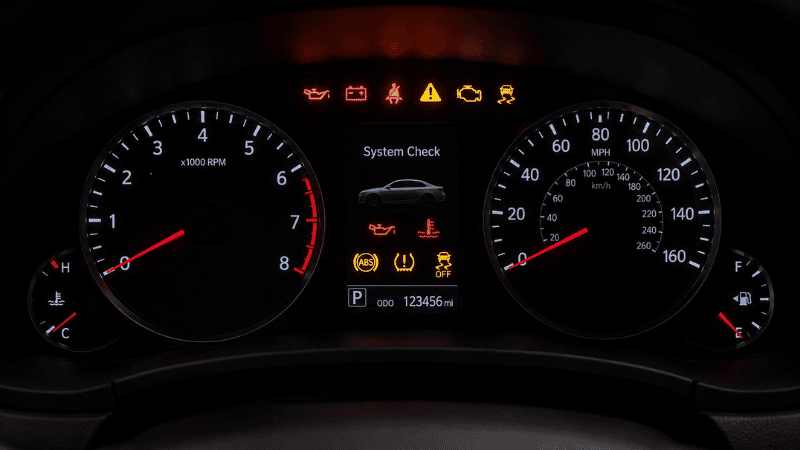
Key Takeaways
- Red warning lights mean stop or take immediate action — these indicate conditions that can cause engine damage or loss of vehicle control if ignored
- Yellow/orange warning lights mean schedule service soon — these are “attention required” signals, not emergencies, but shouldn’t be ignored for weeks
- Green and blue lights are information only — they confirm a feature is active, not that something is wrong
- The 10 most common warning lights new drivers encounter are covered in detail below, including what to do in the next 5 minutes
- Most dashboard issues can be diagnosed at home with an OBD2 scanner before spending money at a shop — we explain exactly which scanner reads which codes
The Light That Just Came On
You’re on the highway, traffic is moving, and a symbol you’ve never seen appears on your dashboard. You don’t recognize it. Is it serious? Can you keep driving? Should you pull over right now?
This is the scenario most new drivers aren’t prepared for — and it’s genuinely unsettling when it happens. The problem isn’t that modern cars have too many warning lights. It’s that nobody explains the one thing you actually need to know in that moment: is this a stop-immediately situation, or can I get to where I’m going and deal with it later?
Most dashboard symbol guides try to explain every possible light on every possible car. That’s useful for reference, but not for the moment the light actually appears. What you need in that moment is a clear decision framework: does this color mean I need to act now, and what’s the most likely cause of the specific symbol I’m seeing?
This guide covers both. First, the color-based urgency system that applies across almost every vehicle. Then, the 10 dashboard symbols new drivers encounter most often — with what they mean, why they appear, and exactly what to do.
The Color System: How Urgency Works on Every Dashboard
Before looking at specific symbols, understand the universal color language that modern cars use. This system is standardized across manufacturers and tells you the urgency level before you even know what the symbol means.
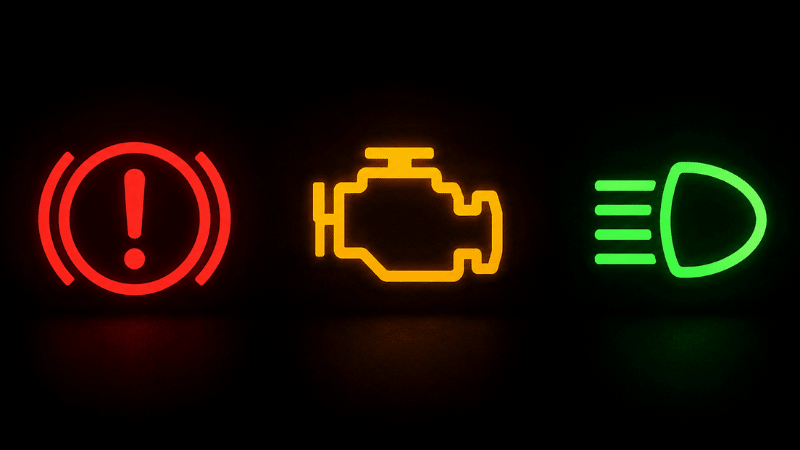
🔴 Red — Stop or Act Immediately
A red warning light means the car has detected a condition that is either dangerous right now or will cause significant damage if you continue driving. Red lights are not suggestions.
What to do: Don’t ignore a red light. Assess quickly. If the car is driving normally and the light just appeared, find a safe place to pull over within the next 1–2 miles and assess. If you notice any changes in how the car drives — smoke, smell, loss of power, difficulty steering — pull over immediately.
Red lights that commonly appear: oil pressure, engine temperature (overheating), battery/charging system, brake system pressure.
🟡 Yellow/Orange — Schedule Service Soon
A yellow or orange warning light means the car has flagged something that needs attention, but it’s not immediately dangerous in most cases. These are “warning, not emergency” signals.
What to do: You can typically complete your current trip and deal with it within the next few days. Don’t ignore it for weeks — yellow lights that are ignored often become red-light situations. Note when the light appeared and whether anything else changed (performance, sounds, smells).
Yellow/orange lights that commonly appear: check engine, traction control fault, ABS fault, tire pressure monitoring system, service reminder.
🟢 Green / 🔵 Blue — Information Only
These are status indicators, not warnings. They confirm that a feature is active: high beams are on (blue), turn signal is active (green), cruise control is engaged (green). No action required — unless you want to turn the feature off.
The 10 Dashboard Symbols New Drivers Encounter Most
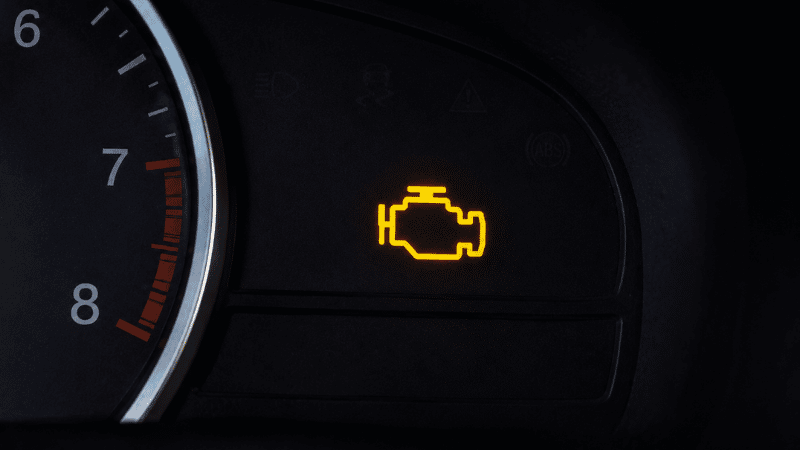
1. Check Engine Light (Engine Symbol or “Check Engine” Text)
What it looks like: An outline of an engine, sometimes with a lightning bolt through it. May also read “Check Engine” or “Service Engine Soon.”
What it means: The engine management system has detected something outside normal parameters and stored a diagnostic fault code. The range of possible causes is enormous — from a loose gas cap to a failing oxygen sensor to a catalytic converter issue.
The critical distinction: A solid check engine light is a yellow-level concern. A flashing check engine light is a red-level concern — it typically indicates an active engine misfire that can damage the catalytic converter. If it’s flashing, reduce speed and get to a shop today.
What to do:
- Solid light: Check that the gas cap is fully tightened. Drive for a day or two — if the cap was loose, the light may go off on its own. If it stays on, use an OBD2 scanner to read the specific fault code before spending money at a shop
- Flashing light: Reduce engine load, drive slowly to a shop, don’t ignore it
What you can do yourself: A basic OBD2 scanner ($20–$30) reads engine codes. The code will narrow down the cause significantly before you pay a shop diagnostic fee.
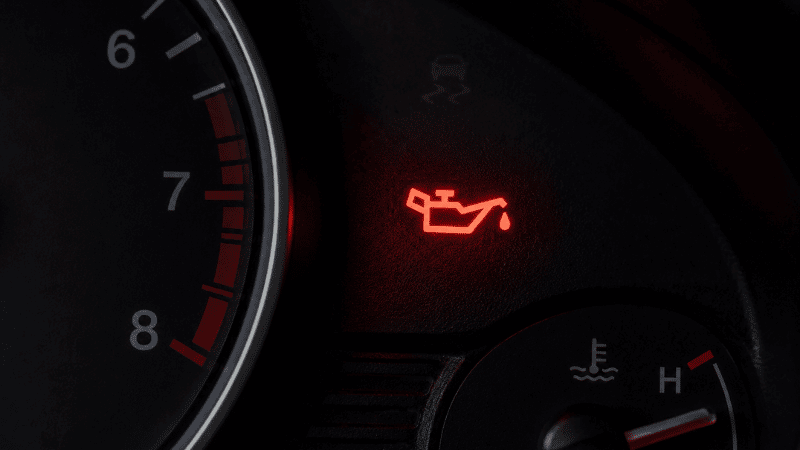
2. Oil Pressure Warning Light (Oil Can Symbol)
What it looks like: A small oil can or teapot with a drop underneath.
What it means: Oil pressure in the engine has dropped below the minimum safe level. This is a red-level emergency. Engines can sustain catastrophic damage within minutes of running without adequate oil pressure.
What to do: Pull over safely and turn off the engine as soon as it’s safe to do so. Don’t keep driving. Check the oil level with the dipstick. If the oil level is normal but the light is on, there may be a pressure sensor failure or a pump issue — either way, don’t drive until it’s diagnosed.
The most expensive mistake new drivers make: Ignoring the oil pressure light or assuming it’s “just a sensor.” Sometimes it is a sensor — but sometimes it’s an oil pump failure, and driving with failed oil pressure for even 15 minutes can destroy an engine that costs $3,000–$8,000 to replace.
→ Full guide: How to Check Car Fluids
3. Battery/Charging System Warning (Battery Symbol)
What it looks like: A rectangle with a plus sign on one end and a minus sign on the other — the universal battery symbol.
What it means: The charging system is not functioning properly. This almost always means the alternator is failing to charge the battery while the engine runs. The battery is draining faster than it’s being replenished.
What to do: Turn off non-essential electronics (radio, AC, heated seats) to reduce the electrical load and extend the time before the battery dies completely. Drive to the nearest auto parts store or shop — don’t turn the car off, because you may not be able to restart it. Most auto parts stores test alternators for free.
How long do you have? If the alternator has completely stopped charging, a fully charged battery typically lasts 30–60 minutes of driving with minimal electronics. A partially depleted battery may give you much less time.
→ Full guide: How to Check Your Car Battery
4. Temperature Warning Light (Thermometer Symbol)
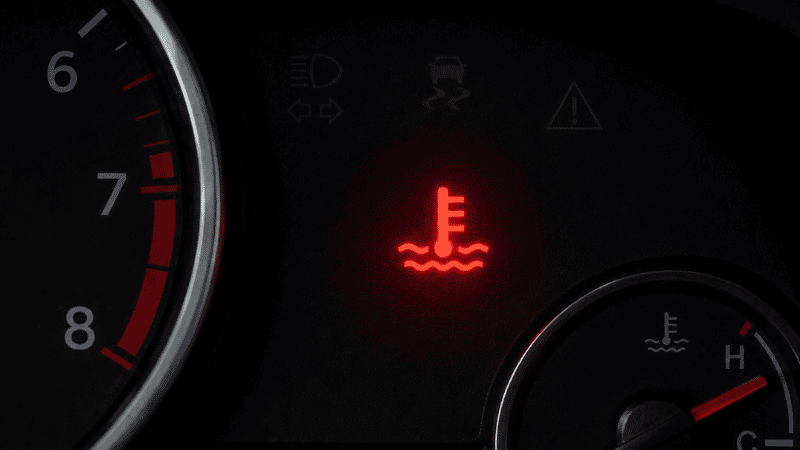
What it looks like: A thermometer submerged in liquid, typically red when the temperature is critically high.
What it means: Engine coolant temperature has exceeded safe limits. The engine is overheating. This is a red-level emergency — continued driving causes severe engine damage including warped cylinder heads and blown head gaskets, repairs that cost $1,500–$4,000+.
What to do immediately:
- Turn off the AC (reduces engine load)
- Turn the heater on full blast — this sounds counterintuitive, but the heater draws heat from the engine coolant, which helps cool the engine
- Pull over safely as soon as possible and turn off the engine
- Wait at least 30 minutes before opening the hood or checking coolant — the cooling system is pressurized and extremely hot; opening it immediately causes severe burns
- Call roadside assistance if the temperature doesn’t normalize within a few minutes of turning off the engine
Never: Add cold water to a hot radiator. The thermal shock can crack the engine block.
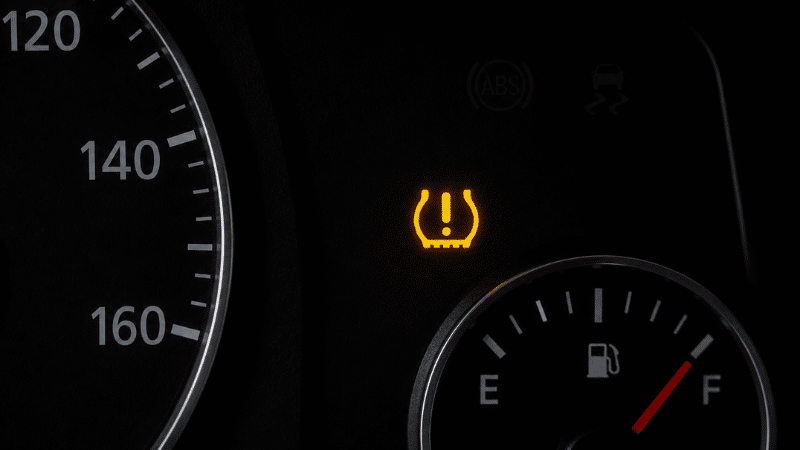
5. TPMS Light — Tire Pressure Monitoring System (Exclamation Mark in Horseshoe)
What it looks like: An exclamation mark inside what looks like a horseshoe or the cross-section of a tire.
What it means: At least one tire is 25% or more below the manufacturer’s recommended pressure. Per federal regulation (FMVSS No. 138), TPMS has been required on all new passenger vehicles since 2008.
What to do: Check tire pressure on all four tires with a gauge. The correct pressure is on the sticker inside your driver’s door jamb — not the number on the tire sidewall (that’s the maximum, not the recommended pressure). Inflate any low tires and the light should turn off after driving a few miles.
The most overlooked fact: TPMS only alerts you when pressure drops 25% or more. A tire that’s 10 PSI below recommended pressure — affecting fuel economy, tire wear, and handling — won’t trigger the TPMS light. Monthly manual checks catch what TPMS misses.
→ Full guide: How to Check Tire Pressure
6. Brake Warning Light (Exclamation Mark in Circle)
What it looks like: An exclamation mark inside a circle, often with the letter “P” or the word “BRAKE.”
What it means: This light has two distinct causes that require different responses:
If the parking brake is applied: The most common cause for new drivers. Make sure the parking brake (handbrake or electronic parking brake button) is fully released before driving.
If the parking brake is not applied: This is a hydraulic brake system warning. Causes include low brake fluid, a brake fluid leak, or a brake system fault. This is a red-level concern — brake failure can cause inability to stop the vehicle.
What to do: If the parking brake is released and the light stays on, check the brake fluid reservoir under the hood. If the fluid is low, do not drive until you understand why — low brake fluid means either significantly worn brake pads (normal wear) or a hydraulic leak (urgent). Significantly low fluid with no obvious pad wear means a leak, which is a stop-driving situation.
→ Full guide: How Long Do Car Brakes Last
7. Traction Control Light (Car with Squiggly Lines)
What it looks like: A car silhouette with two wavy lines beneath the rear wheels, representing tire tracks on a slippery surface. Sometimes labeled “TCS” or “TC.”
What it means: Depends entirely on whether it’s flashing or steady.
Flashing: The system is actively working — your tires slipped and TCS corrected it. This is normal on wet or icy roads. No action needed.
Steady: The TCS system has detected a fault and disabled itself. Most commonly caused by a faulty wheel speed sensor or low tire pressure. You can drive in dry conditions but should get it checked.
→ Full guide: Traction Control Light On? What It Actually Means
8. ABS Warning Light (ABS Text in Circle)
What it looks like: The letters “ABS” inside a circle, sometimes with parentheses on either side.
What it means: The Anti-lock Braking System has detected a fault and disabled itself. ABS prevents wheels from locking during hard braking, allowing you to maintain steering control. Without ABS, you retain normal braking but lose the anti-lock function.
What to do: You can continue driving — your normal brakes still work. Increase following distance significantly and avoid situations requiring emergency stops if possible. Schedule a diagnosis within a few days. ABS and TCS share wheel speed sensors; if both lights are on simultaneously, a wheel speed sensor is the most likely cause.
The cost of waiting: ABS faults are often a single wheel speed sensor — a $150–$400 repair. Delaying diagnosis doesn’t increase repair cost, but it does mean driving without a safety system designed for exactly the emergency situations you can’t predict.
9. Service Engine Soon / Maintenance Required (Wrench or Oil Can)
What it looks like: A wrench symbol, an oil can, or sometimes text reading “Maintenance Required” or “Service Required.”
What it means: This is a scheduled maintenance reminder, not a fault warning. The car’s computer has been counting miles since the last service reset and is prompting you to schedule an oil change or routine service. It is not a malfunction.
What to do: Schedule your next oil change. After service, the shop will reset this indicator. If you’ve recently had service and the light came on shortly after, the shop may have forgotten to reset the indicator — it can be cleared through the car’s menu system (process varies by vehicle; check the owner’s manual).
Don’t confuse this with the check engine light. The service/maintenance reminder light is a scheduled reminder. The check engine light is an actual fault code. They look similar on some vehicles — if you’re unsure which you’re seeing, check your owner’s manual or have a shop run a quick scan.
10. Airbag/SRS Warning Light (Person in Seat with Circle)
What it looks like: A person sitting in a seat with a large circle (the deployed airbag) in front of them. Sometimes labeled “SRS” (Supplemental Restraint System) or “Airbag.”
What it means: The airbag system has detected a fault. This is a yellow-level concern — it doesn’t mean the airbag will deploy unexpectedly, but it does mean the airbag may not deploy when needed in a collision.
What to do: You can drive normally, but schedule a diagnosis. In a collision with an active SRS fault, airbags may not deploy. This is one of the lights that warrants professional diagnosis rather than DIY troubleshooting, as the airbag system involves explosive components that require specialized handling.
Common causes: A faulty seat belt pretensioner sensor (often the cheapest fix), a failing airbag clockspring in the steering column, or a control module issue.
The One Thing to Do When Any Warning Light Appears
Regardless of which light appears, there’s a single most useful action you can take before spending any money at a shop: read the fault code with an OBD2 scanner.
Modern vehicles store diagnostic codes whenever a warning light is triggered. These codes directly identify which sensor, system, or component caused the light. Instead of paying $80–$150 for a shop diagnostic, you can read the code yourself.
The important caveat: Standard $20–$30 OBD2 readers only read engine codes (powertrain codes that start with “P”). They won’t read ABS, TCS, airbag, or transmission codes. For those systems, you need an enhanced scanner that accesses additional modules.
Recommended approach by light type:
- Check engine light: Any basic OBD2 scanner works
- ABS/TCS light: Enhanced scanner needed (Ancel BD310, Launch CR529, roughly $40–$60)
- Airbag/SRS light: Full-system scanner needed — many basic and mid-range scanners can’t read SRS codes; professional-level or specific SRS scanners required
- All other warning lights: Often require specific module access — check scanner compatibility for your vehicle
Knowing the specific code before calling a shop is the difference between being an informed customer and being an easy upsell.
Stop Now vs. Drive to a Shop vs. Schedule Service
Here’s the practical decision framework for the most common warning lights:
Pull over immediately and call for help:
- Oil pressure warning (red oil can)
- Engine temperature warning (red thermometer)
- Brake system warning with no parking brake applied AND brake pedal feels different than normal
- Any red light combined with unusual smells, smoke, or significant changes in how the car drives
Drive carefully to a shop today:
- Battery/charging warning (you may not be able to restart if you stop)
- Flashing check engine light
- Brake warning light with parking brake released (unless fluid level is severely low)
Schedule service within the week:
- Solid check engine light (no flashing)
- ABS warning light alone (no other brake lights)
- TCS warning light alone
- Airbag/SRS warning light
Schedule your next routine service:
- Maintenance required / Service required / Oil change reminder
- Any green or blue indicator you don’t recognize
FAQ
What do car dashboard symbols mean? Dashboard symbols communicate the status of your car’s systems. Color is the most important indicator: red means stop or act immediately, yellow/orange means schedule service soon, green/blue means a feature is active. The specific symbol identifies which system is alerting you. When in doubt, your owner’s manual has illustrations of every symbol specific to your vehicle.
Which dashboard warning lights are serious? Red lights are always serious: oil pressure, engine temperature, battery/charging, and brake system warnings all indicate conditions that can cause immediate damage or safety risk. A flashing check engine light (as opposed to solid) is also urgent. Yellow lights are concerning but not immediate emergencies.
Can I drive with the check engine light on? If it’s solid: yes, typically — schedule service within a few days and use an OBD2 scanner to read the code. If it’s flashing: reduce speed and drive to a shop today. A flashing check engine indicates an active engine misfire that damages the catalytic converter.
What does it mean when multiple warning lights come on at once? Multiple lights simultaneously often indicates a common root cause rather than multiple separate problems. ABS and Traction Control lighting together usually means a shared wheel speed sensor fault. Battery and other electrical lights together often means charging system failure. Use an OBD2 scanner to read codes from each system.
How do I find out what a symbol on my dashboard means? First, check the owner’s manual — it has every symbol specific to your vehicle with explanations. Second, use the search function in your infotainment system, if equipped. Third, search your specific car’s make, model, year, and a description of the symbol online. Most symbols are standardized, but some manufacturers use unique icons.
Why did my dashboard light come on and then go off? Intermittent lights often indicate an intermittent fault — a sensor that’s failing but not consistently, a loose connection, or a condition that only occurs under certain driving conditions. Even if the light goes off, the fault code is usually stored in the car’s computer. Read it with an OBD2 scanner while it’s stored, before it’s cleared by enough drive cycles.
Do I need to go to the dealer for dashboard warning lights? Not necessarily. Most warning lights can be diagnosed and repaired by any competent mechanic with the right diagnostic equipment. Dealer advantages: technicians trained specifically on your brand, access to proprietary diagnostic software for certain systems. Independent shop advantages: typically lower labor rates, same parts quality. Exception: warranty coverage — if your car is under warranty, dealer service preserves coverage.
What’s Next
Now that you know the color system and the 10 most common dashboard symbols, these guides cover the specific systems in depth:
- Traction Control Light — complete guide — what flashing vs. steady means, the most common causes, and how to diagnose it yourself. (→ Traction Control Light On? What It Actually Means)
- How to check car fluids — oil pressure, coolant, and brake fluid warning lights all connect to fluid levels; monthly checks prevent most of these lights from ever appearing. (→ How to Check Car Fluids)
- How long do car brakes last — brake warning lights and ABS lights are connected to brake system health; this guide covers warning signs and when to replace. (→ How Long Do Car Brakes Last)
- How to check tire pressure — TPMS only alerts you when pressure is critically low; monthly manual checks catch what the warning system misses. (→ How to Check Tire Pressure)
- Car maintenance checklist — most warning lights are preventable with regular maintenance; this complete guide covers what to check and when. (→ Car Maintenance Checklist)
The dashboard isn’t sending you problems. It’s sending you information — the earlier you act on it, the cheaper and easier the fix almost always is.
References
- National Highway Traffic Safety Administration (NHTSA) — Federal Motor Vehicle Safety Standard No. 138, Tire Pressure Monitoring Systems; FMVSS No. 126, Electronic Stability Control Systems
- Society of Automotive Engineers (SAE) International — SAE J1979: E/E Diagnostic Test Modes, OBD-II diagnostic code standards and protocol specifications
- Insurance Institute for Highway Safety (IIHS) — Electronic Safety Systems Effectiveness Data, ABS and ESC crash reduction research
- American Automobile Association (AAA) — 2023 Your Driving Costs Study, breakdown cause data and roadside assistance response statistics
This article contains affiliate links. AutoIXPro may earn a small commission on purchases through our links at no extra cost to you. All recommendations are based on genuine research and safety value. See our Affiliate Disclosure for details.
Saw a symbol that’s not on this list? Contact us — describe it and we’ll help you identify it.