
Key Takeaways
- You probably don’t need a dedicated car vacuum — a quality handheld cordless vacuum that works in your home and your car is almost always the smarter buy
- The single most important spec isn’t suction power — it’s crevice tool design and the size of the intake opening. A weak vacuum with a well-designed crevice tool cleans cars better than a powerful one with a wide nozzle that can’t reach the gap between the seat and center console
- 12V plug-in car vacuums (cigarette lighter style) are almost never worth it — they typically produce around 60–80 AW of suction, less than a basic $30 handheld. The only scenario where they make sense is if you need to vacuum during a road trip without access to a charger
- For pet hair specifically, a rubber tool or glove before vacuuming is more effective than any vacuum upgrade — pet fur embeds into fabric in ways suction alone can’t address
- Budget sweet spot for most drivers: $40–$80 for a cordless handheld that handles both car and home. Spending more doesn’t improve car cleaning results proportionally
The Situation That Probably Sent You Here
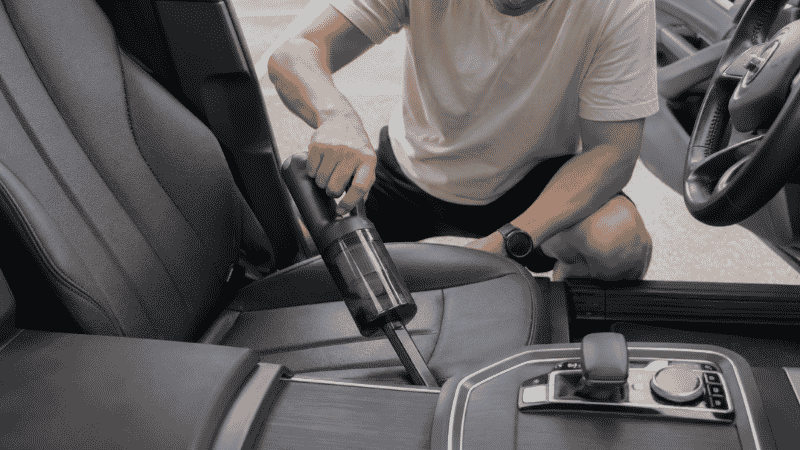
Maybe it was the weekend your kid ate an entire bag of goldfish crackers in the back seat. Or it’s the slow-motion disaster of dog hair that has quietly colonized every fabric surface in your car over the last six months. Or you just noticed, in strong afternoon light, that your floor mats look like a crime scene.
You open the trunk, consider the regular home vacuum, decide it’s too unwieldy to get into the crevices, and start googling “best car vacuum.”
Here’s the thing nobody’s review article says up front: most of the “dedicated car vacuums” you’ll find — the 12V plug-in kind, the branded-as-car-specific kind — are mostly marketing. The actual metric that determines whether a vacuum cleans a car effectively has almost nothing to do with whether it was designed for cars, and almost everything to do with a few specific specs and the shape of the attachments.
This guide cuts through that. We’ll tell you what actually matters, what’s overkill for most people, and — most usefully — what you can skip entirely.
Do You Actually Need a Dedicated Car Vacuum?
Let’s settle this first, because it’s the question most guides skip.
You probably don’t, if you already own a reasonably good handheld cordless vacuum that weighs under 4 pounds and has a crevice tool. Most modern handheld vacuums — Black+Decker, Bissell, Worx, Milwaukee — clean car interiors just as effectively as anything marketed specifically for cars. The “car vacuum” category is largely a retail distinction, not a functional one.
You might want one specifically, if:
- You want something that lives permanently in your car or garage specifically for car use
- You want a 12V corded model so you can vacuum during road trips without access to an outlet
- You frequently detail cars professionally or semi-professionally and need equipment for sustained use
- Storage space is genuinely at a premium and a small single-purpose device makes sense
For the majority of regular drivers — the audience this guide is written for — the most practical choice is a good general-purpose handheld vacuum that you use for both the car and spot cleaning at home. One fewer device, one fewer charger, more value per dollar.
The Specs That Actually Matter (And the Ones That Don’t)
What Actually Matters
Crevice tool design and intake opening size
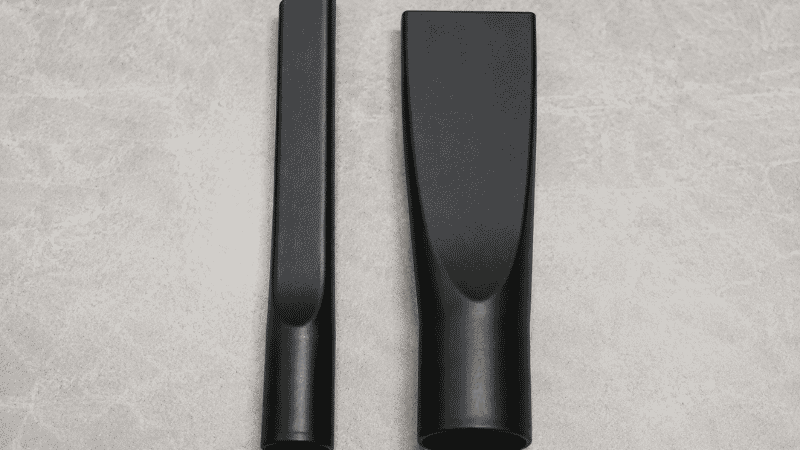
This is the one. The gap between your car seat and the center console — where every dropped item goes to die — is approximately 1–1.5 inches wide on most vehicles. A crevice tool that’s too wide to enter that gap is useless for the most common car vacuuming task.
Look for a crevice tool that’s genuinely slim (under 1 inch at its narrowest) and long enough to reach deep into seat gaps without requiring you to twist your wrist at an impossible angle. This matters more than any suction power number.
Weight and handling in confined spaces
Car interiors are awkward. You’re reaching across from the driver’s seat to vacuum the passenger floor, or kneeling outside the car door reaching in. A vacuum that’s unbalanced or too heavy to hold one-handed for 5 minutes straight will never get used regularly. Under 3.5 lbs is comfortable for extended car use.
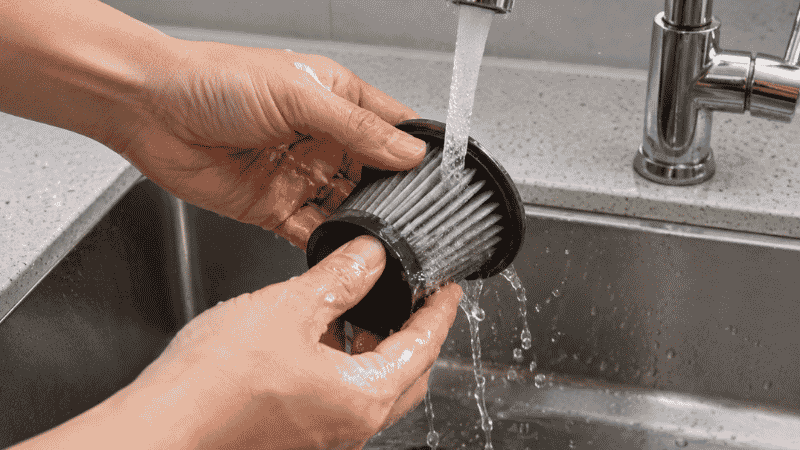
Washable filter
Car vacuuming — especially if you have pets or kids — pushes a lot of fine particulate through the filter fast. A vacuum with a washable filter maintains consistent suction over time. One with a non-washable filter will lose 30–40% of its suction within a few sessions of car vacuuming before you even realize why.
Car detailer Joe Pallero, quoted in Real Simple’s vacuum testing, puts it directly: “Irrespective of the frequency of use, you should look for a vacuum that has a removable and washable filter. This is directly linked with suction power.”
Battery life (for cordless)
15–20 minutes is the realistic minimum for a full car interior vacuum session. 30 minutes is comfortable. Anything under 15 minutes means you’re rushing or recharging mid-session, which kills the habit of doing it regularly.
What Doesn’t Matter as Much as You Think
Suction power in raw watts or AW
More suction is better up to a point — and that point is reached by most decent handheld vacuums in the $40–80 range. Beyond that threshold, you’re not getting meaningfully better car cleaning results. The limiting factor is almost always access (can the tool reach the space?) and tool design (is the opening the right shape?), not raw suction.
“Car-specific” branding
A vacuum that says “car vacuum” on the box and has a 12V adapter is not inherently better at cleaning cars than a quality handheld cordless. The cord adapter, in fact, is often a downgrade — it limits your range of motion and typically produces less power than a battery-powered alternative.
HEPA filtration
For car cleaning specifically, HEPA filtration is unnecessary for most people. It matters for air quality in home vacuums used frequently indoors. For car cleaning — an outdoor or ventilated environment where you’re not recirculating filtered air into a living space — it adds cost without meaningful benefit.
The Four Types of Car Vacuums — and Who Each One Is Actually For
Type 1: Cordless Handheld Vacuum ($30–$120)
The best choice for most people.
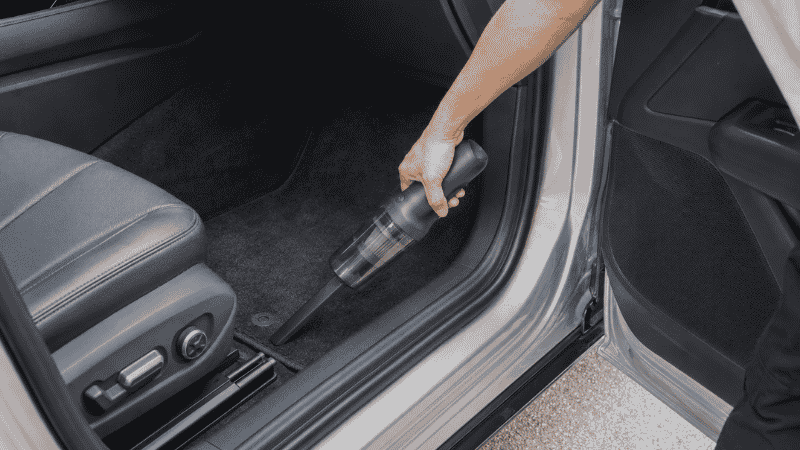
Cordless handhelds are the default recommendation because they work everywhere — car, couch, kitchen, stairs — with no cord management and reasonable battery life. The key brands with solid reputations in this category are Black+Decker (budget-friendly, reliable), Bissell (particularly good for pet hair), Worx (excellent balance of suction and handling), and Milwaukee/DeWalt (premium, especially if you already own their battery ecosystem).
Best for: Daily drivers who want one vacuum that handles everything. New car owners who want a practical first investment.
Editor’s take: If you own nothing and want to buy one thing, this is it. Get one with a crevice tool, check that the filter is washable, and confirm the battery is at least 15 minutes. Done.
Type 2: 12V Plug-In Car Vacuum ($15–$45)
Mostly outdated.
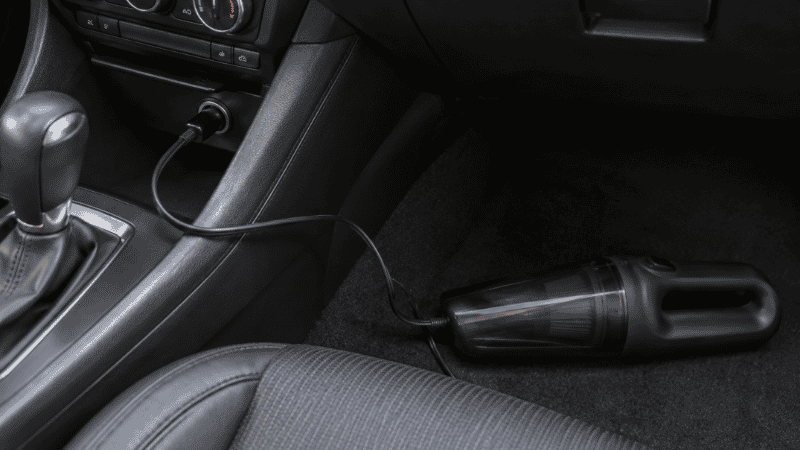
These plug into your car’s 12V power outlet and run on the car’s electrical system. The appeal is that they’re always available in the car without worrying about battery charge. The problem is that a 12V outlet typically maxes out around 150–180 watts, which limits the motor these vacuums can run — resulting in suction that’s noticeably weaker than most cordless handhelds.
They’re also physically annoying to use: the cord limits your reach, you have to keep the car running, and the power supply means they can’t compete with battery-powered alternatives on performance.
Who they’re actually for: Road-trippers who want to vacuum after long drives without access to an outlet. Minimalists who want the simplest possible car-only setup and have low expectations for suction power.
Who should skip them: Everyone who has access to a standard outlet.
Type 3: Small Stick Vacuum / Compact Cordless ($60–$150)
A middle ground between a full-size stick vacuum and a handheld. Has a motor body plus a wand extension, which helps with reach on floor mats and rear cargo areas. More powerful than most pure handhelds, better battery life, but less maneuverable in tight spaces.
Best for: SUV and truck owners with large cargo areas and floor mats that benefit from a longer reach. Anyone who regularly vacuums both the car interior and the cargo area.
The trade-off: Less maneuverable in seat gaps and crevices than a compact handheld. The extended wand that helps on flat surfaces works against you in confined spaces.
Type 4: Wet/Dry Shop Vac ($40–$150)
Powerful, high-capacity, designed for sustained use. Handles wet spills (coffee, drinks) that cordless handhelds can’t safely address. Used by professional detailers.
Best for: The coffee-mug-full-of-old-coffee-left-in-the-cupholder-that-you-forgot-about scenario. Deep cleaning sessions where you’re doing the whole interior properly, not just a quick pass.
Not for regular maintenance: Too large, too loud, too much setup for a 5-minute touch-up. Use these for quarterly deep cleans, not weekly maintenance.
The Pet Hair Problem: What a Vacuum Actually Can’t Do
If pet hair is your main issue, I’ll save you the frustration of disappointment: no vacuum, regardless of price or suction power, pulls embedded pet fur out of fabric seat fabric reliably.
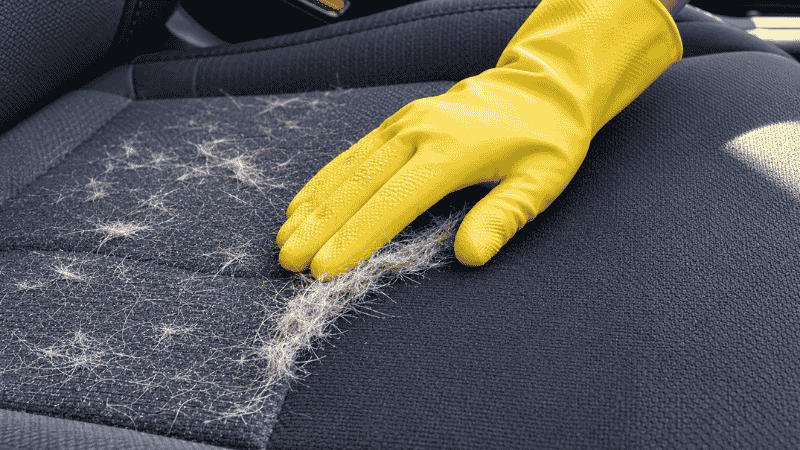
Pet hair embeds into fabric fibers at an angle — essentially weaving itself in. Suction pulls straight up, which is not the direction the hair is embedded. The result is that vacuuming removes loose surface hair but leaves the embedded strands largely untouched.
What actually works for embedded pet hair:
- A rubber grooming glove or rubber pet hair remover brush, dragged firmly across the seat surface in one direction. The rubber creates static friction that clumps the embedded fur into balls that can then be vacuumed up easily.
- A squeegee with a rubber blade, dragged across seat fabric. Same principle, different tool.
Do the rubber tool step first, vacuum second. In that order, you’ll remove 80% more pet hair than vacuuming alone.
This is not a knock on any vacuum. It’s physics — and every honest review of car vacuums eventually mentions that their “pet hair” tests showed disappointing results when the hair was embedded rather than sitting loose on the surface.
Recommended Options by Budget and Use Case
These are honest, broadly-tested picks based on the specs that matter for car cleaning — not affiliate-optimized selections.
Under $50: Black+Decker Dustbuster AdvancedClean+ series
Reliable suction, washable filter, multiple crevice tool options, widely available. The 20V models are significantly more capable than the older 16V versions. Battery life runs about 15–18 minutes on a full charge. Not glamorous, but it works consistently.
$50–$80: Worx 20V Cube Vac WX030L
Excellent maneuverability, built-in hose for flexibility, compact storage footprint. Consistently ranks at the top of tested handheld comparisons for car-specific use. The cube design means it doesn’t roll around or tip over when you set it down on the seat, which sounds minor but matters in practice.
$80–$120: Bissell Pet Hair Eraser Turbo+ (for pet owners)
The rubber-tipped suction tool provides genuinely better pet hair pickup than generic crevice tools. Still benefits from the rubber-glove-first technique, but the specialized nozzle bridges some of that gap. If 40% of your car vacuuming is specifically pet hair, the specialization is worth the price premium.
$120+: Milwaukee M12 FUEL 0882-20 (for existing Milwaukee battery users)
If you already own Milwaukee M12 batteries from other tools, this is exceptional. Motor power noticeably above cordless handhelds in lower price ranges, long battery life on existing packs, genuinely professional-grade suction. Expensive as a standalone purchase but economical if you’re in the Milwaukee ecosystem.
The 5-Minute Car Vacuum Routine That Actually Works
The reason most people’s cars are messier than they intend isn’t that they don’t have the right vacuum — it’s that vacuuming the whole car feels like a project. So it gets postponed until the situation is genuinely bad.
Here’s the realistic 5-minute version that prevents that accumulation:
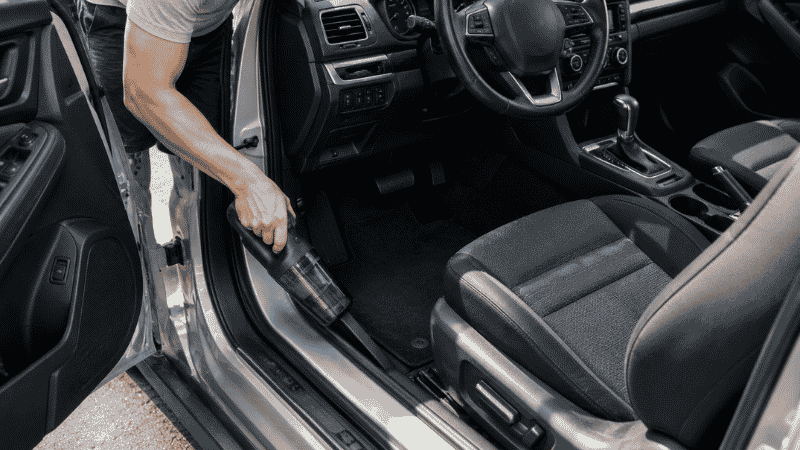
- Front seats only, 2 minutes. Hit the seat surface, the gap between seat and console, the floor mat below. This is where 70% of daily debris ends up.
- Cup holders and center console, 30 seconds. Crevice tool in, quick pass.
- Rear seat floor mat, 1 minute. One pass with the crevice tool between seats, one pass on the floor mat.
- Done. Trunk and deep seat gap cleaning can wait for a proper session.
This routine done weekly keeps a car from ever becoming a project. And it’s short enough that you’ll actually do it. That’s the whole point.
FAQ
What is the best car vacuum cleaner for the money? For most people, a cordless handheld in the $50–80 range — the Worx 20V Cube Vac or Black+Decker 20V AdvancedClean+ — handles car cleaning as well as anything purpose-built for cars at twice the price. The key specs to verify: washable filter, crevice tool that fits car seat gaps (under 1 inch wide), and battery life over 15 minutes.
Is a 12V car vacuum good enough? For light debris on hard surfaces, yes. For anything requiring real suction — embedded crumbs in carpet, fine dust, pet hair — no. 12V outlet-powered vacuums are limited by the power the outlet can provide, which is less than most quality battery-powered handhelds.
What is the strongest handheld vacuum for cars? Among widely available options, Milwaukee M12 and DeWalt 20V handhelds offer the highest suction in the handheld category. Fanttik V9 Mate and V10 Apex are also highly rated specifically for car use. However, “strongest suction” is not the same as “best for cars” — a well-designed crevice tool on a mid-power vacuum outperforms a powerful vacuum with a poorly designed nozzle in actual car cleaning.
How do you get pet hair out of car seats? Use a rubber glove or rubber pet hair brush first — drag firmly across the seat fabric in one direction to clump embedded fur. Then vacuum up the clumps. Vacuuming first without the rubber tool leaves most embedded hair in place. No vacuum, regardless of power, reliably extracts embedded pet hair through suction alone.
Can I use a regular home vacuum in my car? Yes, with the right attachment. A standard canister or stick vacuum with a crevice tool works well for car interiors — often better than dedicated car vacuums because household vacuums typically have higher suction. The limitation is cord management and maneuverability around the car. A cordless option removes the cord issue entirely.
How often should you vacuum your car? Weekly for the front seat and floor mat area, monthly for a full interior pass including rear seats and cargo area. The weekly 5-minute front-seat routine prevents accumulation that turns into a 30-minute project.
Does suction power matter for car vacuums? Up to a threshold, yes — and most vacuums over $40 exceed that threshold. Beyond it, the limiting factors are tool design (does the crevice tool fit where it needs to?) and filter condition (is it clean enough to maintain suction?). Spending more to get higher suction numbers than your current vacuum rarely improves real-world car cleaning results.
What’s Next
A car vacuum is one piece of a clean interior. These guides cover the rest:
- How to clean car seats — vacuuming gets the loose debris, but fabric and leather each need specific cleaning methods for actual stains and embedded dirt. (→ How to Clean Car Seats — Fabric, Leather & Every Stain Type)
- How to clean your full car interior — the complete sequence for cleaning every surface, in the right order. (→ How to Clean Your Car Interior the Right Way)
- Car essentials every driver should have — the practical items worth keeping in your car, including the ones that make regular maintenance easier. (→ Car Essentials Every Driver Actually Needs)
The goal isn’t a perfect car. It’s a car that’s consistently clean enough that you’re not embarrassed when someone gets in — and that’s achievable with about 10 minutes a week and the right tool for the job.
References
- Real Simple / Dotdash Meredith — The 5 Best Car Vacuums of 2025, Tested and Reviewed, including expert consultation with Igor Pomishchyk (Ecostates Elite Car Detailing) and Joe Pallero (NYC Mobile Auto Detailing) on washable filter importance
- Car and Driver — Best Car Vacuums Tested, evaluation methodology including suction power, maneuverability, ease of dirt disposal, portability, noise level, and floor mat challenge testing
- Environmental Protection Agency (EPA) — Particulate Matter (PM) Basics, indoor air quality guidance relevant to vehicle interior particulate exposure
- Consumer Reports — Best Handheld Vacuums of 2026, testing methodology and performance data across battery life, suction, and pet hair removal metrics
This article contains affiliate links. AutoIXPro may earn a small commission on purchases through our links at no extra cost to you. All recommendations are based on genuine research and real-world performance assessment. See our Affiliate Disclosure for details.
Have a specific car vacuum situation we didn’t cover? Contact us — we read every message.