
Key Takeaways
- Side airbag compatibility is non-negotiable — seat covers that block or restrict side-curtain airbag deployment are a genuine safety hazard; look for the “SRS Airbag Compatible” label and verify it covers your specific seat
- Universal fit covers are almost always a disappointment — they look fine in product photos, but real seats have contours, bolsters, and headrests that generic covers can’t accommodate; the result is bunching, sliding, and covers that look worse than the original seat
- Neoprene for active lifestyles, leatherette for aesthetics — these two materials solve different problems; buying neoprene for the look or leatherette for waterproofing leads to the same regret
- Custom-fit covers cost 2–3x more but fit and stay put — the Reddit consensus after years of user experience consistently points to custom-fit as the only version worth buying for daily use
- Seat covers do not fix broken seat foam or structural damage — they cover visual wear; they can’t replace mechanical support
The Question Someone Asked on Reddit That Started This
There’s a thread on r/BuyItForLife that keeps surfacing when people search for seat cover recommendations. The opening question is something most new car owners have thought some version of: “I want seat covers that will actually last, not the cheap Amazon ones that bunch up and look terrible within a month. What do real people use long-term?”
What follows is the kind of honest product discussion that most formal review sites can’t replicate — people describing what failed, what held up, what they’d never buy again, and occasionally the thing that nobody in a product listing ever mentions: that they installed a seat cover on a car with side airbags and didn’t realize until later that it was blocking the deployment channel.
That last part is worth sitting with for a moment. Side-curtain airbags on modern vehicles typically deploy from the door pillar or from the outer edge of the seat itself. A seat cover that’s pulled tight over that area — especially the rigid, universal-fit kind with elastic that wraps around the side — can restrict or deflect airbag deployment in a collision. The airbag fires. The cover is in the way. The protection you paid for doesn’t work correctly.
This is the thing the product listings don’t tell you. And it’s the starting point for understanding what actually matters when buying seat covers.
The Airbag Problem: What to Check Before Buying Anything
Before we talk materials, brands, or price points — this.
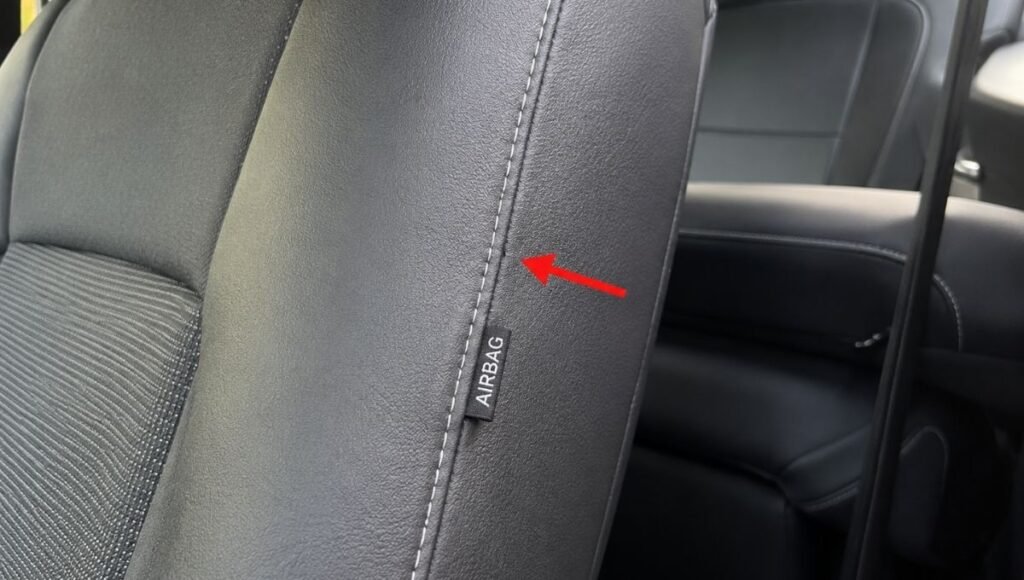
Most modern vehicles have side-impact airbags integrated into the seat. They deploy from the outer bolster area — the raised section on the side of the seat that you push against when cornering. Some vehicles deploy side curtain airbags from the door pillar instead, but many use seat-mounted side airbags that blow through the seat cover to expand outward.
A seat cover that isn’t specifically designed to allow airbag deployment in this area is a safety issue. The consequences range from delayed deployment (the cover slows the airbag) to complete obstruction (the cover is too rigid to split at the correct seam).
What to look for:
Seat covers designed for airbag-equipped vehicles will have a seam or weak point along the outer bolster — a stitched line that’s designed to split cleanly when the airbag fires. This is not a defect; it’s intentional. The product should explicitly state “SRS Airbag Compatible” and, ideally, specify whether this means side-seat airbags, curtain airbags, or both.
What to avoid:
Covers without airbag compatibility labeling. Covers that wrap a solid, non-perforated material across the outer seat bolster with no breakaway seam. Covers with rigid side panels.
The verification step:
Your owner’s manual will show where the airbags in your seats are located. Check which seats have side-mounted airbags (usually at minimum the front seats, sometimes rear) before buying covers for any of them. This takes five minutes and is worth doing before spending $150–$400 on covers.
Universal vs. Custom-Fit: The Fit Problem That Ruins Everything
This is where most seat cover disappointment originates.
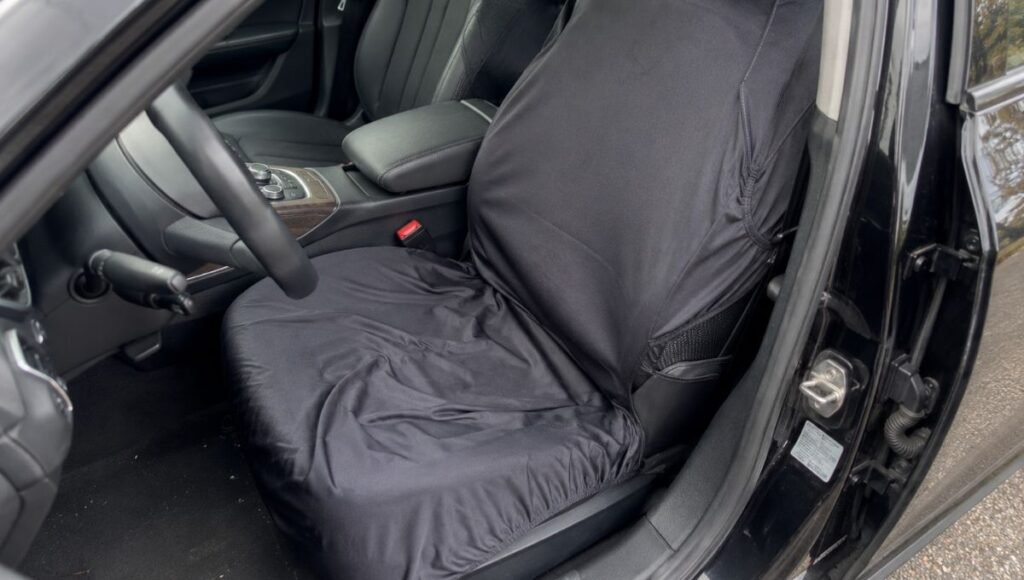
Universal seat covers are sized to approximately fit the majority of vehicles. They use elastic, hooks, and straps to hold themselves in place on seats they weren’t specifically designed for. The product photos show them looking smooth and tailored. The reality is that car seats have bolsters, lumbar curves, integrated headrests, seat belt guides, and seat heater controls — all of which universal covers ignore.
The result is predictable: bunching across the seat bottom, gaps at the headrest, covers that slide toward the center every time someone gets in or out, and an elastic band around the seat base that eventually loses its grip and lets the whole thing sag forward.
Reddit users describe this with consistent frustration: “Looked great for the first week, started sliding after a month, and by three months I took it off because it looked worse than the bare seat.”
Custom-fit covers are made to the exact dimensions and contours of a specific year, make, and model. They have cutouts for seat controls, notches for seat belt guides, and panels that match the actual shape of the bolsters. They install once, stay in place, and look like they belong on the seat.
The cost difference is real — universal covers run $30–80 for a set, custom-fit typically $150–400 — but the Reddit consensus after multi-year ownership is consistent: custom-fit is the version people recommend without hesitation, and universal is the version people warn others away from.
The middle ground: Some brands offer semi-custom covers — designed for a range of similar vehicles (for example, all mid-size sedans from a certain era) rather than one specific model. These perform better than true universal covers but won’t match the fit of full custom options.
Material Guide: What Actually Solves Your Problem
Material choice should follow from your actual use case, not from how the material looks in product photos.
Neoprene
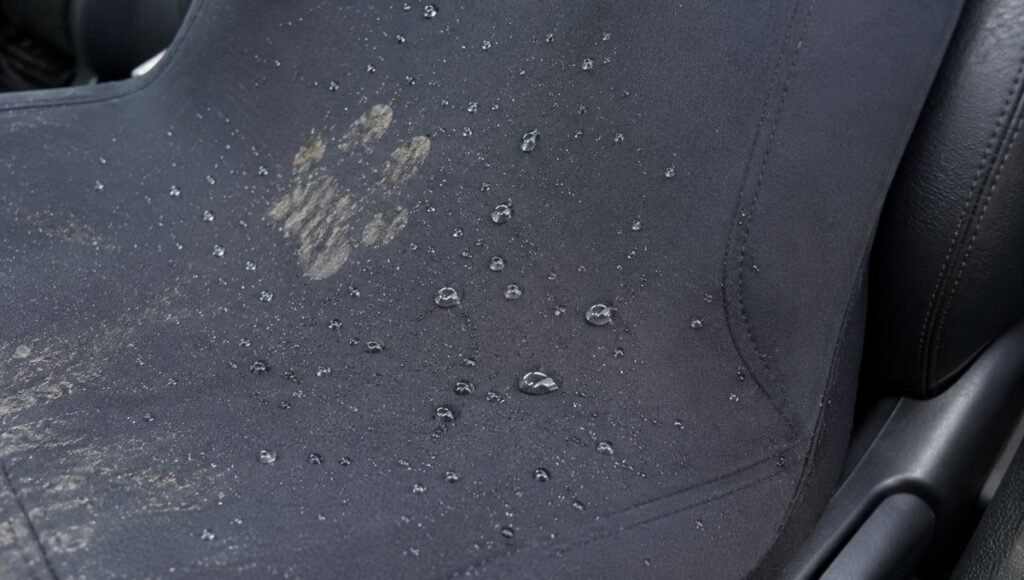
The wetsuit material. Genuinely waterproof, durable against punctures and pet claws, and easier to clean than fabric. Popular with people who surf, hike, or have dogs — active lifestyles where the seat takes genuine abuse.
The honest downside: Neoprene doesn’t breathe. In summer, it gets hot and can feel slightly sticky against bare skin. It’s warmer in winter, which some people prefer and others find uncomfortable. If you spend long hours in the car in a hot climate without consistent AC, neoprene will be an uncomfortable choice.
Best for: Pet owners (especially dogs), outdoor enthusiasts, anyone who regularly transports wet gear.
Leatherette / Faux Leather
The premium-look option. Wipes clean easily, looks sharp, holds up well to daily use. Popular with people who want to upgrade the interior appearance of a cloth-seat car without paying for genuine leather.
The honest downside: Similar to genuine leather — hot in summer, cold in winter, and slightly slippery compared to fabric. Spills wipe off the surface but if they get into the seams, they can be harder to clean than neoprene. Not waterproof in the true sense — water can wick into seams.
One specific Reddit observation: The “mild odor that lasts several weeks” is real with many leatherette covers, particularly fresh from the packaging. It dissipates, but in a small car it can be noticeable for the first month. Leave new leatherette covers in a ventilated space for 24–48 hours before installing if you’re sensitive to chemical smells.
Best for: Drivers who want a cleaner, more premium-looking interior; daily commuters; anyone upgrading from worn factory cloth.
Canvas / Heavy-Duty Fabric
The workwear material. Thick, durable, breathable, and resistant to tearing. Common in truck seat cover sets. Not waterproof but dries faster than neoprene after wet exposure.
Best for: Truck owners, tradespeople, anyone who regularly gets in with dirty workwear or tools.
Mesh / Breathable Fabric
Prioritizes airflow. Significantly cooler than neoprene or leatherette in summer, particularly in climates with high heat and humidity. Not waterproof, not particularly durable, but comfortable for daily use in temperate climates.
Best for: Hot climate drivers who prioritize comfort over waterproofing.
Sheepskin / Genuine Wool
Temperature-regulating material that’s cooler in summer and warmer in winter than most alternatives. Popular in Australia and hot-cold climate areas. More expensive, harder to clean, requires more maintenance.
Best for: Long-distance drivers who spend hours in the car; anyone with sensitive skin or circulation issues who finds standard materials uncomfortable.
The Brands That Come Up Repeatedly in Honest Discussions
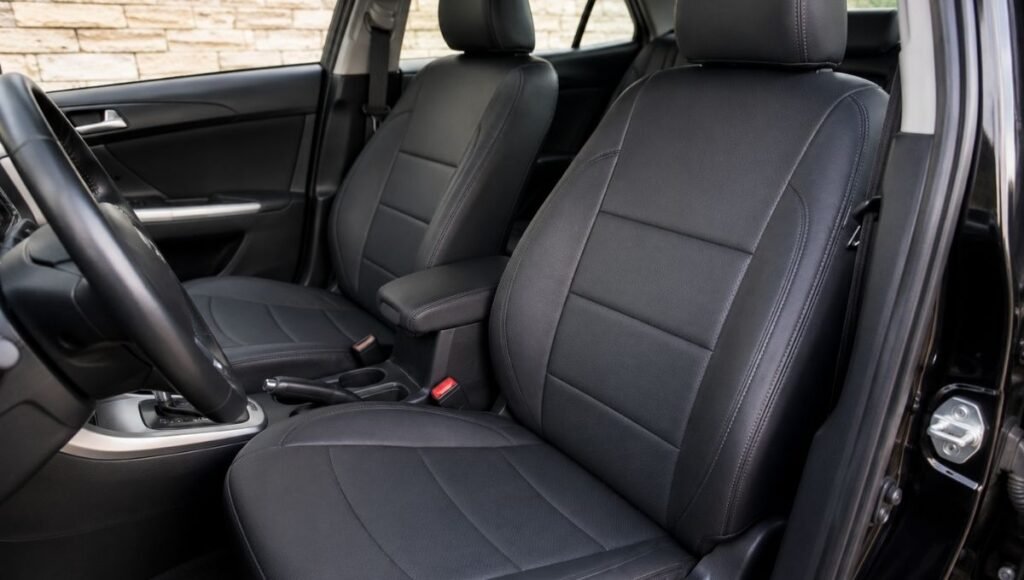
Rather than a ranked list, here’s what consistently appears in multi-year user discussions:
Covercraft — Custom-fit only, made in the USA. Consistently cited as a buy-it-once-use-it-forever brand. Multiple material options. Expensive ($300–600+ for a full set) but the build quality matches the price. The brand that comes up most often in r/BuyItForLife threads specifically.
CalTrend — Custom-fit, slightly more accessible price point than Covercraft ($150–300). The NeoSupreme (neoprene) and “I Can’t Believe It’s Not Leather” (leatherette) lines are both well-reviewed. Some fitment inconsistency between models noted in reviews, but generally positive long-term feedback.
Wet Okole — Hawaiian brand known for neoprene covers, particularly popular with surfers and outdoor enthusiasts. Custom-fit, durable, specifically designed for wet and outdoor use. Regional brand that’s developed strong word-of-mouth.
FH Group — The budget universal option that gets honest reviews in both directions. Some people find them acceptable for the price; others describe the exact sliding/bunching experience described above. If budget is genuinely constrained and you understand the limitations of universal fit, these aren’t terrible. If you expect them to look like product photos after six months, they’ll disappoint.
Amazon Basics / No-name universal — The Reddit consensus is consistent: don’t. Not because cheap is always bad, but because the universal fit problem is structural, not quality-related. A well-made universal cover still has the same fundamental fit issue as a cheap one. Spend the same money on a semi-custom option instead.
The Installation Problem Nobody Talks About Enough
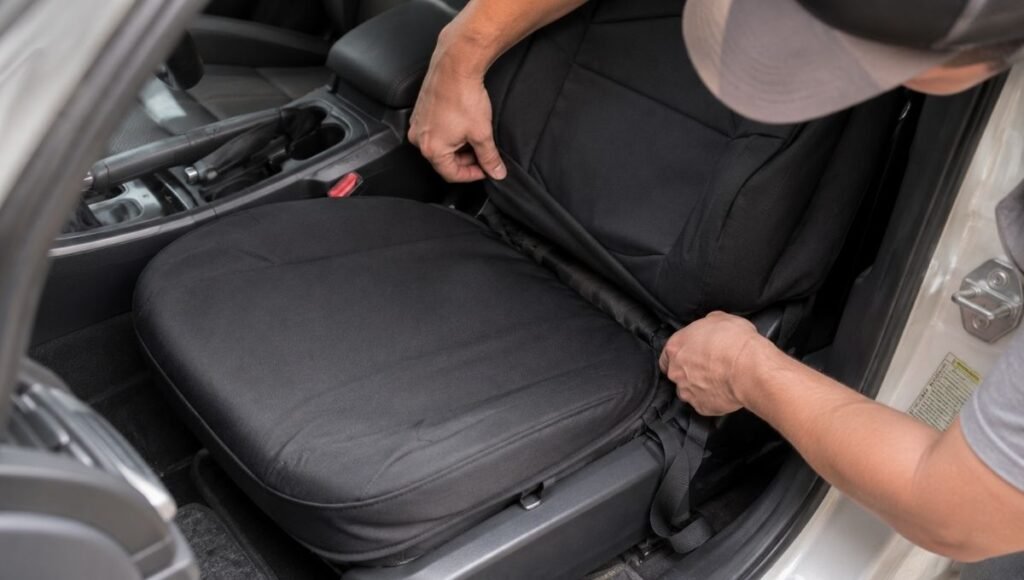
Even a well-fitting seat cover takes patience to install correctly. Most manufacturers provide poor instructions, and the process for front seats with headrests, side airbags, and seat controls is more involved than “slip it over and pull the elastic.”
Allow 45–90 minutes for first installation. Not because it’s difficult, but because rushing it produces a result that looks worse than taking your time. Watch YouTube installation videos for your specific cover and seat before you start — most major brands have these, and a 10-minute video prevents an hour of frustration.
The common mistakes:
Pulling the cover too tight before tucking the base straps — it shifts as you work and the final position is off. Going too fast with the rear seat connections before the front section is fully positioned. Not checking that the headrest cover connects correctly to the seat cover before you start — they attach in a specific sequence that matters for the final fit.
If the cover slides after installation: The straps under the seat weren’t fully tightened, or the non-slip material on the seat bottom wasn’t fully engaged. Reinstall with attention to the base attachment before deciding the cover doesn’t fit.
When Seat Covers Won’t Solve the Problem
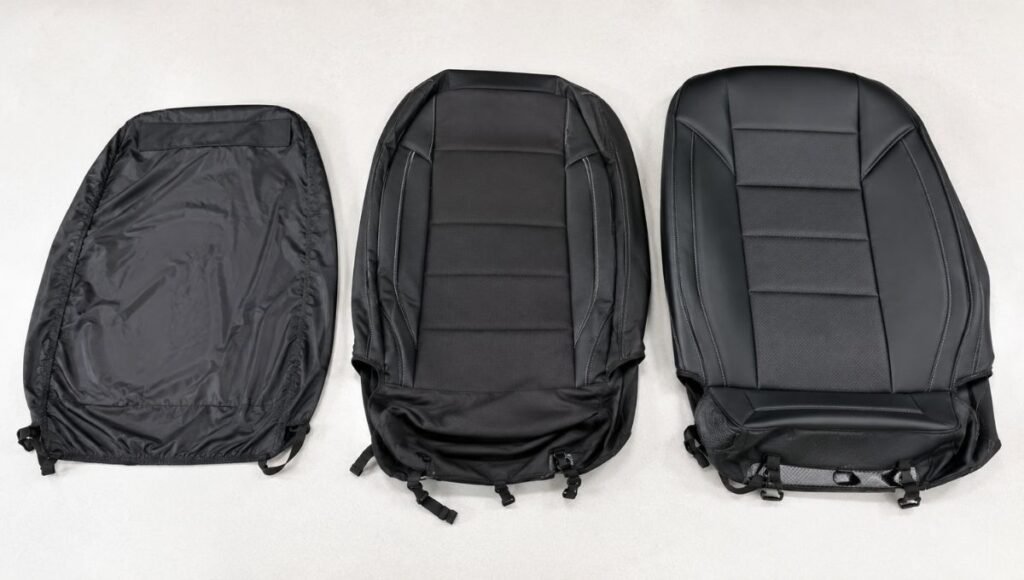
This is worth saying clearly, because people sometimes buy seat covers hoping to address an issue that covers can’t fix.
Seat covers can address: Surface staining and wear, minor scuffs, fading from UV exposure, protecting current seats from future damage, and improving the visual appearance of tired upholstery.
Seat covers cannot address: Seat foam that has collapsed and no longer provides proper support, structural damage to the seat frame, broken seat adjustment mechanisms, or seats that smell strongly of mold or pet urine at the foam level (the cover goes over the smell, not through it).
If your seats sag significantly in the center, the foam is gone. A seat cover will follow the contour of the existing foam — it won’t replace it. For comfort-related seat problems, foam padding replacement or a seat pad insert is the correct solution, not a cover.
FAQ
Are seat covers safe for cars with airbags? Only if they’re specifically labeled “SRS Airbag Compatible” and designed with breakaway seams at the outer bolster — the area where side-impact airbags deploy. Seat covers without this feature can restrict or deflect airbag deployment. Always verify airbag compatibility before buying, and check your owner’s manual to confirm which seats have airbags integrated into the seat itself.
What are the best car seat covers for dog owners? Neoprene is the consistent recommendation — it’s puncture-resistant against claws, genuinely waterproof for wet dog situations, and wipes clean easily. Brands like Wet Okole and CalTrend NeoSupreme are frequently cited in long-term dog-owner reviews. For rear-seat-specific coverage, a seat cover designed to also cover the seat back and fold down into the footwell (a “hammock” style) prevents both seat and floor mat damage simultaneously.
What is the difference between universal and custom-fit seat covers? Universal covers are made to approximately fit most vehicles and use elastic and straps to hold themselves in place. Custom-fit covers are made to the exact dimensions of a specific year, make, and model, with cutouts for controls and contours that match the actual seat shape. Universal covers almost always show fit issues — bunching, sliding, gaps — especially on seats with pronounced bolsters or integrated headrests. Custom-fit covers cost more but stay in place and look significantly better long-term.
How long do car seat covers last? Quality custom-fit covers from brands like Covercraft or CalTrend typically last 5–10 years with normal use. Budget universal covers often show degradation (elastic stretch, color fading, material thinning) within 1–2 years. Material matters too: canvas and neoprene tend to outlast leatherette in high-use scenarios.
Can seat covers damage my seats? Poorly fitted covers with rigid straps can cause wear on seat upholstery at friction points over time. Covers that trap moisture against leather can cause mold and accelerate leather degradation. Well-fitted covers from reputable brands, properly installed, protect rather than damage. The risk is higher with cheap universal covers that shift and rub than with quality custom-fit options.
Do car seat covers affect heated seats? Thin fabric covers have minimal effect on heated seat performance. Thick neoprene and leatherette can reduce heat transfer noticeably, meaning you’ll feel the heat but more slowly and at lower intensity. If heated seats are important to you, verify compatibility before buying neoprene covers, and look for manufacturers who specifically note heated seat compatibility in their product descriptions.
Are waterproof seat covers really waterproof? Genuine neoprene (closed-cell synthetic rubber) is truly waterproof — liquid beads and rolls off rather than soaking in. Leatherette covers are water-resistant at the surface but not waterproof at seams. “Waterproof” labeled covers that use polyester with a coating are water-resistant at best. For true waterproof protection, neoprene is the only material that consistently delivers.
What’s Next
Seat covers protect your seats — but they work best alongside a few other habits:
- How to clean car seats — even with covers, the covers themselves need proper cleaning; fabric, neoprene, and leatherette each need different approaches. (→ How to Clean Car Seats — Fabric, Leather & Every Stain Type)
- Car sun shade — UV damage affects seats even through covers; a sun shade reduces the ambient heat that accelerates material degradation. (→ Car Sun Shade — Why Your Car Gets So Hot)
- Jeep seat covers — if you drive a Jeep specifically, the fit considerations are different from standard passenger vehicles; we cover that separately. (→ Best Jeep Seat Covers)
The best car seat covers are the ones that fit your actual seats, suit your actual lifestyle, and don’t create a safety problem in the process. Everything else is just aesthetics.
References
- National Highway Traffic Safety Administration (NHTSA) — Federal Motor Vehicle Safety Standard No. 208, Occupant Crash Protection; side airbag deployment requirements and seat-mounted airbag specifications
- Insurance Institute for Highway Safety (IIHS) — Side Impact Protection Research, seat-mounted side airbag performance data and importance in frontal and side-impact collisions
- Consumer Reports — Car Seat Cover Testing Methodology, material durability, fit assessment, and user satisfaction data across cover categories
- SAE International — SAE J941: Motor Vehicle Drivers’ Eye Locations, research context for seat comfort and occupant positioning relevant to seat cover thickness effects
This article contains affiliate links. AutoIXPro may earn a small commission on purchases through our links at no extra cost to you. All recommendations are based on genuine research and user-verified long-term experience. See our Affiliate Disclosure for details.
Seat cover question for your specific vehicle? Contact us — we read every message.