
Last updated: May 2026 | Reading time: 13 min | Category: Car Care & Cleaning
Key Takeaways
- Air fresheners never fix a car odor — they layer synthetic fragrance over an unchanged smell source. The smell always wins eventually
- Smoke smell penetrates fabric, foam, HVAC systems, and headliner adhesive — surface cleaning alone rarely eliminates it fully
- Enzyme-based cleaners are not optional for biological odors (pet urine, vomit, mildew) — standard cleaners only mask them temporarily
- Your cabin air filter is almost certainly contributing to the smell — most drivers replace it every 12,000–15,000 miles; most never replace it at all
- For severe smoke in a used car, ozone treatment is the only truly effective option — but it requires proper ventilation and should be done by professionals or with careful technique
That Smell You’ve Stopped Noticing — Until Someone Else Gets In
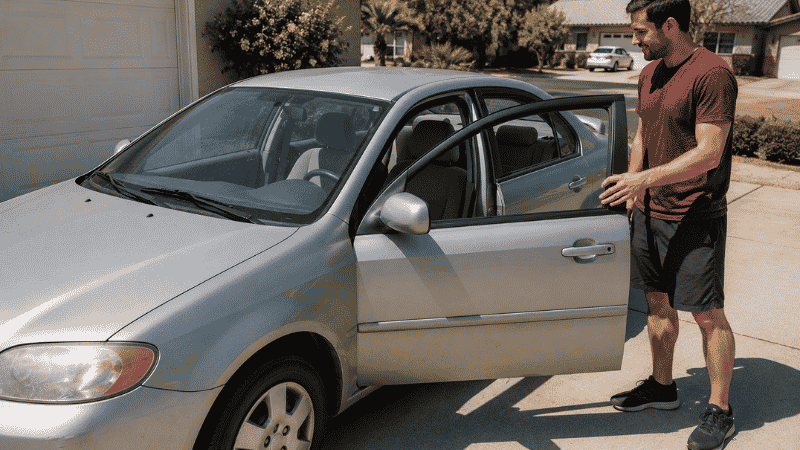
You get in your car every day. You’ve stopped registering the smell. And then a friend or colleague opens the passenger door for the first time, and you see the look on their face before they can control it.
Or maybe you just bought a used car, drove it home, and realized within two blocks that the previous owner was a heavy smoker. The car looked fine on the lot. Under the artificial lights, everything checked out. But now it’s in your driveway and the smell is unmistakable.
Or maybe it’s not smoke at all — it’s the wet dog smell that won’t leave the back seat, the mildew smell that appears every time the AC kicks on, the mystery funk that appeared after a spill you thought you cleaned up properly.
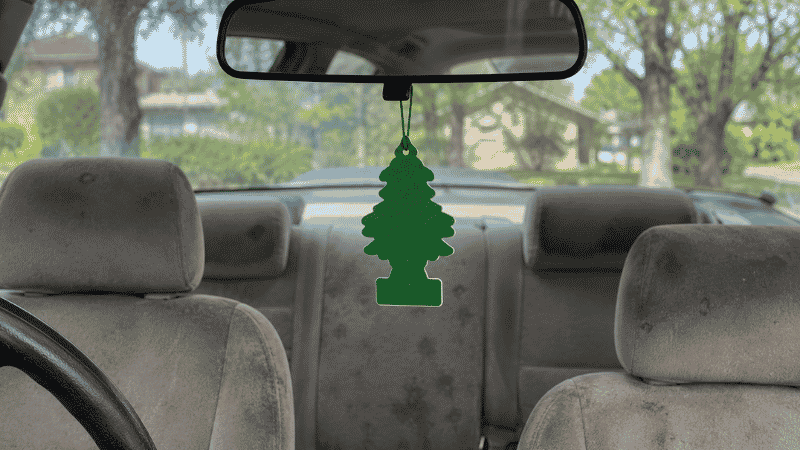
Car odors are stubborn for a specific reason: they don’t live on surfaces. They live in the materials below the surface — in the foam padding under your seats, in the fibers of your headliner, in the evaporator coil of your HVAC system. That’s why hanging a pine tree from your rearview mirror and calling it done never actually works. You’re not addressing where the smell lives.
This guide covers how to actually eliminate car odors — including smoke smell — based on what kind of smell you have, how severe it is, and what tools you’re willing to use. No air freshener recommendations. Just what works.
Why Air Fresheners Don’t Work (And What You’re Smelling Instead)
Before diving into methods, this is worth understanding clearly because it changes how you approach the problem.
Air fresheners — hanging trees, vent clips, spray cans, plug-in diffusers — work by introducing a stronger synthetic scent into a space. They don’t neutralize odor molecules. They don’t break down the compounds causing the smell. They layer artificial fragrance on top of the existing source.
For mild, temporary smells — a brief whiff of fast food, or a gym bag that was in the car once — a freshener can bridge the gap until the smell naturally dissipates. For anything that has soaked into fabric, foam, leather, or the HVAC system, it provides temporary masking at best. Within days or weeks, the original smell reasserts itself through the fragrance layer, and the combined result is often worse than the original.
Research published in Environmental Science & Technology found that certain terpene compounds in common air fresheners (limonene, alpha-pinene) react with ozone inside vehicle cabins to form secondary pollutants including formaldehyde. Meaning the “solution” can create its own air quality problem.
The only real fix is removing or neutralizing the odor source. Everything else is temporary.
First: Identify What You’re Actually Dealing With
Different smells have different sources and require different approaches. Before buying anything or cleaning anything, spend two minutes diagnosing your specific situation.
Cigarette or Smoke Smell
Where it lives: Fabric upholstery, carpet, headliner, seatbelts, foam padding, HVAC system, leather. Why it’s persistent: Smoke particles are extremely fine and penetrate deeply into porous materials. The chemical compounds in tobacco smoke — including nicotine and tar — bond to fabric fibers and leather in ways that require chemical neutralization, not just cleaning. Severity indicator: Light smoke smell that appears when the car is warm but fades quickly = surface-level. Persistent smell regardless of temperature = deep penetration requiring more intensive treatment.
Mildew or Musty Smell
Where it lives: Carpet, seat foam, floor mat backing, trunk lining, HVAC evaporator. Why it’s persistent: Active mold and mildew colonies produce ongoing odor compounds. Cleaning the surface doesn’t kill colonies living in the foam or behind panels. Severity indicator: Smell only when AC is on = likely HVAC evaporator. Smell all the time = likely carpet or seat foam. Smell after rain = possible water intrusion from a seal or drain issue.
Pet Odor
Where it lives: Back seat fabric and foam, trunk carpet, floor mats. Why it’s persistent: Pet dander, oils from fur, and urine contain protein compounds that standard cleaners don’t break down. The smell compounds continue to off-gas until the biological material is enzymatically broken down.
Vomit or Food Smell
Where it lives: Wherever the incident occurred, plus the foam below the surface fabric. Why it’s persistent: Same reason as pet odor — organic biological compounds require enzyme treatment.
Gas Smell / Rotten Egg Smell / Burning Smell
⚠️ These are not cleaning problems — these are potential safety issues.
- Gas smell: possible fuel leak, loose gas cap, or fuel injector issue
- Rotten egg smell: possibly a failing catalytic converter or battery issues
- Burning smell: overheating brakes, burning electrical components, or overheated engine
If you smell any of these, don’t try to mask or clean them. Have the vehicle inspected by a mechanic before driving it further.
How to Get Smoke Smell Out of a Car — By Severity Level
Level 1: Light Smoke Smell (Occasional or Indirect Exposure)
If the smoke smell is mild — a previous passenger smoked once, or you briefly drove with the windows down near smoke — this level is addressable with thorough cleaning and airing out.
Step 1: Deep vacuum everything Vacuum all fabric surfaces: seats, carpet, floor mats, trunk. Use a crevice tool in every seam and gap. Smoke residue settles into any horizontal surface it can find — ash and tar particles accumulate in seat gaps and under floor mats.
Step 2: Wipe all hard surfaces Dashboard, door panels, center console, steering wheel, seatbelt webbing (pull them all the way out), and windows. Use an interior all-purpose cleaner on a microfiber cloth. The film you wipe off hard surfaces is a combination of smoke residue and off-gassing from plastics — both contribute to the smell.
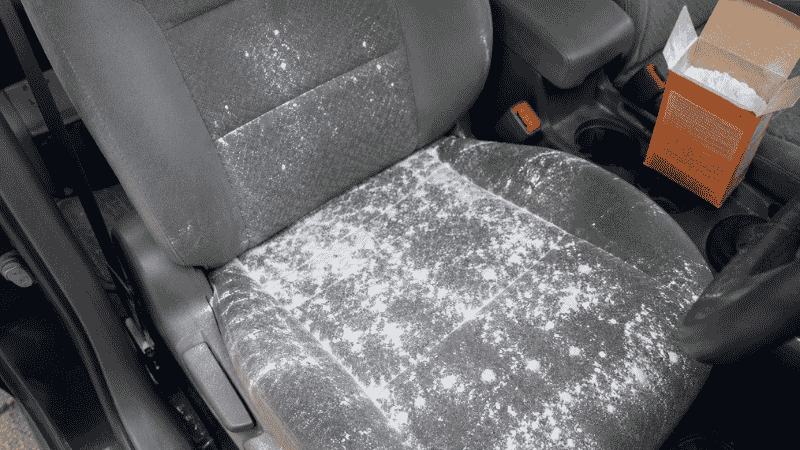
Step 3: Baking soda treatment Generously sprinkle baking soda on fabric seats and carpet. Leave it for a minimum of 8 hours — overnight is better. Baking soda absorbs odor compounds through a chemical neutralization process rather than masking. Vacuum thoroughly afterward.
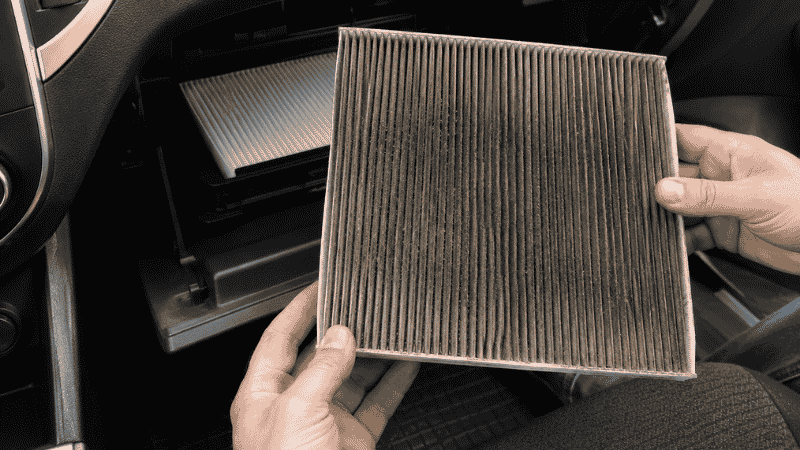
Step 4: Replace the cabin air filter The cabin air filter traps smoke particles along with pollen and dust. A smoke-contaminated filter continuously re-introduces odor into the cabin every time the fan runs. Replacement takes about 10 minutes and costs $15–25. (See your owner’s manual for location — usually behind the glovebox.)
Step 5: Air out with HVAC on fresh air mode Park in a well-ventilated area, open all doors and windows, and run the HVAC fan on maximum with the fresh air intake setting (not recirculate) for 15–20 minutes. This flushes the ductwork.
Level 2: Moderate Smoke Smell (Regular Smoker Used the Car)
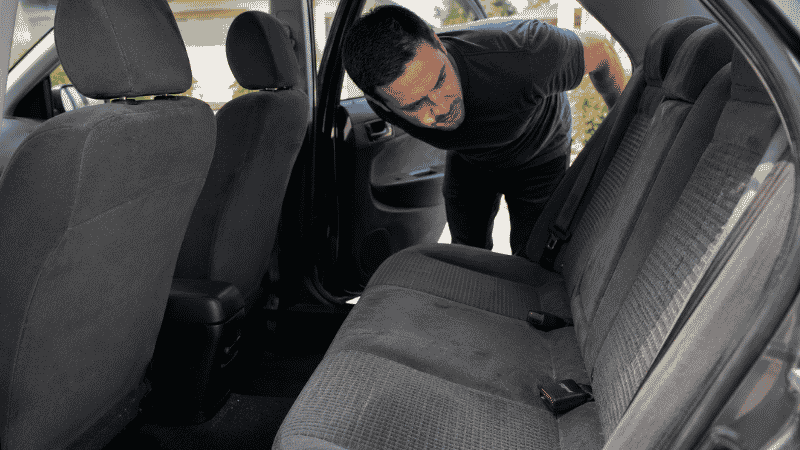
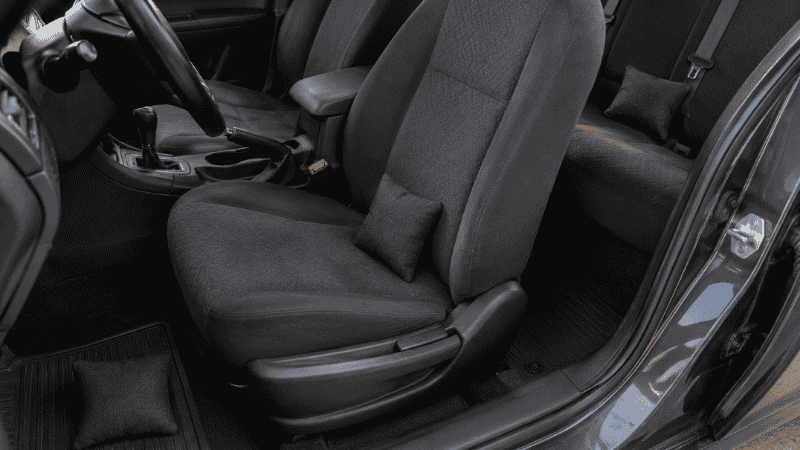
If the car was smoked in regularly, surface cleaning alone won’t get you there. The smoke has penetrated the foam under the fabric.
Everything in Level 1, plus:
Enzyme-based odor eliminator on fabric surfaces Enzyme cleaners break down odor-causing compounds at a molecular level rather than masking them. Brands like Zep, Rocco & Roxie, or Odoban work well for smoke odors. Spray on fabric surfaces, work in lightly, and allow proper contact time (follow product instructions — usually 5–10 minutes minimum). Blot rather than rub. Allow to dry completely with windows open.
Activated charcoal bags Place activated charcoal odor absorbers throughout the car and leave them for 48–72 hours with windows cracked. Activated charcoal is a significantly more effective odor absorber than baking soda for persistent chemical compounds — it works through adsorption, physically binding odor molecules to its porous surface. Industrial-grade activated charcoal bags run $15–25 and are reusable.
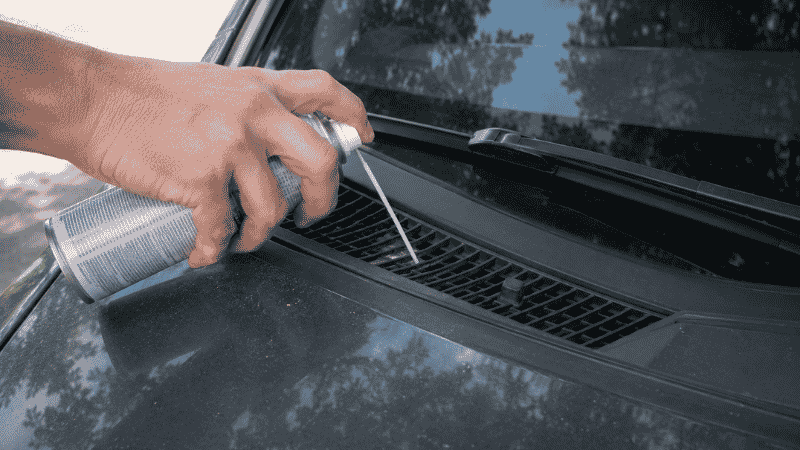
HVAC duct treatment With the engine running and HVAC set to maximum fan on the fresh air setting, spray an HVAC duct cleaner or odor eliminator (available at auto parts stores) into the fresh air intake vent — usually located at the base of the windshield. Run the fan for 10 minutes to distribute it through the system.
Headliner attention The headliner — the fabric ceiling — absorbs smoke as readily as the seats but is often skipped. It requires careful treatment: mist lightly with an enzyme odor eliminator or a 50/50 water-and-white-vinegar solution, and gently blot with a soft cloth. Never soak the headliner — the adhesive behind it is water-sensitive and aggressive moisture causes it to separate from the roof.
Level 3: Heavy Smoke (Second-Hand Car, Years of In-Car Smoking)
This is the situation where a used car comes with serious embedded smoke smell. Surface and foam cleaning helps, but the smell has typically penetrated every soft material in the car and the entire HVAC system.
Everything in Levels 1 and 2, plus:
Professional ozone treatment Ozone (O₃) is an unstable oxygen molecule that reacts with and breaks down odor compounds on contact. An ozone generator placed inside a sealed car produces enough ozone to penetrate every surface — including foam, headliner, and ductwork — and chemically neutralize odor molecules rather than masking them.
This is the only method that reliably reaches all the places smoke smell hides. Professional detailers offer ozone treatment for $50–$150 depending on severity and location.
Important safety note: Ozone at effective concentrations is harmful to breathe. The car must be sealed during treatment and fully ventilated (all windows open, ozone generator removed) for at least 30 minutes before anyone enters. This is not a shortcut to skip — ozone at odor-eliminating concentrations causes respiratory irritation and can damage rubber and plastics with extended exposure. If using a consumer ozone machine, follow instructions precisely and never occupy the vehicle during treatment.
Seat foam replacement (last resort) If severe smell persists after thorough cleaning and ozone treatment, the odor may be embedded so deeply in the seat foam that surface access can’t reach it. Seat foam replacement is an option for particularly severe cases — typically $100–300 per seat for foam only, plus labor, versus $150–350 for seat covers that protect going forward.
How to Get Mildew Smell Out of a Car
Mildew smell has a different solution set from smoke because the source is biological (active mold) rather than chemical (smoke residue).
Find the moisture source first. Treating mildew smell without addressing why the car got wet is like mopping up a leak without fixing the pipe. Common sources: clogged sunroof drains, worn door weatherstripping, a cracked windshield seal, a blocked AC condensate drain (leaves drain water backing up into the footwell).
Once you’ve identified and fixed the source:
White vinegar treatment Mix equal parts white vinegar and water in a spray bottle. Mist affected fabric surfaces lightly and allow to sit for 10–15 minutes. Vinegar is a mild acid that kills surface mold and neutralizes the odor compounds it produces. Blot thoroughly and allow to dry completely with windows open.
Baking soda overnight Follow with baking soda treatment on fabric surfaces as described above.
HVAC evaporator treatment If the smell only appears when the AC runs, the evaporator coil (located behind the dashboard) has mold or bacterial growth on it. This is extremely common — the evaporator naturally condenses moisture, and in humid climates especially, it becomes a mold habitat. An AC evaporator cleaner spray (sprayed through the fresh air intake with the fan running) addresses surface mold. Severe cases require professional evaporator cleaning or replacement.
How to Get Dog Smell Out of a Car
Pet odor from dogs combines dander, body oils, and occasionally urine — each requiring slightly different treatment.
Step 1: Remove embedded fur first A damp rubber glove dragged across fabric in one direction, or a rubber pet hair brush, clumps embedded fur for easy vacuuming. Fur carries dander and oils that contribute significantly to the smell.
Step 2: Enzyme cleaner on all fabric surfaces This is the critical step. Dog odor compounds are biological and require enzyme treatment to break down completely. Apply an enzyme-based pet odor eliminator to all fabric the dog contacted — seats, carpet, trunk liner. Allow full contact time before blotting.
Step 3: Activated charcoal maintenance After treating, activated charcoal bags in the car on an ongoing basis (particularly in the trunk if that’s where the dog rides) significantly reduce baseline odor between cleanings.
Step 4: Prevention going forward A waterproof seat cover or cargo liner in the area the dog occupies is dramatically more effective than repeated cleaning. A cover that can be removed and washed addresses the problem at the source.
The 10-Minute Quick Fix (When You Need the Car to Smell Acceptable Right Now)
Full odor elimination takes time. When you need the car to be presentable in the next 10 minutes:
- Open all doors — 2 minutes of maximum ventilation removes the most concentrated odor layer
- Remove the obvious sources — any trash, food containers, damp items
- Wipe hard surfaces quickly — dashboard, center console with a damp microfiber cloth
- Place an activated charcoal bag or open baking soda box on the front seat
- Run HVAC on fresh air, maximum fan while driving
This won’t eliminate the source, but it makes the immediate environment significantly more tolerable and buys time for proper treatment.
What to Do When You’ve Tried Everything and the Smell Returns
If you’ve cleaned thoroughly and the smell keeps coming back, one of three things is happening:
The source wasn’t fully eliminated. Mold colonies still active in foam or HVAC. Smoke residue still in headliner or ductwork. Biological material still in seat cushion foam. More thorough or targeted treatment is needed.
There’s ongoing contamination. A water leak continuing to wet the carpet. A dog continuing to ride in an unprotected back seat. Smoking continuing in the vehicle. Fix the ongoing source or the smell will return regardless of how well you clean.
The smell is in components you haven’t addressed. Seatbelts, headliner, the HVAC evaporator, behind door panels, in the trunk foam. Go through the car systematically and identify what hasn’t been cleaned yet.
When to stop DIY and call a professional detailer:
- Smoke smell from years of heavy in-car smoking
- Mold visible under seats or behind panels
- Smell originating from the HVAC system that doesn’t respond to duct treatments
- Any smell you can’t identify or locate the source of
Professional detailers have extraction equipment that pulls contaminants from deep in foam, and ozone generators calibrated for vehicle interiors. For severe cases, the $100–200 cost is usually worth it versus weeks of repeated DIY attempts.
FAQ
Does baking soda really work for car smell? It works for mild to moderate surface-level odors, particularly smoke and general mustiness. Baking soda neutralizes acidic odor compounds through a chemical reaction. Leave it on fabric surfaces for at least 8 hours for meaningful effect. It does not work for odors embedded in foam, leather, or HVAC systems — those require enzyme treatment or ozone.
How long does it take to get smoke smell out of a car? Light smoke smell can be largely eliminated with a thorough cleaning session over 2–4 hours, plus overnight baking soda treatment. Moderate smoke from regular use typically requires 2–3 days of combined treatments. Heavy smoke from years of in-car smoking may require professional ozone treatment and could take multiple sessions — realistically 1–2 weeks of sustained effort, or a single professional treatment of 2–4 hours.
Does Febreze work on car smell? Febreze uses cyclodextrin molecules that temporarily trap some odor molecules, making it somewhat more effective than basic fragrance sprays. But it doesn’t eliminate odor sources — it reduces perceived intensity temporarily. For mild, fresh odors it can help. For anything embedded in foam, leather, or the HVAC system, it provides masking only.
Why does my car smell bad when the AC is on? The most common cause is bacterial or mold growth on the HVAC evaporator coil. The evaporator naturally accumulates moisture during AC operation, and in that environment bacteria and mold establish colonies that produce musty odor every time air passes over them. An AC evaporator cleaner spray addresses mild cases; severe cases require professional cleaning. Replacing the cabin air filter is always the first step.
Can I use an ozone generator in my car myself? Yes, consumer ozone generators designed for vehicles are available for $30–80. The critical requirement: the car must be sealed during treatment, and you must ventilate it completely (all windows open, ozone generator removed) for at least 30 minutes before entering. Ozone at effective concentrations is harmful to breathe and can damage rubber seals and plastics with extended exposure. Follow instructions precisely.
How do I get rid of a gas smell in my car? A persistent gas smell is a safety issue, not a cleaning issue. Possible causes include a loose or damaged gas cap, a fuel line leak, or a fuel injector problem. Check the gas cap first — if it’s not sealing properly, replace it. If the smell persists after replacing the cap, have the vehicle inspected by a mechanic before driving it further. Don’t try to mask a gas smell with air freshener.
What’s the best car odor eliminator that actually works? For biological odors (pet, vomit, mildew): enzyme-based cleaners. For smoke and chemical odors: activated charcoal bags plus enzyme treatment for fabric surfaces. For severe cases: professional ozone treatment. The product category that consistently underperforms: any spray-and-walk-away air freshener, regardless of brand or price point.
What’s Next
Once your car smells clean, keeping it that way is much easier than getting it back to this point:
- How to clean car seats — odors live in fabric and foam; thorough seat cleaning is the most effective odor prevention. (→ How to Clean Car Seats — Fabric, Leather & Every Stain Type)
- How to clean your full car interior — a systematic clean of every surface removes odor sources before they accumulate. (→ How to Clean Your Car Interior the Right Way)
- Car essentials every driver should have — including the activated charcoal bags and microfiber cloths that make odor maintenance a weekly 5-minute habit. (→ Car Essentials Every Driver Actually Needs)
The cars that always smell clean aren’t detailed constantly. They’re maintained consistently — small habits that prevent the big problems.
References
- Environmental Science & Technology — Secondary organic aerosol formation from vehicle interior air freshener compounds in the presence of ozone (2021), American Chemical Society
- U.S. Environmental Protection Agency (EPA) — Indoor Air Quality: Ozone Generators Sold as Air Cleaners, consumer safety guidance
- National Institute for Occupational Safety and Health (NIOSH) — Ozone Health Effects and Exposure Limits, DHHS Publication
- American Chemical Society — Chemical composition and persistence of tobacco smoke compounds on vehicle interior surfaces, Journal of Environmental Chemistry (2019)
This article contains affiliate links. AutoIXPro may earn a small commission on purchases through our links at no extra cost to you. All recommendations are based on genuine research and real-world effectiveness. See our Affiliate Disclosure for details.
Have a specific odor situation we didn’t cover? Contact us — we read every message.