
Key Takeaways
- Mount type matters more than brand — an air vent mount that blocks airflow in summer is worse than a $10 suction cup mount that holds perfectly; match the mount type to your car and climate
- Magnetic mounts are convenient but compromise wireless charging — the metal plate required for magnetic attachment blocks the Qi coil alignment on most phones
- Vent mounts on cars with horizontal vents are a bad idea — the phone hangs at an angle that vibrates loose at highway speeds; check your vent orientation before buying
- Legal reality: in 44 US states, holding a phone while driving is illegal — a mounted phone used for GPS navigation is legal in all 50 states, making this a safety purchase, not just a convenience one
- Budget sweet spot: $15–$35 — above this price, you’re paying for features (wireless charging, auto-grip) that are nice but not necessary for a mount that just holds your phone
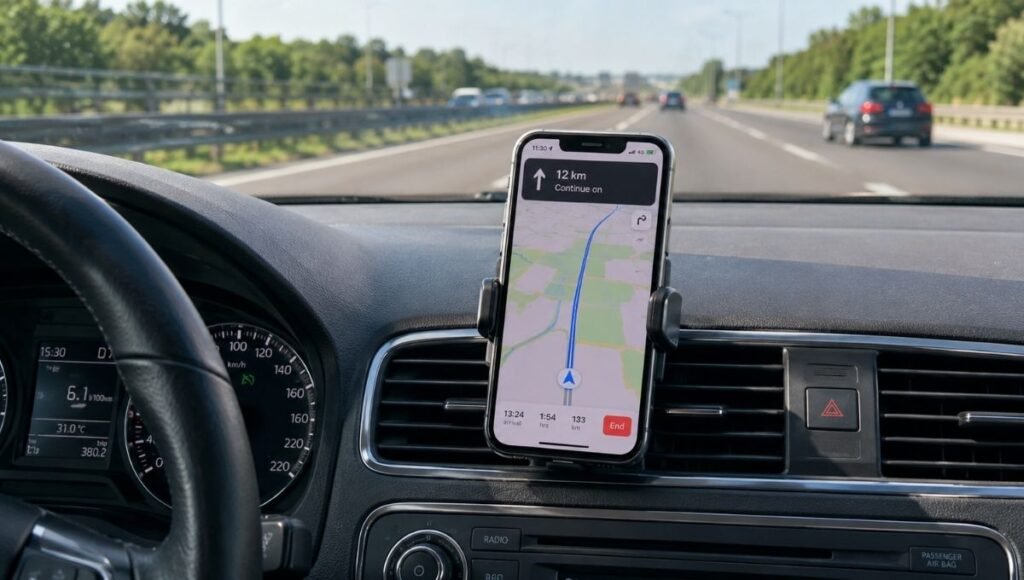
The Phone That Falls at 70 mph
You know how it goes. You wedge the phone between the seat and the center console, or prop it against the cupholder, or — worst case — you hold it. You tell yourself you’ll get a proper mount “soon.” And then one day you’re doing 70 on the highway, your navigation updates, the phone tips over, and you’re suddenly reaching around trying to find it while traffic moves at speed.
It’s one of those small purchases that feels trivial until the moment you realize you’ve been making driving more dangerous for months by not spending $20.
A good car phone mount doesn’t just hold your phone — it puts it at the right angle, in the right place, where you can glance at it the way you’d glance at a speedometer. Eyes on the road, information available. That’s the whole job. And the reason there are so many bad mounts out there is that most people pick one based on price or aesthetics rather than whether it actually works with their specific car and phone.
This guide is about matching the mount to your situation — not just recommending a product and calling it done.
The Four Types of Car Phone Mounts — and the Real Trade-offs
This is the decision that determines whether your mount actually gets used or ends up in a drawer.
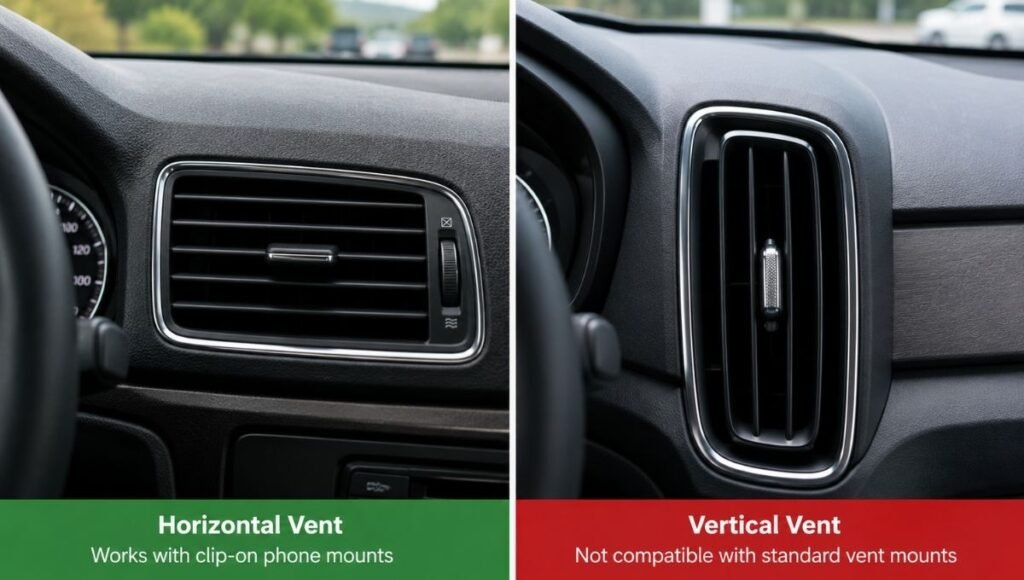
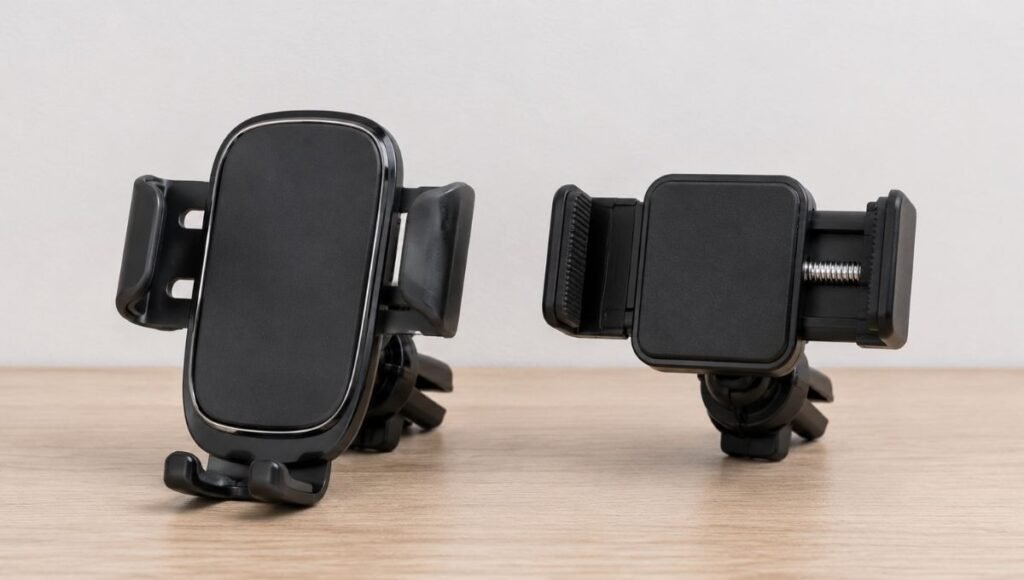
Air Vent Mount
Clips onto the slats of your car’s air vents. The phone sits at dashboard level, in your natural line of sight, without blocking the windshield.
Why people love them: Easy installation, no residue, positions the phone naturally in front of you. Generally the most popular type.
The real problems nobody mentions:
First — vent orientation. The classic vent mount is designed for horizontal vent slats that point forward. Many newer vehicles (including most Mazda, newer Honda, and several luxury brands) have vertical slats, or unusual vent shapes that don’t accept standard vent clips. Check your vents before ordering.
Second — airflow. A phone sitting in the vent blocks a significant portion of your AC and heat output. In summer in hot climates, this is genuinely uncomfortable. The phone also gets blasted with hot or cold air constantly, which accelerates battery wear.
Third — vibration on older cars. On vehicles with more road vibration, vent slats can flex enough for the mount to gradually loosen. You’ll be retightening it.
Best for: Newer vehicles with forward-facing horizontal vents, moderate climate areas, drivers who prioritize clean installation.
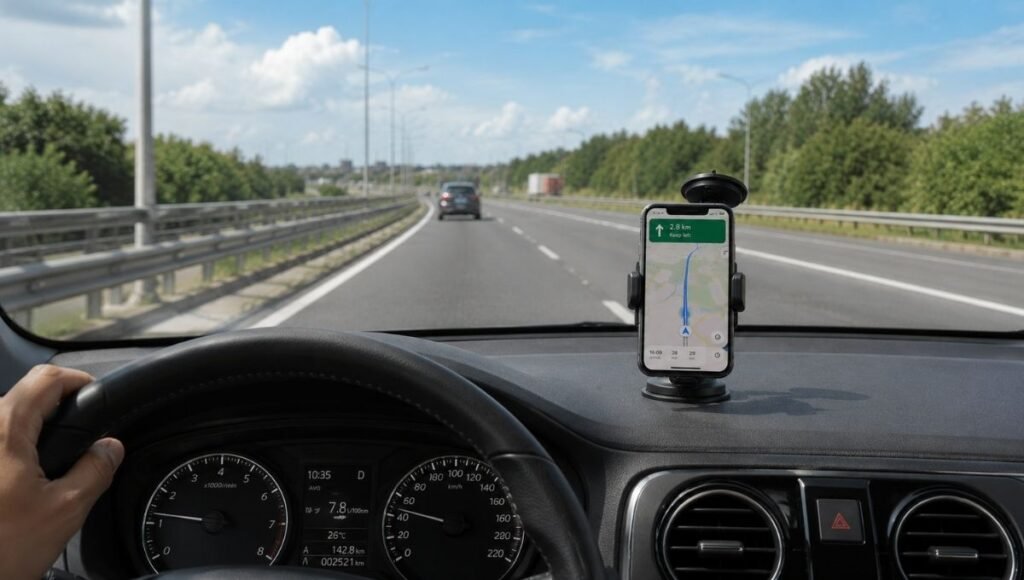
Windshield Suction Cup Mount
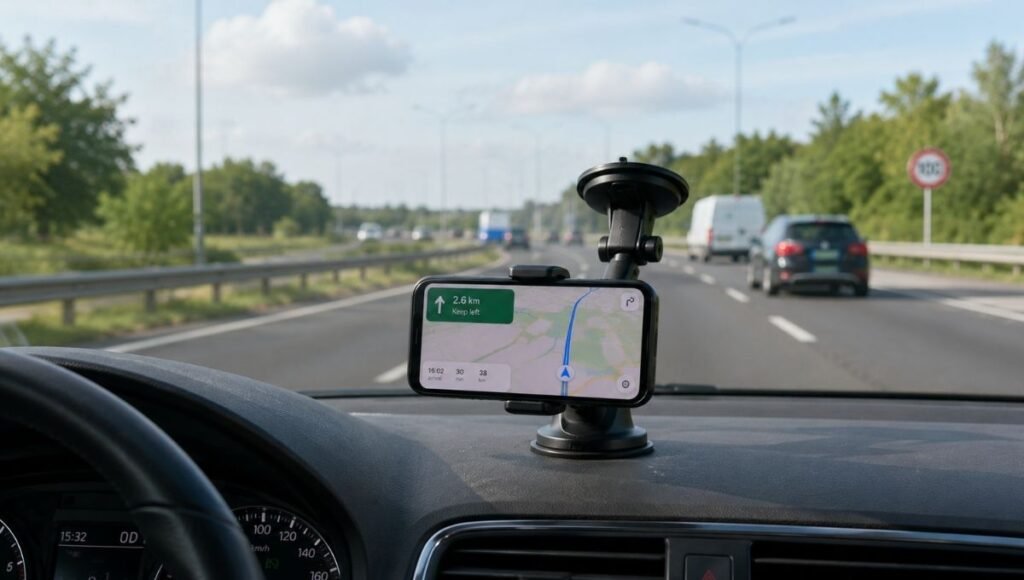
Attaches to the windshield via a suction cup, typically with a telescoping arm that positions the phone at your desired viewing angle.
The practical reality: This is where most people start and many end up staying. A quality suction cup mount — one with a lever-lock mechanism rather than a twist-lock — holds extremely well on clean glass. The phone ends up high and in front of you, which is ergonomically correct.
The problems: In cold weather (below 32°F), suction cups lose their grip. Drivers in cold climates often find their mount on the floor on winter mornings. Additionally, some states have laws restricting objects mounted on windshields — California, for instance, restricts windshield mounts to specific zones near the A-pillar or dashboard.
Re-cleaning the suction cup with rubbing alcohol when it starts losing grip restores almost all of its holding power — most people throw away a mount that would have worked fine for years if they’d done this.
Best for: Warm to moderate climates, drivers who want maximum viewing angle flexibility, people who need a reliable hold for heavier phones.
Dashboard Mount (Adhesive or Suction)
Mounts to the dashboard surface via either a strong adhesive pad or a suction cup designed for flat surfaces.
Adhesive pad mounts: Very secure — the 3M adhesive these use is genuinely strong. Position it once and it stays. The trade-off is permanence; removing the pad often leaves residue and occasionally pulls off dashboard surface material.
Dashboard suction mounts: Less reliable than windshield suction mounts because dashboard surfaces are textured and rarely perfectly flat. Tends to fail faster.
The viewing angle consideration: Dashboard placement puts the phone lower than windshield mounts. For shorter drivers, this may mean looking slightly downward rather than straight ahead — less ideal ergonomically than a windshield mount.
Best for: Drivers who want a permanent, clean setup and are committed to a specific mounting location. Not suitable for leased vehicles.
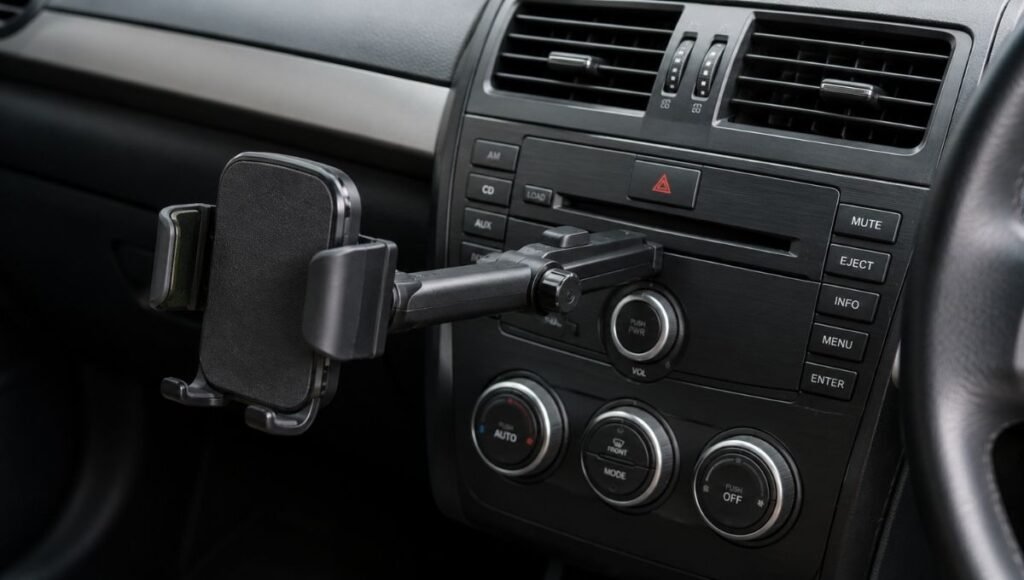
CD Slot Mount
Inserts into the CD slot and uses the slot’s friction to hold a mounting arm. Surprisingly secure for what it is.
Who this is actually for: This is a niche solution for drivers who can’t use vent mounts (wrong vent type) and don’t want windshield or dashboard mounts. If your car has a CD slot and you’ve never used it in five years, this is a clever use of dead space.
The obvious limitation: New vehicles increasingly don’t include CD players. If your car doesn’t have a CD slot, this isn’t an option. Also, the phone position is usually low — around console level — which isn’t ideal for glancing at navigation.
Magnetic Mounts — The Convenience vs. Wireless Charging Trade-off
Magnetic mounts deserve their own section because they’ve become incredibly popular and the trade-off is widely misunderstood.
The appeal is obvious: snap the phone on and off in one motion, no fiddling with clips or grips. It’s genuinely faster and more satisfying than any other mount type.
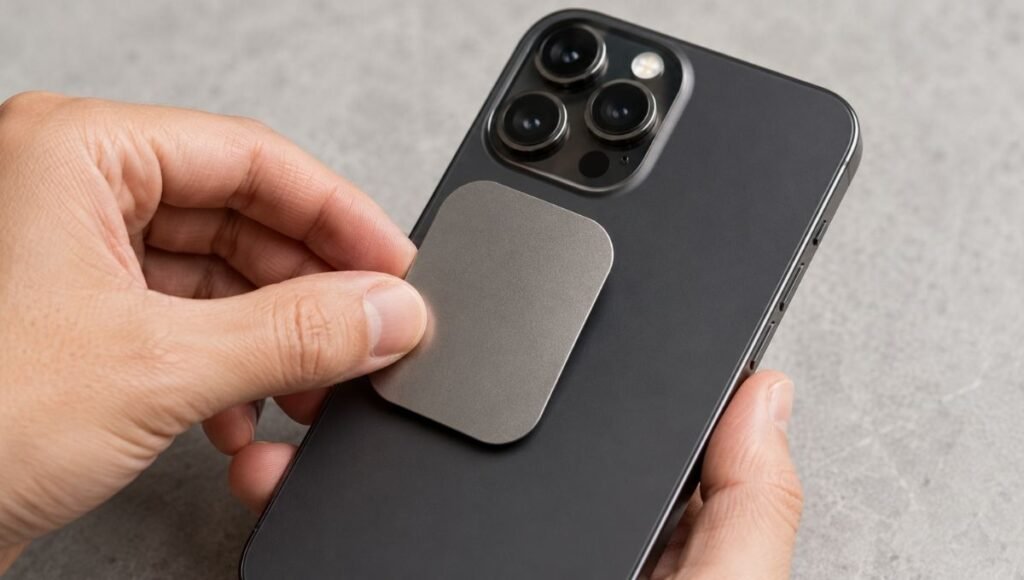
The problem: Magnetic mounts require a metal plate attached to the back of your phone or inside your case. That metal plate sits between the phone’s wireless charging coil and the charging pad — and it blocks the magnetic alignment that Qi wireless charging depends on. Most phones with metal backing plates can’t wireless charge while mounted magnetically, or charge significantly slower.
If you never wireless charge: magnetic mounts are excellent.
If you use a wireless charging dashboard or vent charger to charge while driving: magnetic mounts create a frustrating compatibility issue. The phone attaches magnetically (easy) but then won’t charge efficiently through the wireless charger that’s also trying to work through the same metal plate.
The exception: MagSafe-compatible mounts (for iPhone 12 and later) use Apple’s own magnetic alignment standard and maintain wireless charging capability. If you have a MagSafe-capable iPhone, MagSafe car mounts solve the magnetic-versus-charging conflict.
Gravity Holders vs. Active Grip Mounts
A secondary decision once you’ve chosen your mount type.
Gravity holders: The phone sits in a cradle and gravity plus side arms holds it. Insert from above, and the weight of the phone expands the bottom support and clamps the arms. No buttons, no squeezing. Quick to use. Works well for most phone sizes but can struggle with very light phones or cases with unusual shapes.
Active grip (spring-loaded): Traditional clip design where you squeeze the arms apart, place the phone, and release. The spring tension holds the phone. Very reliable, works with any phone size or case. Slightly slower to use than gravity holders.
Auto-grip electric: Battery-powered mounts that automatically open and close their arms when they detect a phone. The most convenient but adds complexity — now you have a mount with a battery that can die, sensors that can fail, and a higher price. For most people, this is solving a problem that doesn’t need solving.
Where to Position the Mount in Your Car
Getting the mount type right is half the battle. Placement is the other half — and a correctly placed cheap mount beats a premium mount in the wrong location every time.
The target: Position the phone so your eyes move no more than 15–20 degrees off the road to see it. The AAA Foundation for Traffic Safety defines distracted driving in part by the duration of eyes-off-road time; even glances longer than 2 seconds significantly increase collision risk.
Practical positioning:
- Windshield mount: Position on the lower windshield, near the center or driver’s side, below the rearview mirror. Don’t place it so high that you’re looking up at it or so low that it’s near the dashboard where it’s harder to see at a glance.
- Vent mount: The center stack vents (between the driver and passenger) position the phone directly in front of you. The driver’s-side vent (at the A-pillar) pushes the phone to your left — fine for many people but sometimes harder to see at a glance.
- The passenger seat rule: Never prop the phone on the passenger seat or anywhere that requires you to look right or down. Studies consistently show this is functionally equivalent to taking your eyes completely off the road.
The Legal Reality — Why This Is a Safety Purchase
Holding a phone while driving is now illegal in 44 states. The remaining states have partial restrictions. Even in states where it’s technically legal to hold a phone, texting while driving is illegal everywhere in the US.
A phone mounted to your car and used for GPS navigation is legal in all 50 states. Using your mounted phone for audio controls while driving — volume, next track, accepting a call — is generally legal. Interacting with apps, social media, or composing messages is not.
This matters because a car phone mount isn’t just a convenience item. It’s the difference between a legal use of your phone in the car and one that results in fines of $100–$500+ depending on your state, points on your license, and — more importantly — meaningfully higher collision risk.
NHTSA data consistently shows that distracted driving accounts for approximately 8–9% of all fatal crashes annually. Hands-free use via a properly mounted phone reduces that risk while maintaining navigation functionality.
What to Look for When Buying
Mount security: The mount should not move when you push firmly on the mounted phone. Wobble means it will vibrate loose over time.
Phone accessibility while mounted: You should be able to reach the phone’s volume buttons and home button (if applicable) without dismounting it. Test this before committing.
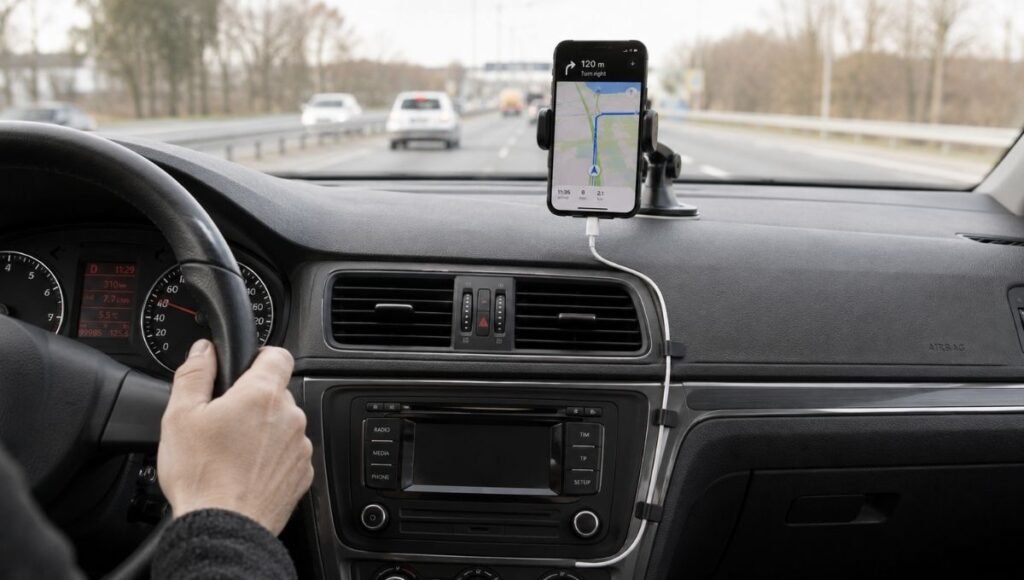
Charging pass-through: If you charge your phone while driving, verify the mount allows your charging cable to connect while the phone is in the mount. Some mounts block the charging port.
One-hand operation: Mounting and dismounting should be achievable with one hand — you’ll be doing this while seated in the car, often while the other hand is busy.
Compatibility with your case: Thick cases, wallet cases, or battery cases can cause fitment issues with some mounts. If you use a non-standard case, check dimensions before buying. Magnetic mounts require a metal plate that typically sits under most cases.
Quick Picks by Situation
Best overall for most drivers: A vent mount or lower windshield suction mount with a gravity holder arm. Brands like iOttie, Beam Electronics, and Nulaxy consistently appear in reliability testing. Budget: $15–$25.
iPhone users with MagSafe: A MagSafe-compatible vent or dashboard mount solves the magnetic-versus-wireless-charging conflict entirely. Budget: $20–$40.
Cold climate drivers: Avoid windshield suction mounts as the primary hold in winter. A vent mount or dashboard adhesive mount is more reliable in freezing temperatures.
Truck or SUV drivers: A longer-arm windshield mount positions the phone more appropriately for the higher driving position. The phone needs to be higher and closer to eye level than in a sedan.
Leased vehicles: Avoid adhesive dashboard mounts. Suction cup or vent mounts leave no trace.
The 10-Minute Setup That Ends Phone Fumbling Forever
Once you have the mount:
- Clean the mounting surface with rubbing alcohol — windshield glass, vent slats, or dashboard. This is the step people skip and then wonder why their mount fails.
- Position before securing — hold the mount in place and check the phone position from your normal driving position. Adjust before locking anything down.
- Route your charging cable if you use one — clip it along the dashboard edge or center console with cable clips so it doesn’t dangle across the mount.
- Test at speed — take it on the highway before committing. Vibration that’s invisible at low speed becomes obvious at 65 mph.
That’s it. A phone mount that’s installed properly and tested takes one weekend afternoon and changes every drive after that.
FAQ
What is the best type of car phone mount? Depends on your car and climate. Vent mounts work for most vehicles and climates but require compatible vent orientation (horizontal slats facing forward). Windshield suction mounts work anywhere but can fail in cold weather. CD slot mounts work if your car has a CD player. Match the type to your specific vehicle before buying.
Are car phone mounts legal? Using a mounted phone for navigation is legal in all 50 states. Holding a phone while driving is illegal in 44 states. Mounting your phone and using it hands-free is the legal way to use navigation and audio controls while driving.
Do magnetic phone mounts block wireless charging? Yes, in most cases. The metal plate required for magnetic mounting sits between the phone and wireless charger coils, blocking or severely reducing Qi charging efficiency. Exception: MagSafe-compatible mounts for iPhone 12 and later maintain wireless charging while using magnetic attachment.
Why does my car phone mount keep falling? Most mount failures come from either a dirty mounting surface (suction cups and adhesives require clean, smooth surfaces — clean with rubbing alcohol) or a mount that’s incompatible with the mounting location (horizontal suction on a textured dashboard, or a vent mount on vertical slats). Re-cleaning the suction cup and reattaching often restores full grip.
Where should I mount my phone in the car? Position it so your eyes move no more than 15–20 degrees off the road to see the screen. Ideally, lower windshield center or a center stack vent mount — directly in front of you and slightly below your normal line of sight. Never the passenger seat, center console, or anywhere requiring you to look significantly right or downward.
Can a car phone mount damage my car? Suction cup mounts on windshields and dashboards leave no lasting marks if removed properly. Adhesive pad mounts may leave residue or occasionally pull off dashboard material — not suitable for leased vehicles. Vent mounts can leave minor marks on vent slats with extended use. CD slot mounts are generally risk-free.
Do I need to spend a lot on a car phone mount? No. The $15–$35 range covers reliable, well-designed mounts from established brands. Above $50, you’re paying for features like auto-grip, built-in wireless charging, or premium materials — convenient but not necessary for a mount that just holds your phone securely.
What’s Next
A car phone mount is the first interior accessory most new drivers should buy. These guides cover the rest of a practical interior setup:
- Car sun shade — the other essential that protects your phone (and your dashboard) when the car is parked. (→ Car Sun Shade — Why Your Car Gets So Hot and How to Actually Fix It)
- Car essentials every driver should have — the complete list of what’s worth keeping in your car, organized by priority. (→ Car Essentials Every Driver Actually Needs)
- How to clean your car interior — keeping the dashboard and surfaces around your mount clean extends both the mount’s hold and the car’s overall condition. (→ How to Clean Your Car Interior the Right Way)
The right phone mount costs $20 and takes 10 minutes to install. The wrong one — or none at all — costs significantly more in stress, distraction, and risk every time you drive somewhere unfamiliar.
References
- National Highway Traffic Safety Administration (NHTSA) — Distracted Driving 2023, Traffic Safety Facts Research Note; hands-free device usage data and distracted driving fatality statistics
- AAA Foundation for Traffic Safety — Measuring Cognitive Distraction in the Automobile, research on eyes-off-road duration and collision risk increase thresholds
- Governors Highway Safety Association (GHSA) — Distracted Driving Laws by State, 2025 state-by-state mobile phone use restriction data
- Journal of Safety Research — The effect of handheld and hands-free cell phone use on driving performance and safety-critical event risk, comparative distraction research
This article contains affiliate links. AutoIXPro may earn a small commission on purchases through our links at no extra cost to you. All recommendations are based on genuine research and practical value. See our Affiliate Disclosure for details.
Phone mount question for your specific vehicle? Contact us — we read every message.