
Last updated: May 2026 | Reading time: 10 min | Category: Safety & Emergency
Key Takeaways
- A flashing traction control light means the system is actively working — your tires are slipping and TCS is correcting it. This is normal on wet or icy roads
- A solid, steady traction control light means the system has turned itself off due to a fault — the car has detected a problem and disabled TCS until it’s fixed
- The most common cause of a steady TCS light is a faulty wheel speed sensor — a relatively inexpensive repair ($150–$400) that most shops can diagnose in under an hour
- Low tire pressure is the most overlooked cause — one tire significantly below recommended PSI changes its rolling diameter enough to confuse the system
- You can drive with the TCS light on, but your safety margin in slippery conditions is reduced — treat it like driving a car without traction control, which most cars didn’t have before the late 1990s
The Light That Appears Without Warning
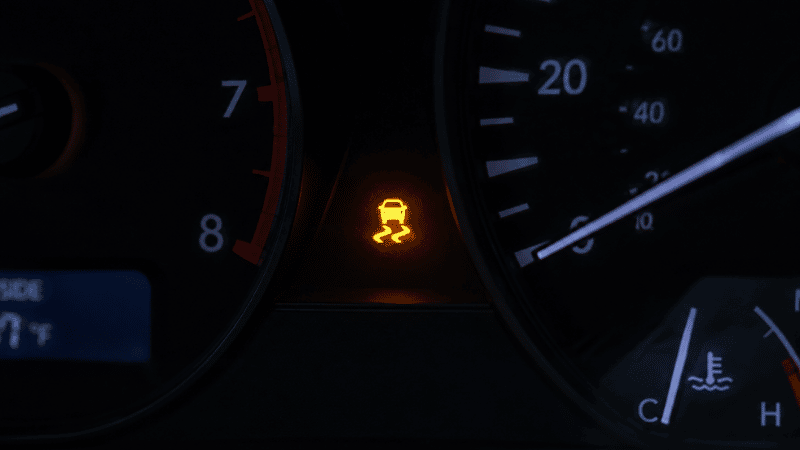
You’re accelerating out of a parking lot, the road is slightly wet, and suddenly you see it — that icon of a car with squiggly lines underneath, briefly illuminated on your dashboard. Or maybe it came on yesterday and hasn’t gone off since, and now it’s just sitting there, a persistent orange glow you’ve been trying to decide whether to worry about.
The traction control light is one of the dashboard symbols that causes the most unnecessary anxiety among new drivers — primarily because it looks alarming without being explained. The problem is that it can mean two completely different things depending on whether it’s flashing or staying solid, and conflating the two leads either to unnecessary panic or unnecessary complacency.
This guide gives you the actual framework for understanding what you’re seeing: what the flashing version means versus the steady version, the real reasons it stays on when it shouldn’t, whether you can safely keep driving, and what to do about it — including a simple check you can do in your driveway before spending any money at a shop.
What the Traction Control System Actually Does
Before diagnosing the light, understanding what it’s monitoring helps the diagnosis make more sense.
The Traction Control System (TCS) prevents your wheels from spinning faster than they’re gripping the road. When you accelerate on a slippery surface — wet pavement, loose gravel, ice — the engine can deliver more power than the tires can convert into forward motion. The excess power causes the wheels to spin rather than grip. TCS detects this by comparing the rotational speed of all four wheels; if one or more are spinning significantly faster than the others, the system intervenes.
That intervention happens in two ways, often simultaneously:
Brake application: The system briefly and precisely applies brake pressure to the spinning wheel, slowing it until it regains grip. This is similar to what ABS does during hard braking — controlled application of brakes to a specific wheel.
Engine power reduction: The system signals the engine control module to temporarily reduce power output, preventing the wheels from being overpowered past the point of traction.
This all happens in milliseconds — typically before you’d even feel the wheel slip yourself. The process is transparent under normal conditions, which is why most drivers rarely notice TCS working. The only time the light appears during normal operation is as a brief notification that the system intervened.
By federal regulation (per NHTSA’s FMVSS No. 126), electronic stability control — which incorporates traction control — has been mandatory on all new passenger vehicles in the United States since the 2012 model year. This means any car made in the last decade-plus has this system.
Flashing vs. Steady: The Difference That Changes Everything
This is the distinction most drivers don’t know, and it’s the most important information in this entire guide.
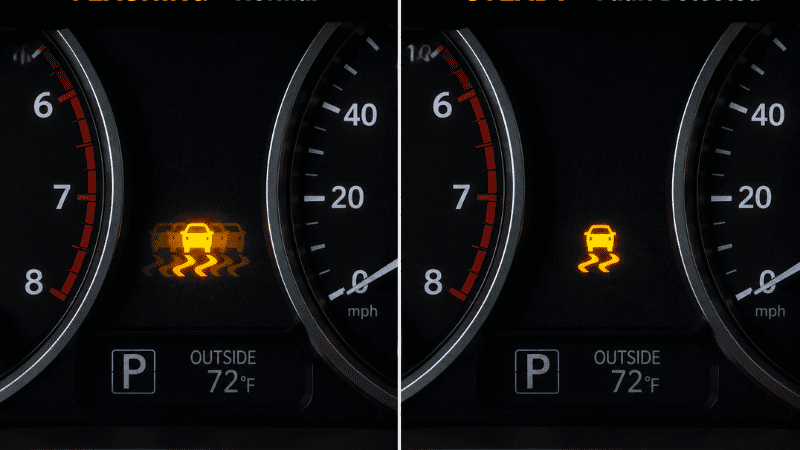
Flashing Traction Control Light — The System Is Working Normally
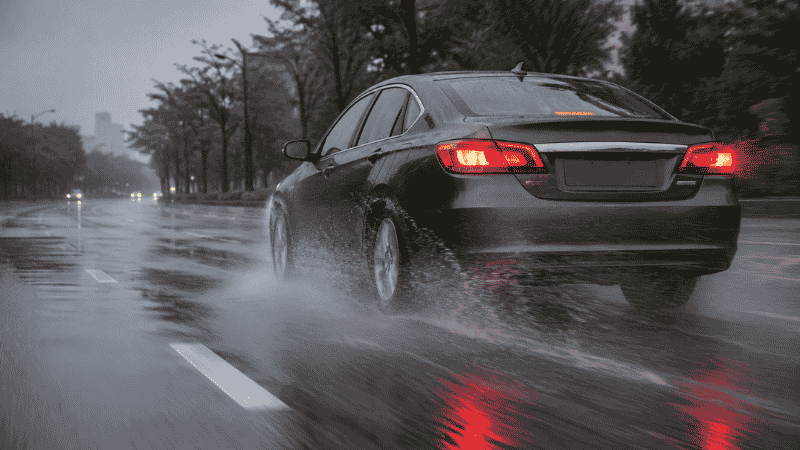
A TCS light that flashes briefly and then goes off means exactly what it’s designed to mean: the system detected wheel slip and corrected it. You accelerated too hard for the available grip, or the road surface changed briefly, and TCS stepped in.
This is not a warning that something is wrong. It’s a notification that something went right — your car’s safety system just did its job. You’ll commonly see this on:
- Wet roads during hard acceleration
- Pulling out of a parking spot on a cold morning when frost is on the pavement
- Accelerating on gravel, sand, or leaves
- Loose surfaces like unpaved driveways
If the light flashes and goes out, no action is needed. Consider slowing down slightly or adjusting your acceleration if it’s happening frequently — it means the road conditions are at the limits of your tires’ grip.
Steady Traction Control Light — A Fault Has Been Detected
A TCS light that stays on continuously means the system has disabled itself because it detected something wrong. The car is telling you: “I found a problem I can’t resolve on my own, so I’ve shut TCS off until someone fixes it.”
This is the version that warrants attention. When the light is steady, your car is operating without traction control — it will drive normally in dry conditions but offers no electronic assistance on slippery surfaces.
Important distinction: TCS has been deactivated, not your brakes. Your regular braking system still works. You haven’t lost the ability to stop — you’ve lost one layer of the safety systems that help maintain traction during acceleration and cornering.
Why Is the Traction Control Light Staying On?
When the light is steady, something in the system has triggered a fault code. Here are the actual causes, roughly in order of frequency.
Faulty Wheel Speed Sensor
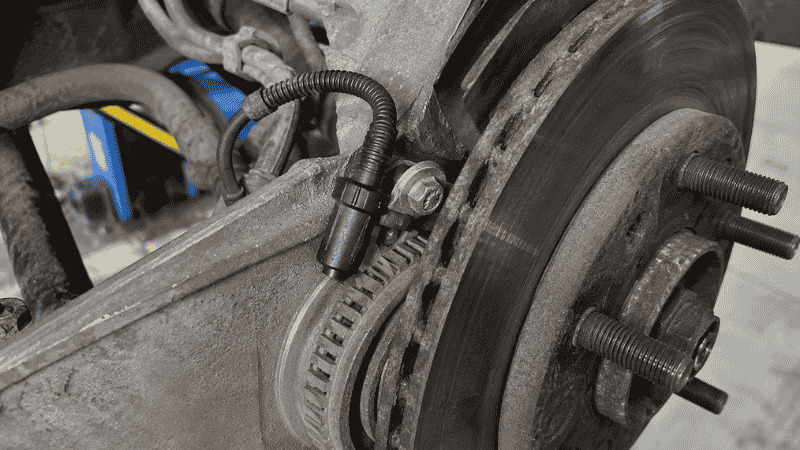
This is the most common cause by a significant margin. The TCS and ABS systems share a network of four wheel speed sensors — one at each wheel — that monitor rotational speed dozens of times per second. These sensors sit close to the road surface, exposed to water, road salt, debris, and heat cycles.
When a sensor corrodes, its wiring frays, or metallic debris from brake dust accumulates around the sensor magnet, the signal becomes unreliable or stops entirely. The TCS module receives inconsistent data and shuts down the system rather than risk incorrect interventions.
A faulty wheel speed sensor typically triggers both the TCS and ABS warning lights simultaneously — because both systems depend on the same sensors. If you see both lights on at once, a wheel speed sensor is the first thing to check.
Diagnosis is straightforward with an OBD2 scanner that can read ABS/TCS codes (standard cheap code readers often can’t — more on this below). Repair cost: typically $150–$400 at a shop, or less if you do it yourself since wheel speed sensors are accessible on most vehicles.
Low Tire Pressure
This one surprises most drivers, but the physics make sense. Each of your four tires has a specific rolling diameter — the effective size of the circle it makes with each rotation. This diameter changes with air pressure; an underinflated tire is physically smaller in diameter and therefore completes more rotations per mile than a properly inflated tire.
When one tire is significantly underinflated, it rotates faster than the other three at any given speed. The TCS module compares wheel speeds and detects this difference — which looks exactly like a slipping wheel. The system may attempt to intervene or simply flag a fault and shut down.
This is the check to do first, before anything else. It costs nothing, takes two minutes, and resolves the issue immediately if it’s the cause. Check all four tires against the recommended pressure on your driver’s door jamb sticker. If any are more than 5 PSI below the recommendation, inflate them and drive a short distance — the light may turn off on its own.
→ Full guide: How to Check Tire Pressure
Steering Angle Sensor Misalignment
Modern TCS systems don’t just monitor wheel speeds — they also monitor steering angle. A steering angle sensor (mounted in the steering column) tells the vehicle’s computer the precise direction the steering wheel is pointed. The system uses this data to anticipate the car’s intended direction of travel and calibrate its traction interventions accordingly.
If the steering angle sensor fails, goes out of calibration, or wasn’t reset after a wheel alignment or steering component replacement, the system receives incorrect directional data and disables TCS. This is particularly common after:
- Wheel alignment service
- Tie rod or steering component replacement
- Certain suspension repairs
A steering angle sensor reset is typically a software procedure done at a shop using a scan tool — not a part replacement, just a calibration. Cost: usually $50–$100 for the reset alone.
ABS Module or Hydraulic Control Unit Failure
The ABS and TCS share a hydraulic control unit and a control module. A failure in either component shuts down both systems simultaneously. These failures are less common than sensor issues but more expensive to repair — typically $300–$800 for the module alone, plus labor.
The tell-tale sign is both ABS and TCS lights on, combined with no fault codes pointing to a specific wheel speed sensor. This typically requires professional diagnosis.
Battery Voltage Issues
A weak or failing battery can produce inconsistent voltage to the various control modules, causing spurious fault codes including TCS warnings. If your TCS light appeared around the same time as other electrical oddities — dim lights, slow starts, intermittent electronic features — check the battery before pursuing other diagnostics.
→ Full guide: How to Check Your Car Battery

Manual Deactivation
Some drivers accidentally press the TCS deactivation button — usually a button with the TCS icon somewhere on the center console or dashboard. When manually deactivated, most vehicles display a persistent “TCS OFF” or similar indicator. If this is the cause, pressing the button again re-enables the system.
Can You Drive With the Traction Control Light On?
Yes, but with clear awareness of what you’ve lost and appropriate adjustment of your driving behavior.
In dry conditions: No meaningful safety impact. TCS rarely activates on dry roads during normal driving. You can drive normally to a shop or home without urgency.
In wet conditions: Drive more carefully. Avoid hard acceleration, especially from a stop or in corners. Increase following distance. Reduce speed more than you normally would in rain. You’re driving as people did before TCS existed — which is manageable, but requires more attention.
In icy or snowy conditions: Treat this as an urgent issue. TCS provides significant protection on ice and snow by preventing wheel spin during acceleration and cornering. Without it, the risk of losing control during acceleration on icy surfaces is substantially higher. If the light comes on during a winter storm, slow down significantly and get to a shop as soon as conditions allow.
If the ABS light is also on: The absence of ABS is a more significant safety concern than the absence of TCS, because ABS affects emergency braking. In this situation, increase following distance substantially and avoid any driving that might require emergency stops.
If the brake warning light is also on: Pull over when safely possible and assess the situation before continuing. The combination of TCS and brake warning lights could indicate a hydraulic pressure issue that affects braking. Don’t dismiss multiple simultaneous warning lights.
When Should You Turn TCS Off Intentionally?
Most drivers never need to turn TCS off. But there are specific situations where disabling it actually helps:
Deep snow: When you’re stuck in deep snow, the spinning of the drive wheels can help the car “dig in” and find traction. TCS may cut power before the wheels can do this work. Temporarily disabling TCS in deep snow is a legitimate technique.
Sand or loose gravel: Starting from a stop on loose surfaces sometimes requires wheel spin to initiate forward movement. TCS intervention can prevent this.
Rocking the car to get unstuck: If you’re stuck and need to rock the car forward and back, TCS may interfere with this technique by cutting power at the wrong moment.
To disable: press and hold the TCS button for 3–5 seconds (varies by vehicle). A “TCS OFF” or similar indicator will appear. Re-enable it when you’re back on normal roads — this is important. TCS off is a temporary situation-specific tool, not a driving mode.
How to Diagnose It Yourself Before Going to a Shop
You can narrow down the cause significantly before spending money on a professional diagnosis.
Step 1: Check tire pressure on all four tires Do this before anything else. Takes 2 minutes. If any tire is significantly low, inflate it and drive for a few minutes. The light may turn off on its own if this was the cause.
Step 2: Check for a manually deactivated TCS Look for a “TCS OFF” or similar indicator on the dashboard. If you see it, press the TCS button to re-enable.
Step 3: Restart the car A clean power cycle can clear a temporary electronic glitch. If the light goes off and doesn’t return, it was likely a transient fault. Monitor it over the next few days.
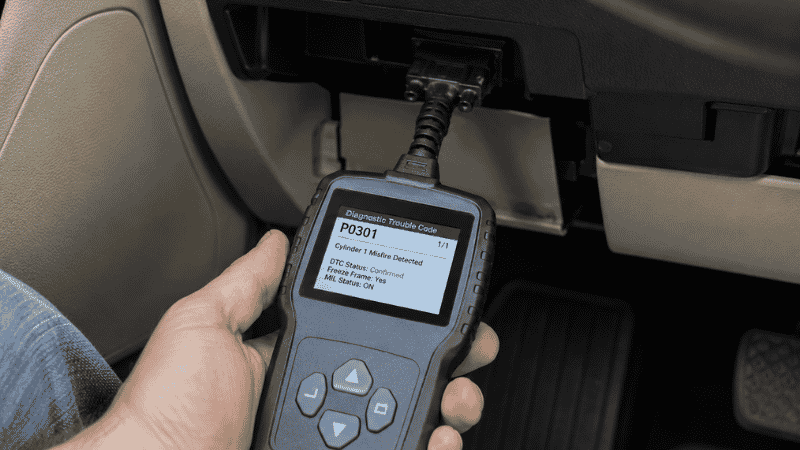
Step 4: Use an OBD2 scanner Here’s where most guides fall short: standard cheap OBD2 readers (the $20–$30 ones) often only read engine fault codes, not ABS or TCS codes. To read the specific fault code that triggered your TCS light, you need a scanner that can access ABS/TCS modules — sometimes called an “enhanced” or “professional” scanner.
Mid-range options like the Ancel BD310 or Launch CR529 ($40–$60) can read ABS codes on most vehicles. The specific code will tell you which wheel speed sensor is failing, whether it’s the steering angle sensor, or whether it’s pointing to something else entirely.
If the code says something like “C0035” or “C0040” — these are wheel speed sensor codes. The number indicates which wheel (right front, left rear, etc.). This narrows the repair to a single part.
Step 5: Check for corrosion on the sensor wiring If you’re comfortable looking under the car, each wheel has a small sensor and a wiring harness running to it. Visible corrosion, frayed wiring, or accumulated debris around the sensor is a visual confirmation of the likely cause.
When to Stop DIYing and Go to a Shop
- Both TCS and ABS lights are on and no wheel speed sensor codes are found — likely a control module or hydraulic unit issue
- The light came back immediately after tire pressure correction and a restart
- The light appeared after a recent wheel alignment or suspension work — steering angle sensor reset needed
- You see fault codes but aren’t comfortable with the repair
- Any brake-related warning lights are also illuminated alongside TCS
- You’re about to drive in winter conditions with TCS off
A shop diagnosis typically runs $80–$150 for a proper ABS/TCS scan and inspection. Ask specifically whether they can read ABS/TCS module codes, not just engine codes — some quick-service shops only have basic code readers.
FAQ
What does the traction control light look like? It’s typically a car-shaped silhouette with squiggly lines beneath the rear wheels, representing tire tracks on a slippery surface. It may be labeled “TCS,” “TC,” or “TRAC.” Some vehicles show it as the letters “TCS” or “TRAC” without the car icon. The same icon with an “OFF” label means TCS has been manually deactivated.
Can I drive normally with the traction control light on? In dry conditions, yes — normal driving is unaffected. In wet, icy, or slippery conditions, be more cautious. Drive more slowly, accelerate more gently, and increase following distance. You’ve lost one safety system but retain full braking capability and normal steering.
Why are both my traction control and ABS lights on? TCS and ABS share wheel speed sensors and are integrated systems. Both lights on simultaneously almost always indicates a wheel speed sensor failure or an ABS control module issue. This is the most common combination and usually points to a single failing component rather than two separate problems.
Is it expensive to fix a traction control light issue? Depends on the cause. Tire pressure — free. Steering angle sensor reset — $50–$100. Wheel speed sensor replacement — $150–$400 depending on vehicle and labor rates. ABS module replacement — $300–$800+. Getting a proper diagnosis first is worth the $80–$150 diagnostic fee; it prevents replacing the wrong part.
Will the traction control light go off by itself? Sometimes. If the cause was temporary — momentary sensor interference, cold weather affecting a marginal sensor, a brief tire pressure drop — the light may go off after the car is restarted or driven. If the underlying cause persists, the light will stay on or return. A light that goes off and on repeatedly is a sign of an intermittent fault worth diagnosing before it becomes a permanent one.
Does the traction control light affect my brakes? No — your standard braking system operates independently of TCS. What changes is ABS (if that light is also on) and the electronic assistance during acceleration and cornering. Your foot brakes, brake lines, and caliper system are unaffected.
Can low tire pressure cause the traction control light? Yes — and it’s more common than most people realize. One tire significantly underinflated rotates faster than the others because its effective diameter is smaller. This speed difference looks like wheel slip to the TCS sensors. Checking and correcting tire pressure is always the first diagnostic step.
What’s Next
A steady traction control light is a signal your car is giving you — treat it as useful information rather than something to ignore or immediately panic about. Understanding what it means is the first step to handling it properly.
These guides cover the related systems and checks that connect to TCS:
- How to check tire pressure — low pressure is the most overlooked cause of TCS lights, and checking takes two minutes. (→ How to Check Tire Pressure)
- Car maintenance checklist — where TCS, ABS, and other safety system checks fit into an annual maintenance routine. (→ Car Maintenance Checklist)
- How to check your car battery — battery voltage issues can cause spurious warning lights including TCS. (→ How to Check Your Car Battery)
- Car essentials every driver should have — including the OBD2 scanner that lets you read your own fault codes before going to a shop. (→ Car Essentials Every Driver Actually Needs)
Understanding your dashboard is one of the most practical skills a new driver can develop. The lights aren’t there to alarm you — they’re there to inform you.
References
- National Highway Traffic Safety Administration (NHTSA) — Federal Motor Vehicle Safety Standard No. 126, Electronic Stability Control Systems; mandatory TCS/ESC requirement for vehicles from model year 2012
- Society of Automotive Engineers (SAE) International — SAE J2564: Electronic Stability Control Systems, performance requirements and test procedures
- National Safety Council — Electronic Stability Control Effectiveness Research, crash reduction data for ESC-equipped vehicles
- Insurance Institute for Highway Safety (IIHS) — Electronic Stability Control: Status and Effectiveness, comparative crash data for ESC/TCS-equipped vs. non-equipped vehicles
This article contains affiliate links. AutoIXPro may earn a small commission on purchases through our links at no extra cost to you. All recommendations are based on genuine research and practical value. See our Affiliate Disclosure for details.
Question about your specific warning light situation? Contact us — we read every message.