
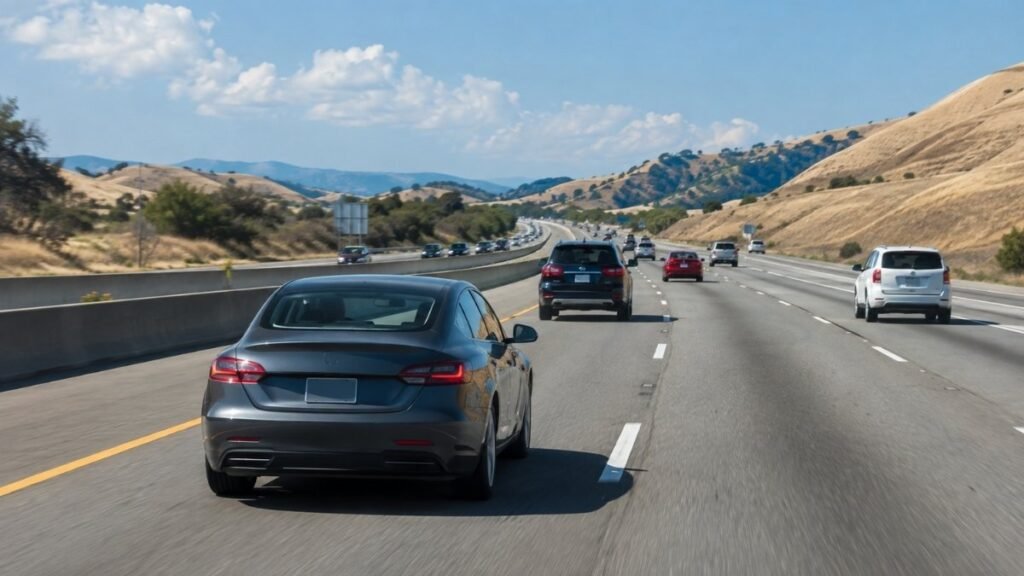
Following the speed limit, using your turn signals, and obeying traffic laws are all important—but they don’t guarantee you’ll avoid a crash. Many accidents happen because another driver makes a sudden mistake, not because you did anything obviously wrong. That’s where defensive driving comes in.
These defensive driving tips focus on the habits that give you more time and space to react when the unexpected happens. You’ll learn how to spot potential hazards earlier, maintain a safe cushion around your vehicle, handle aggressive drivers calmly, and make sure your car is ready to respond when it matters most. Small adjustments like these can make every trip safer, whether you’re driving across town or on the highway.
Defensive Driving Tips at a Glance
The direct answer is this: defensive driving means expecting mistakes from other road users, keeping enough space and time to react, and staying calm and predictable no matter what’s happening around you. It’s less about reacting quickly and more about never being caught off guard in the first place.
A few principles anchor everything else in this guide:
- Expect mistakes from other drivers, pedestrians, and cyclists
- Scan farther ahead than just the vehicle in front of you
- Keep a safe space cushion in every direction
- Stay predictable so others can anticipate your moves
- Adjust speed for road, weather, and traffic conditions
- Stay calm under pressure, even when someone else isn’t
None of these require special training or expensive equipment. They’re habits — and like any habit, they get easier the more consistently you practice them.
What Defensive Driving Really Means
Good drivers don’t rely on quick reactions—they try to avoid needing them in the first place. That’s the idea behind defensive driving. It means staying aware of what’s happening around you, leaving yourself room to react, and never assuming other road users will make the safest choice. These habits won’t stop every risky situation, but they can give you more options when something unexpected happens.
Defensive Driving Explained
In plain terms, defensive driving means driving in a way that reduces your risk regardless of what mistakes other people make. Following traffic laws is part of it, but it’s not the whole picture. A driver can follow every rule and still get into a preventable crash simply because they assumed the car ahead would brake normally, or that the driver merging in wouldn’t cut it close.
The Golden Rule
The golden rule of defensive driving is simple: never assume. Don’t assume the other driver sees you, will use their signal, will stop at the light, or will stay in their lane. It sounds overly cautious on paper, but in practice it just means giving yourself a small buffer of time and space so that someone else’s mistake doesn’t become your emergency.
The benefits go beyond avoiding crashes. Drivers who practice defensive habits consistently tend to experience less day-to-day stress behind the wheel, put less wear on brakes and tires from sudden stops, and in some cases qualify for insurance discounts through recognized defensive driving courses.
Everyday Defensive Driving Habits That Make a Difference
The safest drivers aren’t constantly making dramatic maneuvers—they’re consistently doing the little things well. Habits like leaving extra space, scanning traffic ahead, checking blind spots, and signaling early become second nature over time, making every trip smoother and giving you more time to react when something unexpected happens.
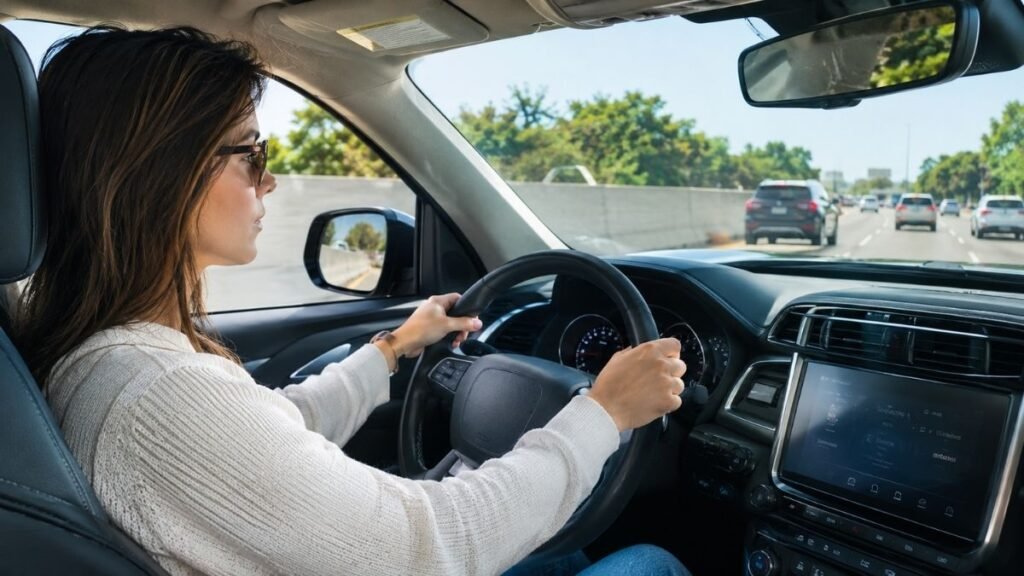
Build a Space Cushion
Following too closely is one of the leading causes of rear-end collisions. According to the National Highway Traffic Safety Administration (NHTSA), rear-end crashes account for nearly 29% of all traffic accidents, making them the most common type of collision. Maintaining a proper 3-to-4-second space cushion gives you the critical reaction time needed to prevent these avoidable crashes.
Scan Continuously
Rather than fixing your eyes on the bumper directly in front of you, defensive drivers scan 10 to 12 seconds ahead — roughly a city block in town, or a quarter mile on the highway. This gives you enough warning to react smoothly instead of slamming on the brakes at the last second.
Use Mirrors and Blind-Spot Checks
Checking mirrors every few seconds keeps you aware of what’s changing around you, but mirrors alone don’t cover everything. Every vehicle has blind spots that mirrors simply can’t show, which is why a quick shoulder check before changing lanes remains essential — even with modern mirror setups.
Drive Predictably
Signaling early, maintaining consistent speed, and avoiding sudden lane changes make you easier for other drivers to anticipate. It’s surprisingly common for new drivers to signal at the very last second, which defeats the purpose of signaling in the first place — by the time other drivers see it, you’ve often already started moving.
Daily Defensive Driving Habits Checklist
- Maintain at least a 3-second following distance (more in poor conditions)
- Scan 10–12 seconds ahead, not just the car directly in front
- Check mirrors every 5–8 seconds
- Perform a shoulder check before every lane change
- Signal at least 3–5 seconds before turning or changing lanes
- Avoid lingering next to other vehicles in their blind spot
- Keep at least one open escape route in traffic when possible
Small habits repeated consistently prevent most everyday crashes — none of them require special skill, just consistency.
How to Spot Trouble Before It Happens
Experienced drivers scan ahead to spot trouble early—especially distracted drivers. The National Safety Council (NSC) reports that cell phone use while driving leads to an estimated 1.6 million crashes annually. Watching for subtle clues like lane drifting or inconsistent speed allows you to build a safe buffer before a distracted driver’s oversight becomes your emergency.
Reading Vehicle Behavior
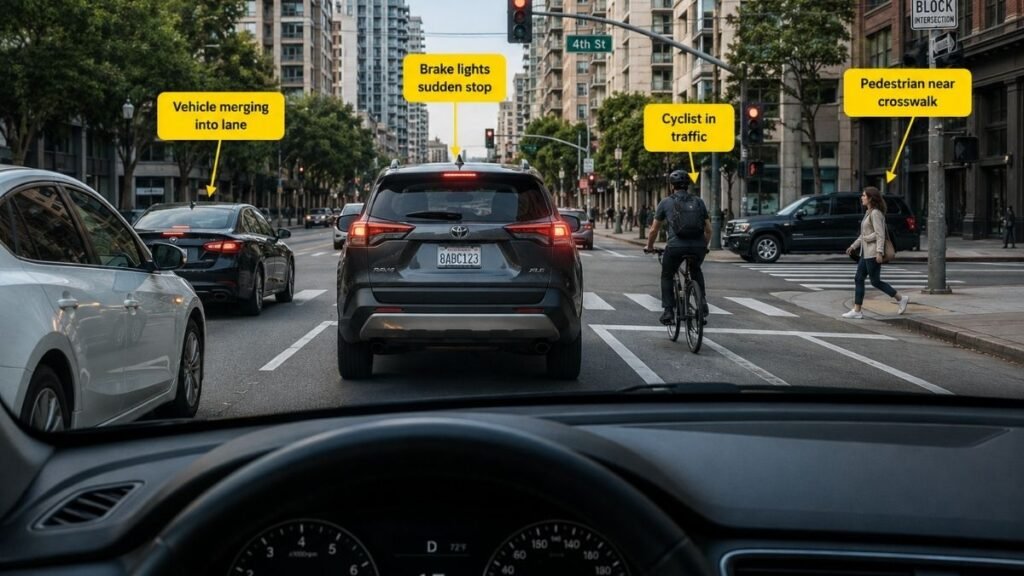
A car drifting slightly within its lane, inconsistent speed, or delayed reactions at green lights are often early signs of a distracted or impaired driver. Watching front wheels — not just the body of a car — can also tip you off to a lane change before the turn signal even comes on, since wheels typically turn before the rest of the vehicle visibly moves.
Spotting Hidden Hazards
Pedestrians stepping out between parked cars, cyclists in a driver’s blind spot, or a ball rolling into the street ahead of a child are the kinds of hazards that don’t show up until it’s almost too late — unless you’re actively scanning for them in advance, particularly near schools, parks, and residential streets.
Looking Beyond the Immediate Traffic
Many beginners only watch the car directly ahead, missing brake lights several vehicles further up that would have given them several extra seconds of warning. Glancing past the vehicle in front, especially in heavy traffic, often reveals a slowdown before the car right in front of you even reacts to it.
Traffic Clue → Likely Hazard → Best Response
| Traffic Clue | Likely Hazard | Best Response |
|---|---|---|
| Brake lights several cars ahead | Slowdown or stop approaching | Begin easing off the gas early |
| Wheels of a parked/stopped car turned outward | Vehicle about to pull out | Cover the brake, be ready to slow |
| Erratic speed or lane drift | Distracted or impaired driver | Increase following distance, avoid passing closely |
| Ball or object rolling into street | Child or pedestrian may follow | Slow down immediately, scan sidewalks |
| Turn signal blinking, but car not slowing | Possible last-second lane change | Don’t assume — watch wheel movement instead |
Most dangerous situations provide warning signs before they become emergencies — the goal is training your eyes to catch them early.
Adjust Your Driving for Different Road Conditions
A crowded intersection, a fast-moving highway, a rainy afternoon, or a parking lot full of pedestrians all require slightly different driving habits. The goal isn’t to drive with the same level of caution everywhere—it’s to recognize what’s around you and adjust early before a routine situation becomes a dangerous one.
Intersections
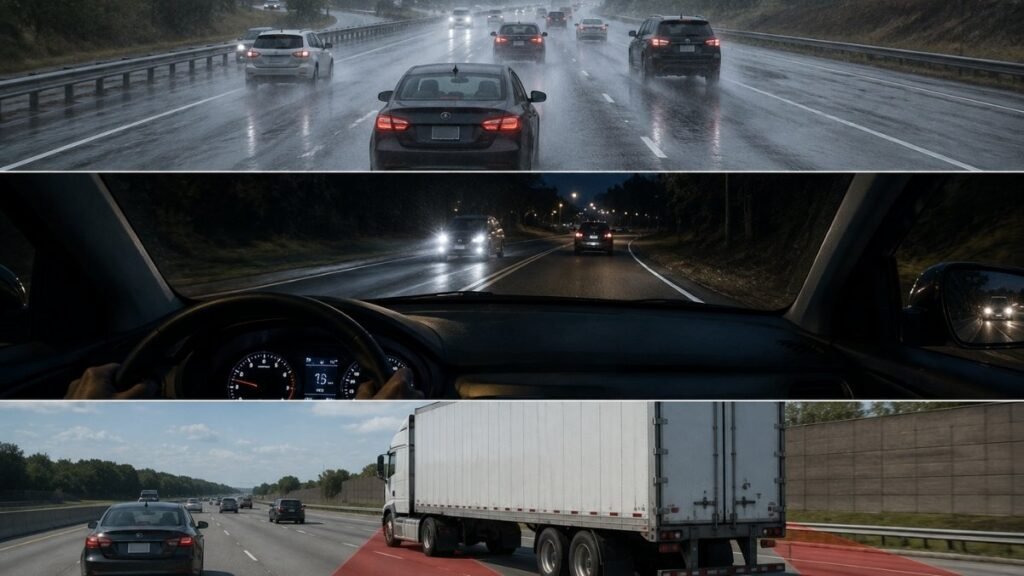
Intersections are where a large share of serious crashes happen, often because someone runs a red light, misjudges a turn, or doesn’t see a pedestrian. A brief pause after the light turns green — even a second or two — gives a driver running the red an extra moment to clear the intersection before you enter it.
💡 Expert Insight: “Data from the National Safety Council (NSC) shows that over 50% of red-light runner crashes happen within the first two seconds of a signal change. That is why we always instruct drivers to pause and glance left-right-left before accelerating through a fresh green light,” explains AutoIXPro master driver instructor.
Highways
Higher speeds mean less time to react, which makes following distance even more important than in city driving. Merging traffic is the biggest highway-specific risk; watching mirrors and adjusting speed slightly to open a gap for merging vehicles reduces the odds of a rushed, unsafe merge next to you.
Poor Weather
Rain, snow, and fog all reduce visibility and traction, which means both following distance and speed need to increase. Wet roads in particular are deceptive — the first 10–15 minutes of rain are often more hazardous than steady rain, since oil and debris haven’t washed off the road yet.
Large Trucks
Large trucks have vast blind spots (or “No-Zones”) where passenger vehicles virtually disappear. Data from the Insurance Institute for Highway Safety (IIHS) highlights that over 4,000 fatalities occur annually in large truck crashes, with smaller passenger vehicles accounting for the vast majority of victims. If you can’t see the truck driver’s side mirrors, you are invisible to them—avoid lingering alongside or tailgating commercial trucks.
Parking Lots
Low speeds create a false sense of safety in parking lots, but pedestrians, backing vehicles, and blind corners make them surprisingly hazard-dense. Covering the brake and driving slower than feels necessary is a small habit that prevents most parking lot fender-benders.
Situation → Biggest Risk → Defensive Adjustment
| Situation | Biggest Risk | Defensive Adjustment |
|---|---|---|
| Intersections | Red-light runners, turning conflicts | Pause briefly after light turns green |
| Highways | Merging traffic, high-speed following | Increase following distance, watch mirrors |
| Rain/Snow/Fog | Reduced visibility and traction | Slow down, increase space, use headlights |
| Large trucks | Blind spots, wide turns | Stay visible in their mirrors, avoid lingering alongside |
| Parking lots | Pedestrians, blind corners | Reduce speed, cover the brake |
Different environments require different defensive strategies — the underlying habits stay the same, but how you apply them changes.
How to Stay Safe Around Tailgaters and Aggressive Drivers
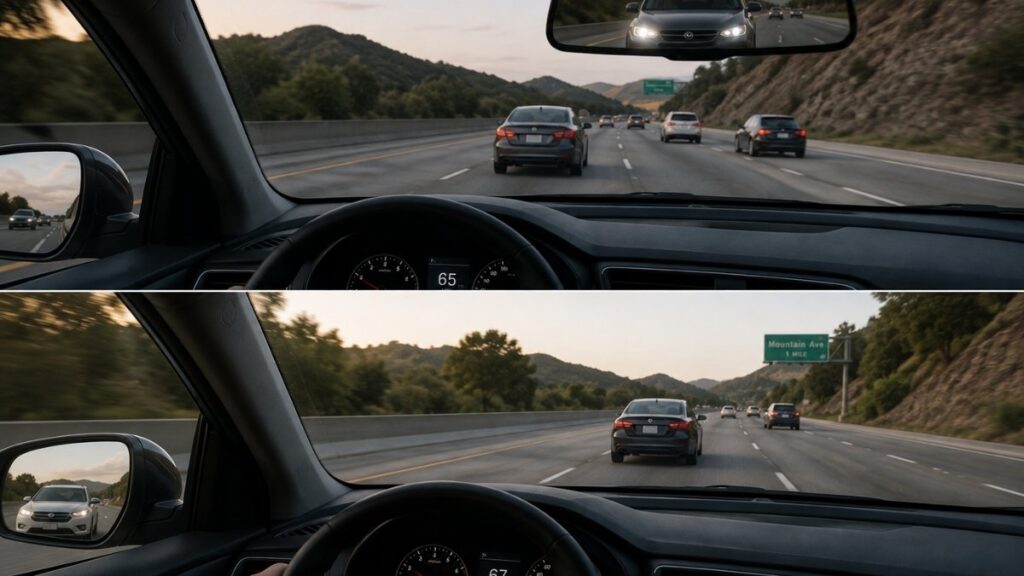
No matter how carefully you drive, you’ll eventually encounter someone who’s impatient, distracted, or driving aggressively. A tailgater, an unsafe lane change, or an angry driver can quickly turn a routine trip into a stressful one. The safest approach is to stay calm, avoid reacting emotionally, and create enough space to remove yourself from the situation whenever you safely can.
Tailgaters
If someone is following too closely, resist the urge to brake-check them or speed up in response. Instead, when it’s safe, ease off the gas gradually to widen the gap between you and the car ahead, or move over to let the tailgater pass. It’s a common mistake to feel pressured into matching an aggressive driver’s pace — doing so only reduces your own safety margin.
Cut-In Drivers
When another driver cuts in front of you, the instinct is often frustration — but the safer response is simply to ease off the accelerator and rebuild your following distance. Reacting emotionally rarely changes the outcome and often increases risk for everyone nearby.
Road Rage
If a driver becomes visibly aggressive — following closely, gesturing, or trying to block your path — avoid eye contact, don’t retaliate, and don’t pull over in an isolated area. Head toward a public, well-lit location such as a gas station or police station if the behavior continues.
If Someone Follows You
If you genuinely believe someone is following you rather than simply driving aggressively, drive to the nearest police station or a busy, populated area and contact emergency services if the situation feels unsafe.
Stay Calm Response Checklist
- Avoid matching an aggressive driver’s speed
- Don’t brake-check or retaliate in any way
- Let tailgaters pass when it’s safe to do so
- Avoid prolonged eye contact with an aggressive driver
- Head to a public location if you feel unsafe
- Contact emergency services if the situation escalates
Safe Response vs. Unsafe Reaction
| Situation | Safe Response | Unsafe Reaction |
|---|---|---|
| Tailgater | Ease off gas, let them pass | Brake-check or speed up |
| Cut-in driver | Rebuild following distance | Tailgate them in retaliation |
| Aggressive gestures | Avoid eye contact, stay calm | Respond with gestures or horn |
| Feeling followed | Drive to a public, populated area | Pull over in an isolated spot |
The safest driver is the one who refuses to escalate conflict, even when someone else is trying to start one.
Make Sure Your Vehicle Is Ready for the Road
You can leave plenty of following distance and react early, but worn brakes, underinflated tires, or poor visibility can still make it harder to avoid trouble. Spending a few minutes checking the basics before driving helps ensure your car is ready when you need it most.
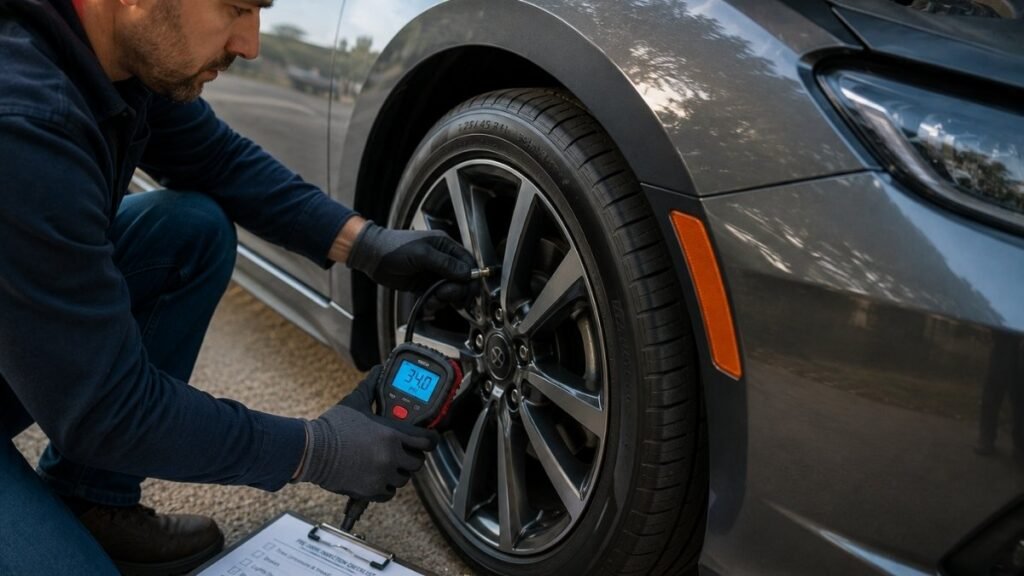
Tires and Brakes
Brakes are one of the most safety-critical systems on your vehicle, and they wear gradually enough that many drivers don’t notice a decline until stopping distance is already compromised. Understanding how long your brakes actually last and when to replace them helps you catch wear before it becomes a safety issue rather than after. It’s also worth knowing what the brake warning light means and when it’s serious, since not every warning light indicates the same level of urgency — but none should be ignored for long.
Visibility
Cracked windshields, worn wiper blades, and dirty headlights all reduce how much you can see and how quickly you can react — particularly at night or in rain. A quick visibility check before longer drives takes less than a minute and can reveal problems before they matter in a critical moment.
Cabin Safety
Loose objects in the cabin — water bottles, phones, groceries — can roll under pedals or become projectiles during sudden braking. Keeping the cabin reasonably clear isn’t just about tidiness; it directly affects how safely you can operate the vehicle in an emergency stop.
Emergency Readiness
A basic emergency kit — flashlight, first aid supplies, jumper cables, reflective triangles — won’t prevent a crash, but it makes handling a breakdown or minor incident considerably less stressful, especially at night or on an unfamiliar road.
Pre-Drive Safety Check
- Tires: check pressure and look for visible wear
- Brakes: listen for grinding or squealing, note any soft pedal feel
- Lights: confirm headlights, taillights, and signals work
- Windshield: check for cracks or buildup that blocks visibility
- Wipers: test for streaking or skipping
- Mirrors: adjust before driving, not while driving
- Cabin: secure or remove loose objects
A prepared vehicle gives defensive-driving techniques a chance to actually work when you need them.
Useful Car Accessories That Support Safer Driving
A better view of your surroundings, fewer distractions inside the car, and simple emergency tools can all improve your confidence and awareness behind the wheel. Choose accessories that support safe driving—not ones that create unnecessary distractions.
Visibility Tools
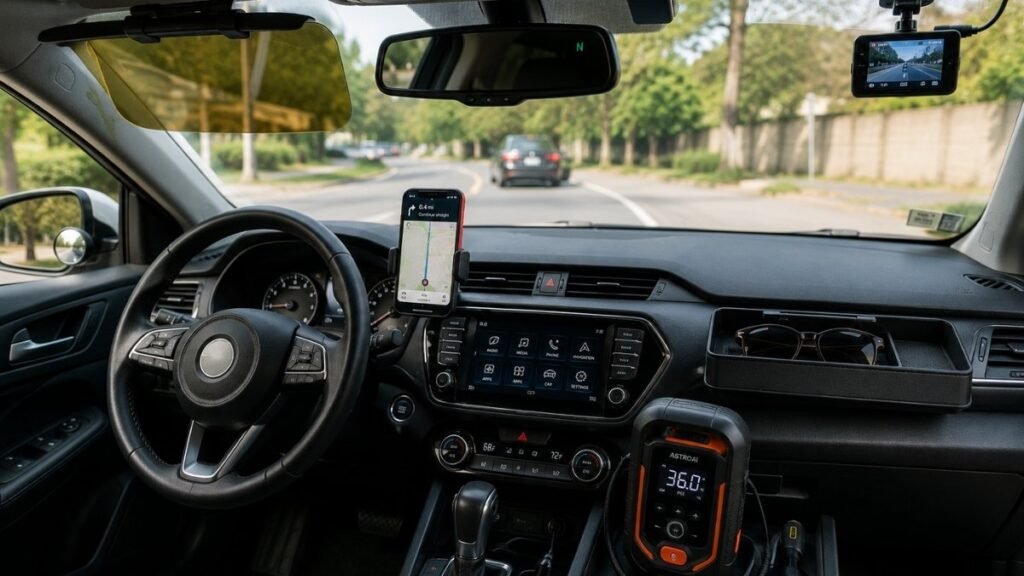
Anti-glare mirrors reduce headlight glare from vehicles behind you at night, and quality wiper blades keep the windshield clear during sudden rain — both directly support the scanning and hazard-recognition habits covered earlier in this guide.
Awareness Tools
One of the most persistent gaps in any vehicle’s factory setup is the blind spot along both rear corners. Understanding blind spot mirrors and how to eliminate your car’s most dangerous viewing gaps is worth doing early, since this is one of the few accessories that directly closes a real visibility hazard rather than just adding convenience. A stable phone mount also reduces the temptation to glance down at a phone resting in a cupholder or seat.
Emergency Tools
A dash cam won’t prevent a collision, but it does provide an objective record if a dispute arises — useful with insurance claims or in the aftermath of an aggressive-driver incident. A portable tire inflator and accurate gauge support the vehicle-readiness habits already covered, helping you catch a slow leak before it becomes a roadside emergency.
Accessories to Avoid
Dashboard clutter, hanging air fresheners, and phone mounts placed in the direct line of sight all work against the same visibility and awareness this guide is built around. It’s a common mistake to add “convenient” accessories without considering whether they block a mirror, a sightline, or reaction time in an emergency.
Accessory → Purpose → Limitation
| Accessory | Purpose | Limitation |
|---|---|---|
| Blind spot mirrors | Eliminate rear-corner blind spots | Requires proper adjustment to work correctly |
| Anti-glare mirror | Reduce nighttime headlight glare | Doesn’t improve daytime visibility |
| Dash cam | Records incidents for evidence | Doesn’t prevent a crash |
| Phone mount | Reduces distraction from handheld phone use | Can block view if placed poorly |
| Portable tire inflator | Maintains safe tire pressure | Requires regular use to be effective |
| Wiper blades (quality) | Maintains clear visibility in rain | Needs periodic replacement to stay effective |
The best accessories improve awareness rather than creating overconfidence — they support good habits, not replace them.
Quick Defensive Driving Self-Check
Run through this list before your next few drives. If you answer “no” to any of these, that’s the habit worth focusing on first.
- Do I scan ahead, rather than just watching the car in front of me?
- Do I maintain enough following distance in normal and poor conditions?
- Do I check blind spots before every lane change?
- Do I adapt my speed and spacing for weather and road conditions?
- Do I stay calm and avoid reacting to aggressive drivers?
- Is my vehicle ready — tires, brakes, and visibility — before I leave?
Improving one habit at a time leads to safer driving over the long term — you don’t need to master everything at once.
Frequently Asked Questions
What is the golden rule of defensive driving for beginners?
The golden rule is to never assume another driver will do the right thing. Give yourself extra space and time so that someone else’s mistake doesn’t turn into your emergency.
How do you safely deal with an aggressive tailgater behind you?
Avoid braking suddenly or speeding up to match them. Instead, ease off the gas gradually and let them pass when it’s safe, keeping your own following distance intact.
How can I accurately scan ahead and anticipate danger before it happens?
Look 10–12 seconds ahead rather than fixating on the car directly in front of you, and pay attention to brake lights, wheel direction, and driver behavior several vehicles ahead.
How do you safely avoid blind spots around large trucks and neighboring cars?
If you can’t see a truck driver’s side mirrors, assume they can’t see you either. Avoid lingering alongside any vehicle for longer than necessary, especially trucks with larger blind spots.
What practical car accessories can help improve defensive driving and safety?
Blind spot mirrors, anti-glare mirrors, dash cams, and stable phone mounts all support awareness and visibility without replacing the core habits this guide covers.
Why should you pause before accelerating when the traffic light turns green?
A brief pause gives a driver running the red light from the cross street a moment to clear the intersection, reducing the risk of a T-bone collision.
How do you maintain a defensive safety space cushion in crowded city traffic?
Leave as much following distance as traffic allows, scan for brake lights several cars ahead, and avoid weaving between lanes, which shrinks your safety margin in every direction.
How does defensive driving change when driving at night or in heavy rain?
Both conditions call for reduced speed, increased following distance, and extra attention to visibility — headlights, wipers, and a clean windshield all become more important than in normal daytime conditions.
🚗 AutoIXPro Garage Notes: Why We Wrote This Guide
Learning defensive driving isn’t about becoming a perfect driver—it’s about giving yourself a little more time, space, and awareness every time you get behind the wheel.
That’s why these defensive driving tips focus on practical habits that everyday drivers can actually use. From keeping a safer following distance and spotting potential hazards earlier to staying calm around aggressive drivers and making sure your vehicle is ready for the road, every section is designed to help you feel more prepared in real traffic—not just pass a driving test.
This guide is built around three simple ideas:
- 🚘 Drive With More Awareness — Learn to spot risks before they turn into emergencies.
- 🛣️ Leave Yourself More Time to React — Use space, speed, and visibility to make safer decisions.
- 🧰 Start With a Road-Ready Vehicle — Good habits work best when your car is ready to respond.
No one gets everything right on every drive.
But building a few better habits today can make every trip a little safer tomorrow.
🚗 Continue Building Your Driving Skills
Safe driving doesn’t stop with defensive driving habits. These practical guides will help you handle challenging road conditions, understand how your vehicle behaves in emergencies, and keep it in top condition for safer driving every day.
- How to Drive in Snow — Learn how to handle snow-covered roads, icy conditions, reduced traction, and winter weather with confidence. (→ How to Drive in Snow)
- Oversteer vs Understeer — Understand why a vehicle loses grip, how to recognize the difference, and what to do to regain control safely. (→ Oversteer vs Understeer)
- Car Maintenance Checklist — Stay ahead of routine maintenance with a practical checklist that helps keep your brakes, tires, lights, and other safety systems road-ready. (→ Car Maintenance Checklist)
❤️ A Final Note
Cars are part of everyday life, but good driving isn’t about knowing every answer. It’s about building simple habits that make each trip a little safer, a little easier, and a little less stressful.
At AutoIXPro, we believe practical car advice should be clear, honest, and useful long after you’ve finished reading. That’s why we focus on real-world driving, straightforward maintenance tips, and everyday solutions that help you make confident decisions behind the wheel.
Whether you’re learning your first driving habit or improving one you’ve had for years, we’re glad to be part of the journey.
Drive safe, keep learning, and enjoy every mile ahead.