
Key Takeaways
- The best car accessories solve problems you’ve stopped noticing — the phone that falls every time you brake, the seat gap that swallows everything, the dead battery at 7 a.m.
- Safety-first accessories have the highest ROI — a $60 portable jump starter has saved people more stress than $600 of aesthetic upgrades ever could
- Most “best accessories” lists are shopping catalogs — this guide is organized around actual problems, not product categories
- The Reddit consensus on car accessories after thousands of real user experiences: phone mount, dash cam, and seat gap filler are the three most universally praised purchases
- The accessories that feel obvious in hindsight are the ones worth buying; anything that requires a lifestyle change to use will end up in your trunk unused
“I Bought It and I Can’t Believe I Waited So Long”
There’s a specific type of product recommendation that shows up in every honest car accessories thread. Not “this looks cool” or “this gets great reviews” — but something more specific. People write: “I’ve had this for two years and I think about how I drove without it constantly.” Or: “My wife asked me why I hadn’t bought this when I first got the car.”
That’s the feeling this guide is built around. Not the accessories that make your car look different, but the ones that change the actual experience of driving and owning a car. The gap between “before” and “after” that you feel every single day.
When r/cars ran a thread asking drivers what quality-of-life accessories they actually recommend, the answers fell into a clear pattern. People didn’t talk about LED ambient lighting or custom steering wheel covers. They talked about the phone that stops falling off the dash. The jumper cables they finally stopped needing a stranger to help with. The dash cam that settled an insurance dispute in 20 minutes. The small, unglamorous things that quietly make car ownership less stressful.
This is that list.
The Phone Mount — First, Because Everything Else Assumes You Have One
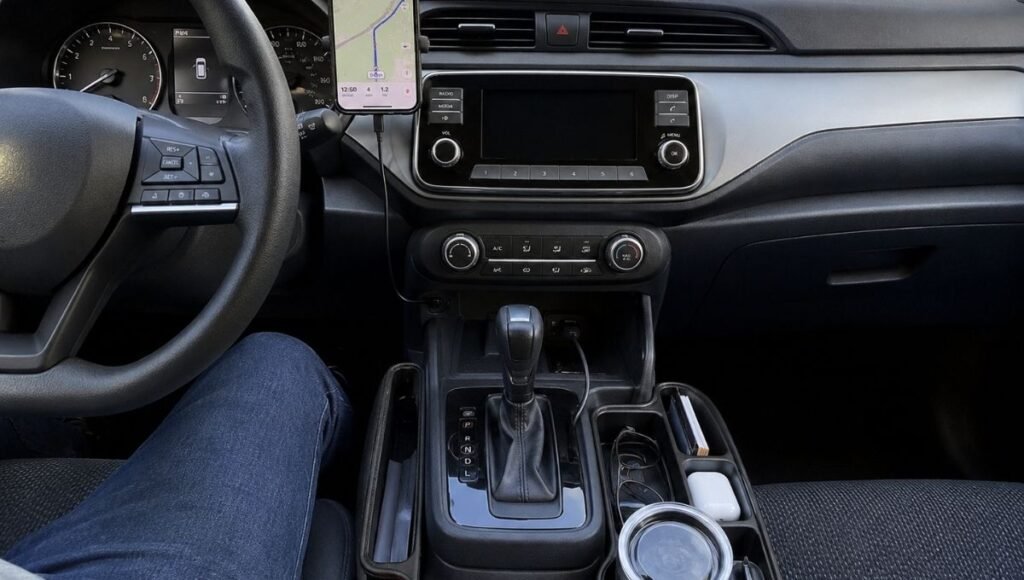
Every other tech accessory in your car — navigation, music control, hands-free calls — depends on your phone being somewhere you can see and interact with it safely. A phone mounted at eye level, within a brief glance, is the foundation of a modern car setup.
The problem isn’t that people don’t know they need one. It’s that most people have tried one that didn’t work and given up. The phone that slides off in turns. The suction cup that drops at 6 a.m. on a cold morning. The vent clip that gradually comes loose at highway speed and lets the phone vibrate its way free.
What actually works: a vent mount on forward-facing horizontal slats (not vertical ones), or a lower windshield suction mount with a lever-lock mechanism cleaned regularly with rubbing alcohol. The mount that holds in cold weather, holds on rough roads, and holds with your specific phone in its specific case — that mount is worth finding.
The detail most people miss: your phone needs to be reachable with one hand, buttons accessible while mounted, and at an angle that doesn’t require you to look down from the road. The position matters as much as the mount itself.
→ We cover this in detail: Car Phone Mount — Which Type Actually Works for Your Car
The Seat Gap Filler — The Dumbest Simple Problem With a Dumb Simple Fix
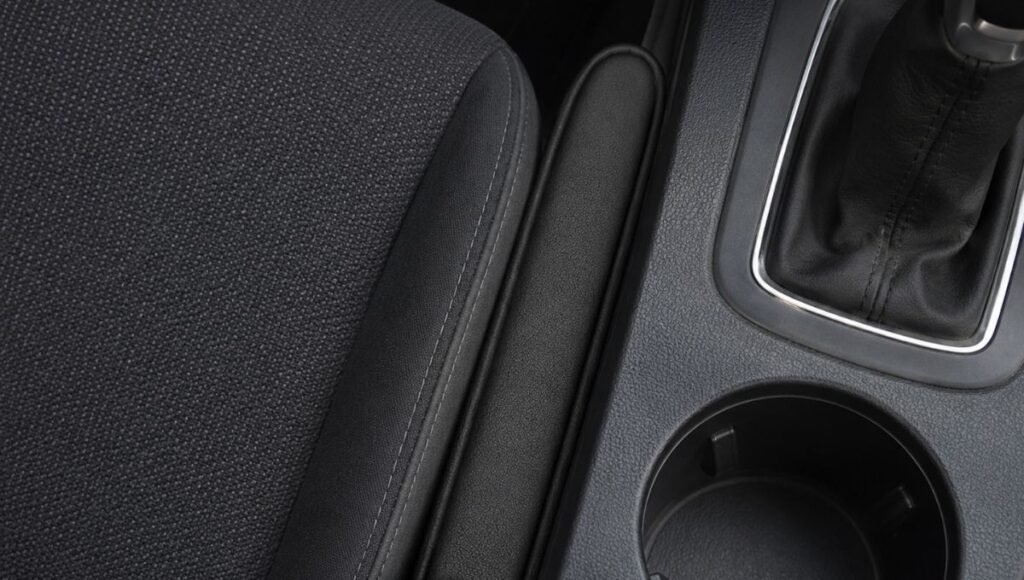
Here’s a thing that happens: you’re at a drive-through, you pay with cash, you drop a coin, and it disappears into the gap between your seat and the center console. Gone. It will never be found again, or it will emerge three years later in the worst possible moment.
The same gap also swallows pens, lip balm, small tools, receipts you needed, and phone chargers. It’s a black hole that exists in almost every car and causes a cumulative amount of low-grade frustration that nobody measures but everyone experiences.
A seat gap filler — typically two foam or silicone pieces that slide into each seat gap — costs $15–25 and takes about a minute to install. The satisfaction-to-price ratio is genuinely one of the highest of any car accessory. Reddit users describe it consistently as the purchase they’re most embarrassed it took them so long to make.
The secondary benefit: it eliminates the distraction of reaching into the gap while driving, which is one of those small behaviors that contributes to distracted driving without feeling like a phone.
The Portable Jump Starter — Because AAA Takes 45 Minutes
You know the feeling. You come out to your car, turn the key (or push the button), and nothing happens. The lights come on but the engine doesn’t turn over. The battery is dead. And now you need someone with jumper cables who is willing to pull up next to you in a parking garage at 8 p.m.
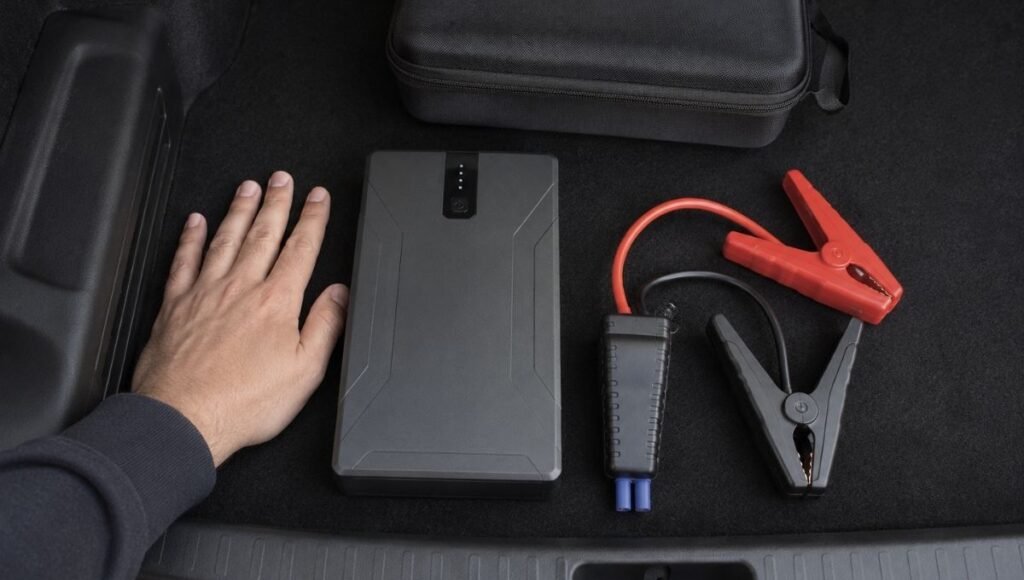
A portable lithium jump starter is a compact device — roughly the size of a thick paperback — that contains enough stored energy to start most passenger vehicles without a second car. Connect red to positive, black to negative, wait 30 seconds, start the car. The whole process takes under two minutes.
They run $50–90 for a quality unit and will start your car reliably for 3–5 years between charges (charge it once every few months to maintain capacity). They also function as a USB power bank, which means they’re useful even on days your battery doesn’t die.
The people who own these describe a very specific feeling after the first time they use them: a kind of low-level calm about the parking lot, the cold morning, the old battery that’s probably due to be replaced. The anxiety about being stranded quietly disappears.
What to look for: peak amperage of at least 400A for compact cars, 600A+ for trucks and SUVs. A built-in LED flashlight (useful in parking garages at night). A case that keeps it from rattling around in your trunk.
→ See our full guide: Car Essentials Every Driver Actually Needs
The Dash Cam — Not for Accidents. For What Comes After.
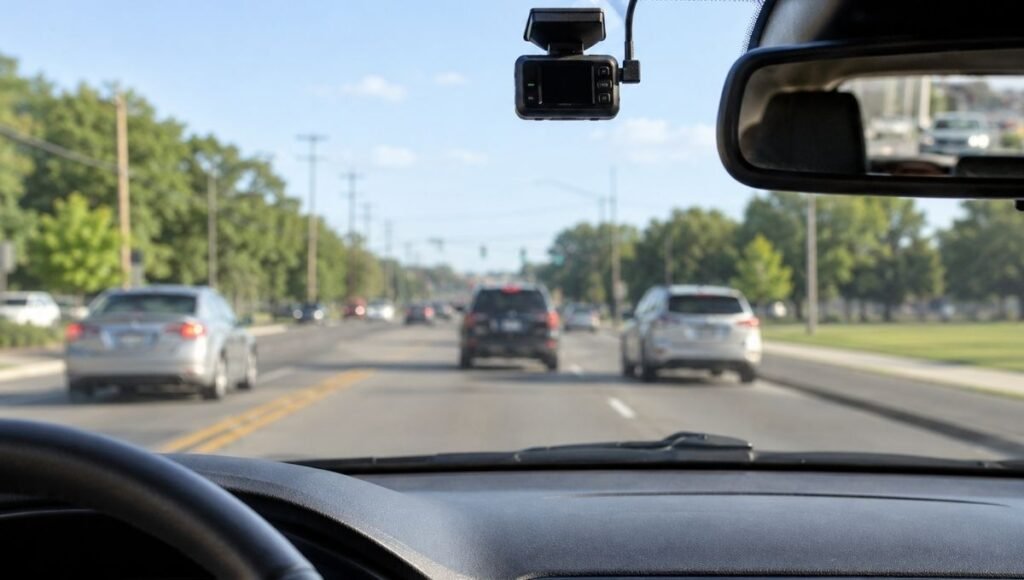
Most people think about dash cams in terms of recording accidents. That’s one use. But the more accurate framing is: a dash cam records every drive, and most of the time you never look at the footage. It just sits there. And then one day, something happens — a minor collision where the other driver tells a different story, a near-miss with a vehicle that ran a light, a parking lot door ding with no note — and you pull out your phone and you have video of exactly what happened.
The insurance and legal value of a dash cam is hard to quantify in advance. But people who’ve been in even minor disputed incidents describe the experience of having footage as genuinely transformative. A claim that might have taken months of back-and-forth gets resolved in a conversation. A “he said, she said” becomes a question with a clear answer.
The secondary use that Reddit users consistently mention: driver improvement. People who watch their own dashcam footage periodically describe becoming more aware of their own habits — following distance, highway merging, how close they get to cyclists. There’s something about seeing your own driving from the outside that’s different from how it feels in the moment.
What matters in a dash cam:
Loop recording (overwrites old footage automatically so you don’t need to manage storage), parking mode (detects impacts when the car is off — useful for parking lots), and night vision. Resolution matters but 1080p is sufficient for license plates and faces at normal driving distances. 4K is useful if you want to zoom into footage significantly.
The hidden installation detail: A dash cam hardwired to the fuse box is cleaner and more reliable than one running on a cable to the 12V outlet. The cable route along the windshield edge, behind the A-pillar trim, and to the fuse box takes 30–45 minutes for someone handy, or costs $50–80 at a shop. Most people who run a cable across the windshield for a year eventually have it hardwired.
The Portable Tire Inflator — For Slow Leaks and Monday Mornings
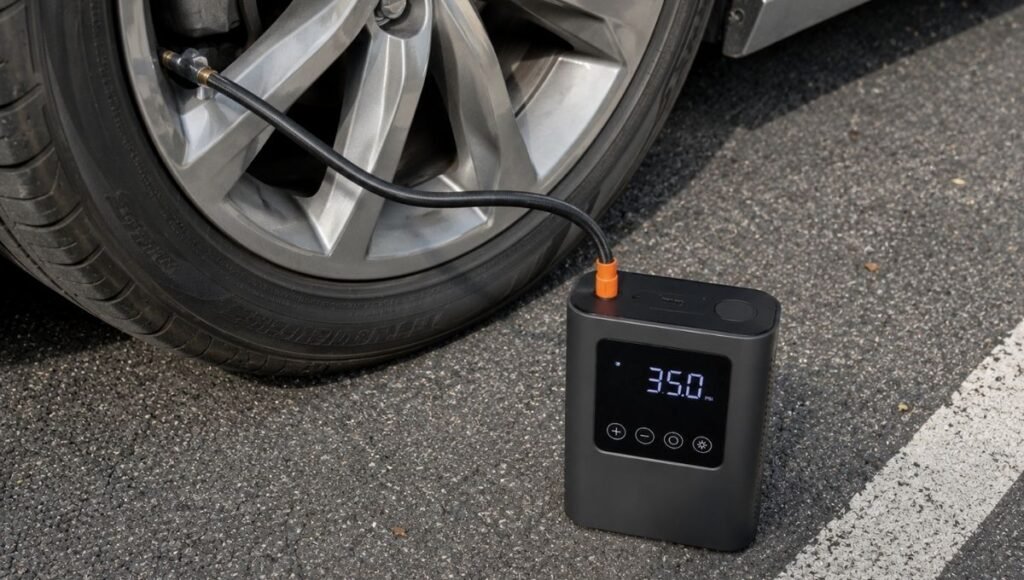
Not every flat tire is a blowout. A lot of them are slow leaks — a nail in the tread that the tire holds for weeks, losing a pound of pressure every few days, until one morning the TPMS light comes on and the tire is noticeably soft.
A portable tire inflator plugs into your 12V outlet or USB port and inflates a standard passenger car tire in 3–5 minutes. Set your target pressure, attach to the valve stem, and it stops automatically. For slow leaks, you can top off the tire and make it to a shop on your own schedule rather than waiting for roadside assistance.
They cost $25–55, live in the trunk, and get used more than most people expect. The monthly tire pressure check that takes 5 minutes with a gauge takes 7 minutes with the inflator and ends with every tire at exactly the right pressure. It’s a small difference in convenience that turns a task people procrastinate on into one they actually do.
The population that uses these most frequently: people in cold climates (where pressure drops noticeably in October and November) and parents with kids who are the primary cause of flat tires through general chaos.
→ Full guide: How to Check Tire Pressure
The Car Organizer — But Only If You Use It
The trunk organizer and center console insert appear on every “best car accessories” list, and they deserve their spot — with one honest caveat. An organizer you don’t maintain becomes a more organized form of chaos within about a month.
What works: a collapsible trunk organizer with tie-down straps ($20–40) that you designate for a specific category — emergency kit items, reusable bags, sporting equipment. One purpose, one organizer. A console insert tray ($15–25) that creates sections for the specific items you actually reach for daily (charging cable, pen, coins, lip balm). Not everything. The specific things.
What doesn’t work: buying three organizers for every zone of the car, filling them with whatever, and then losing track of what’s where. The car ends up feeling more cluttered than before, just in a contained way.
The Reddit observation that gets at this most clearly: the people with the most organized cars aren’t using the most accessories. They’re using the fewest items that solve the most problems.
→ Our full guide: Car Organizer — By Zone and Why the Trunk Stuff Is a Safety Issue
The Microfiber Cloth and Interior Cleaner — Unglamorous and Irreplaceable
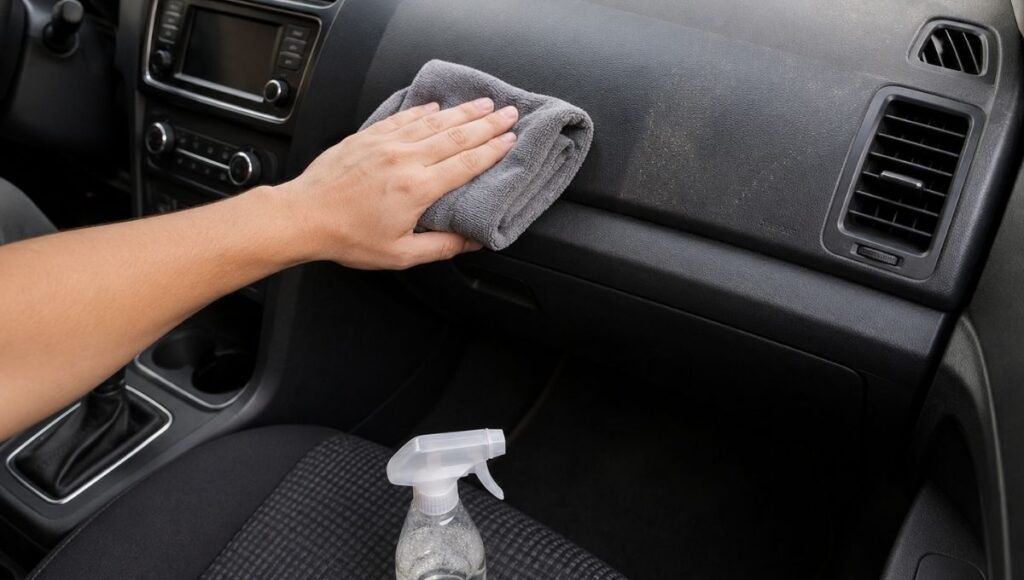
This is the one nobody puts on these lists because it doesn’t feel like an accessory. It’s cleaning supplies.
But here’s the thing: a car with a slightly dusty dashboard and hazy windows feels worse to be in than one that’s clean, and the difference between those two states is a $12 interior cleaner and a few microfiber cloths kept in the car. Three minutes while waiting to pick someone up. A wipe-down of the dash at a rest stop. The quick pass on the interior windows that cuts the nighttime glare from the film that builds up over weeks.
Keeping microfiber cloths in the car — not in the garage, in the car — is the specific habit that makes this work. The clean car isn’t the result of dedicated cleaning sessions. It’s the result of small opportunistic moments that are only possible if the tools are there.
The specific recommendation that Reddit users return to: a UV-protectant interior cleaner for the dashboard (prevents the cracking and fading that happens on plastic and vinyl dashboards over years of sun exposure) and a glass-specific cleaner for windows (eliminates the streaking that all-purpose cleaners leave). Two products. Substantial difference.
→ Related: How to Clean Your Car Interior the Right Way
The Car Sun Shade — Protecting More Than Your Comfort
The sun shade is on this list not because of the 40°F temperature reduction when you get back in the car (real, and nice), but because of what it’s actually protecting: your dashboard.
Dashboard cracking and fading from UV exposure is gradual and permanent. The plastic and vinyl materials used in most car interiors degrade under consistent sun exposure over months and years. The dashboard on a 10-year-old car parked outdoors without a shade looks noticeably older than the same car that was garaged or shaded.
Dashboard replacement costs vary enormously by vehicle, but $500–2,000 is not unusual for the full surface. A quality car sun shade costs $15–40 and lasts several years with regular use. The math is straightforward.
The secondary reason to own one: winter frost. Place it on the windshield before overnight frost and remove it in the morning to find clear glass under it. No scraping.
→ Full guide: Car Sun Shade — Why Your Car Gets So Hot and How to Fix It
The One Accessory That Isn’t an Accessory: Your Registration and Insurance in a Document Organizer
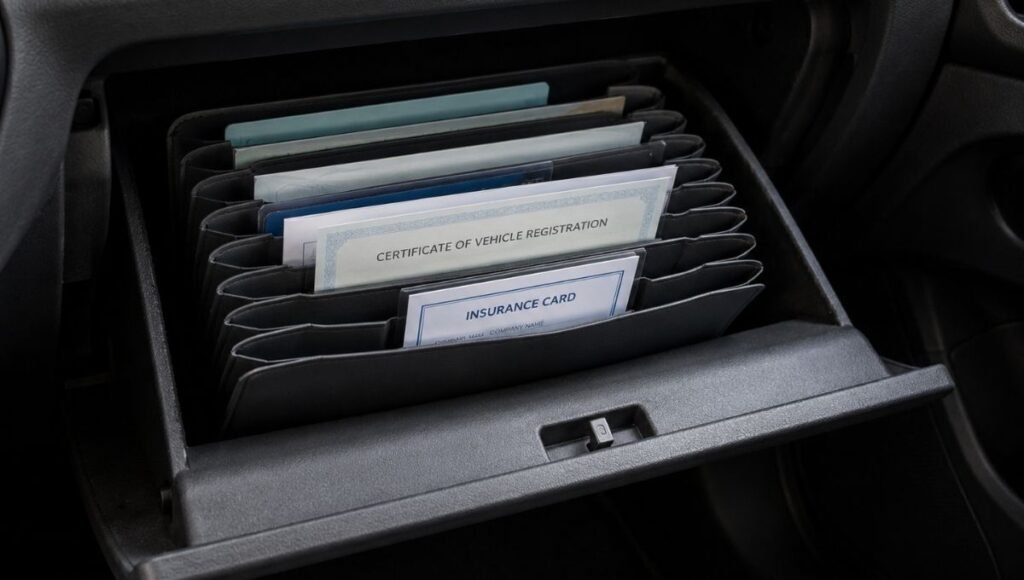
This isn’t exciting. It’s also the thing that matters most in the worst moments.
If you get in an accident or get pulled over, you need to find your registration and insurance card in under 30 seconds, in whatever light exists, while your hands may be shaking. A thin accordion document organizer in the glove box means those documents are in a specific place every time. Not loose among the owner’s manual, napkins, and old receipts. In a specific place.
A document organizer costs $8–15. The peace of mind it provides in the moments you need it is worth considerably more than that. This is the category of accessories that nobody posts about because it’s boring — and that’s exactly why it needs to be on this list.
The Accessories to Skip (Or at Least Deprioritize)
Not every car accessory earns its place.
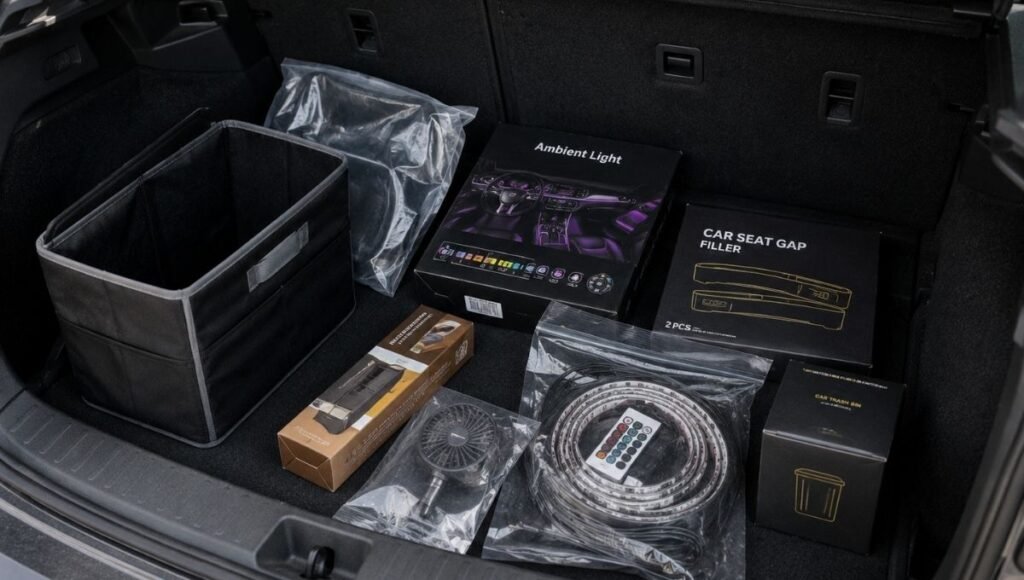
LED ambient interior lighting kits — genuinely nice looking, genuinely low priority. They add aesthetics without solving problems. Worth buying after everything on this list.
Seat back hooks — useful for about two weeks, then forgotten. A trunk organizer with a designated bag section does the same job better.
Car aromatherapy diffusers — don’t solve the underlying smell; see our car odor guide for what actually works.
12V plug-in vacuum cleaners — typically underpowered compared to a quality handheld cordless. Better to own one good vacuum that works in the car and at home.
Most gadgets that solve problems you don’t have — the waterproof phone case for water crossings you’ll never do, the roof cargo bag for camping trips you haven’t taken yet. Accessories that serve imagined versions of your driving life accumulate and go unused.
The 10-Minute Upgrade Session
If you want to meaningfully improve your daily driving experience without spending a weekend on it:
- Install a phone mount that actually holds your phone (20 minutes, $20)
- Install seat gap fillers (5 minutes, $20)
- Put a portable jump starter in the trunk (0 minutes of installation, $60)
- Buy a document organizer and put your registration and insurance in it (10 minutes, $10)
- Put two microfiber cloths and a bottle of interior cleaner in the center console (5 minutes, $15)
That’s $125 and 40 minutes for a car that’s meaningfully more organized, safer, and less stressful to own. Not glamorous. Effective.
FAQ
What are the most useful car accessories? Based on long-term user experience across driver communities: a phone mount, a portable jump starter, a seat gap filler, a dash cam, and a portable tire inflator. These solve daily friction points and occasional emergencies rather than adding features most people won’t use consistently.
What accessories should every car have? A phone mount for safe navigation use, a document organizer for registration and insurance, jumper cables or a portable jump starter, a tire pressure gauge or portable inflator, and a basic emergency kit (reflective triangles, flashlight, first aid). Beyond these, accessories should address your specific pain points rather than a generic list.
Are car accessories worth it? Depends entirely on whether they solve a real problem in your specific driving life. A dash cam is worth it if you drive in high-traffic areas. A portable jump starter is worth it for anyone with an aging battery or unreliable parking situations. Aesthetic accessories are worth it if aesthetics matter to you — just don’t let them crowd out the functional ones.
What do car enthusiasts recommend? Enthusiast communities tend to recommend high-function, low-flash items: a quality phone mount, a hardwired dash cam, a portable jump starter with USB charging, custom-fit floor mats, and a reliable tire inflator. The consistent pattern is accessories that solve real problems, not ones that signal interest in cars.
What are the best car accessories for new drivers? For new drivers specifically: a phone mount (legal navigation use), a portable jump starter (batteries die at the worst times), a basic emergency kit, a tire pressure gauge, and a document organizer. These address the most common first-year car ownership challenges.
What accessories make long drives more comfortable? For highway driving: a phone mount with charger pass-through, a lumbar support cushion if the factory seats lack support, a seat-back organizer if passengers are in the rear, a portable cooler or insulated bag for food and drinks, and a dashcam running continuously for the peace of mind it provides on unfamiliar roads.
What are the best car accessories under $50? Seat gap fillers ($15–25), document organizer ($8–15), microfiber cloths and interior cleaner ($15–25 combined), tire pressure gauge ($10–15), cup holder insert ($15–20), and a phone mount ($15–30). All of these provide daily use value that justifies their cost within weeks.
What’s Next
The accessories on this list connect to guides that go deeper on each category:
- Car essentials every driver should have — the complete priority-ranked list of what actually belongs in your car. (→ Car Essentials Every Driver Actually Needs)
- How to check tire pressure — the monthly habit that the portable inflator makes effortless. (→ How to Check Tire Pressure)
- Car phone mount — which type works for your car and why vent orientation matters before you buy. (→ Car Phone Mount Guide)
- Car organizer — the zone-by-zone approach to actually keeping things where you can find them. (→ Car Organizer Guide)
The accessories that change your daily driving experience aren’t the ones that make your car look different. They’re the ones that make you think, six months later, about why you waited.
References
- National Highway Traffic Safety Administration (NHTSA) — Distracted Driving 2023, Traffic Safety Facts; hands-free device and mounted phone usage data
- AAA Foundation for Traffic Safety — Motorist Assistance and Roadside Emergencies, battery failure statistics as primary cause of AAA service calls annually
- Insurance Information Institute (III) — Auto Insurance Claims Data, documentation and evidence impact on claim resolution time and outcome
- Consumer Reports — Car Accessories Reliability and User Satisfaction Survey 2025, long-term ownership data across accessory categories
This article contains affiliate links. AutoIXPro may earn a small commission on purchases through our links at no extra cost to you. All recommendations reflect genuine user experience and practical value assessment. See our Affiliate Disclosure for details.
Accessory question for your specific situation? Contact us — we read every message.